.svg&w=384&q=75 "logo")
Kawhi Leonard Trade Stalled as Clippers Face Front Office Chaos

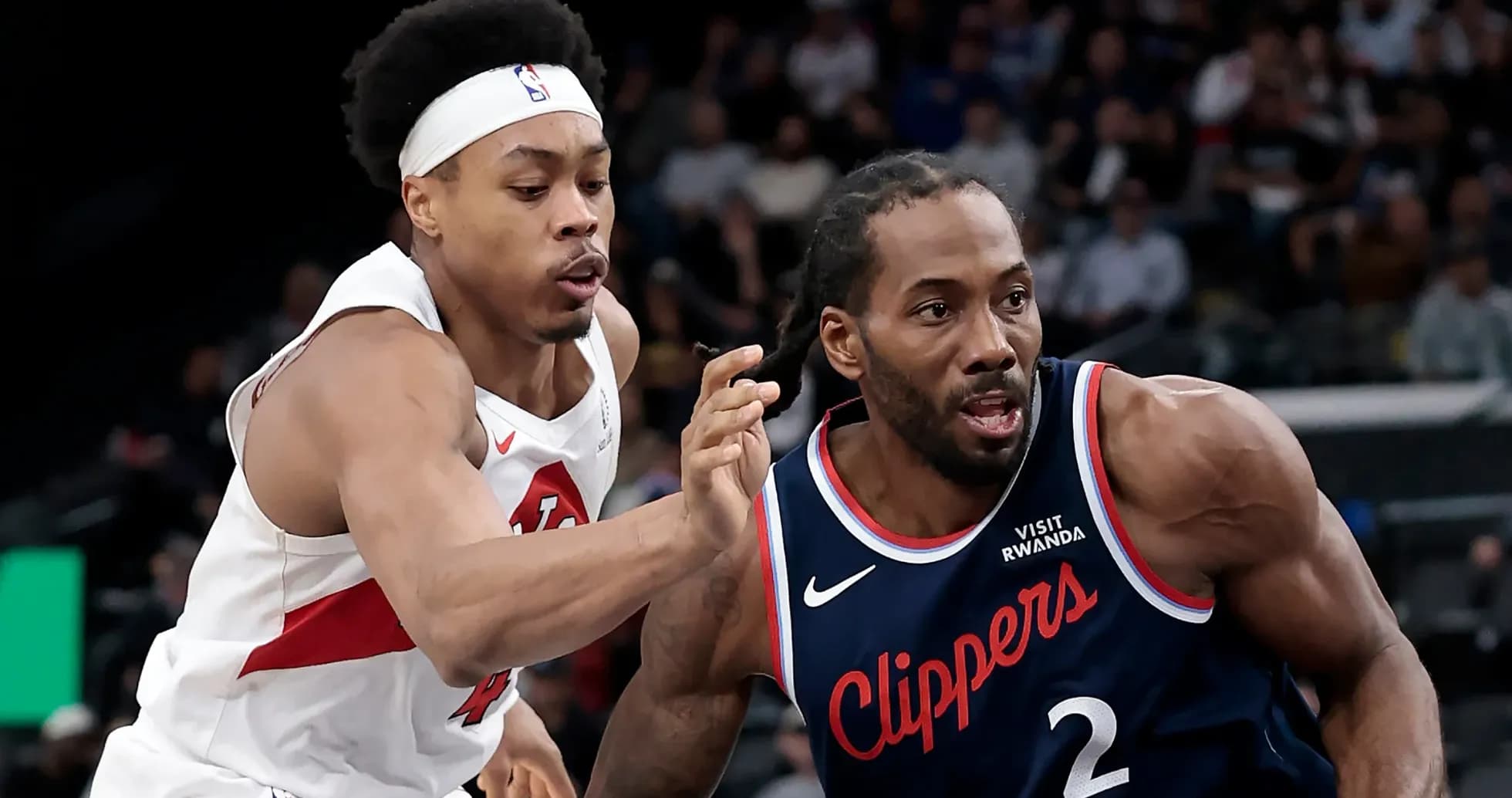
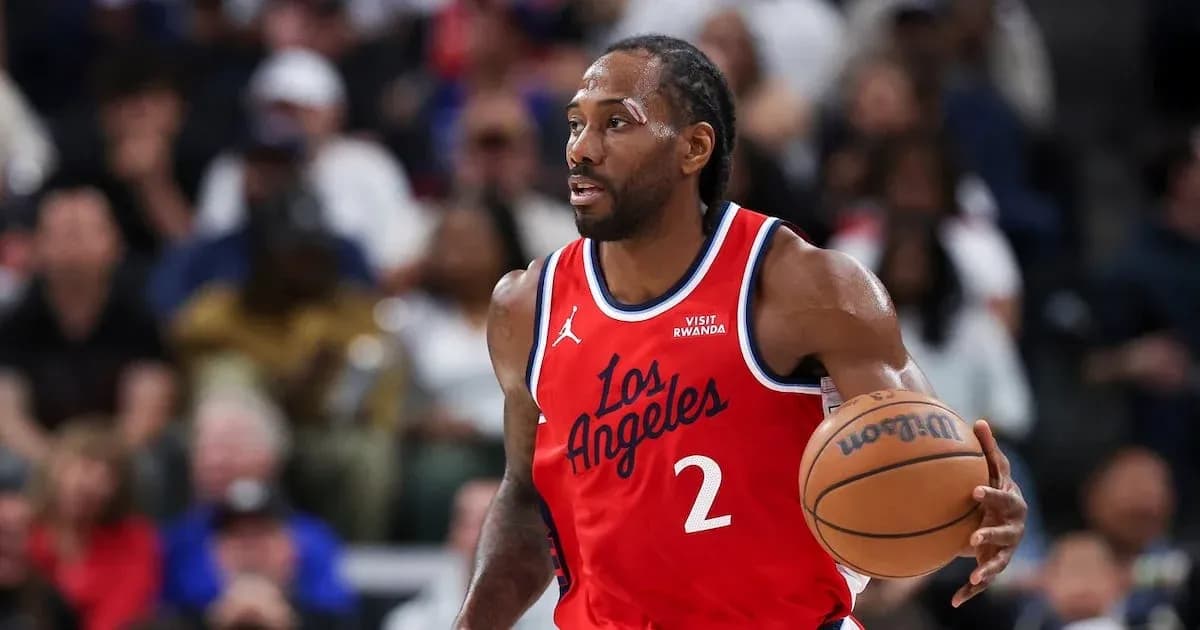
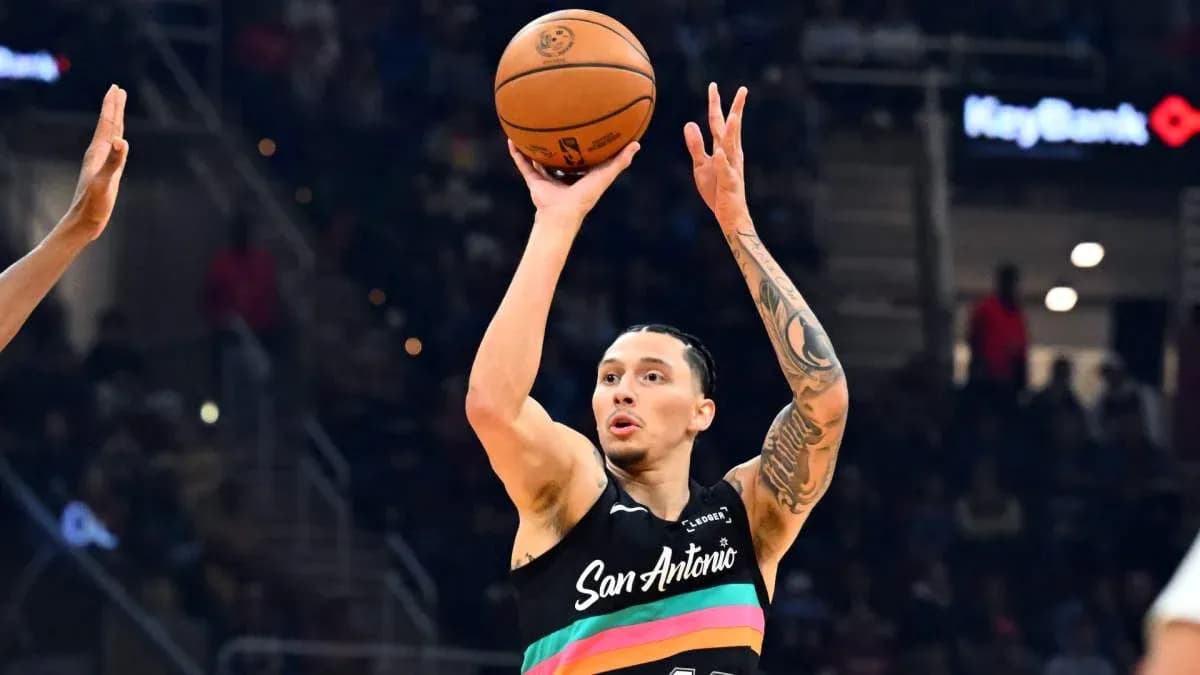
Kawhi Leonard is in Miami, working out with future teammates, waiting on a trade that exists in every way but one: it isn’t official.
The Toronto Raptors and Los Angeles Clippers have an agreement in place to send Leonard to Canada, with Toronto poised to hand him a lucrative extension once the deal is done. The framework is set, the player is on board, and the Raptors have already mentally built their 2026-27 season around him.
The holdup is in Los Angeles.
A franchise in disarray
According to reporting from Jake Fischer and Marc Stein, the primary reason the trade has not been finalized is simple and staggering: the Clippers are still sorting out who, exactly, runs their front office in the wake of sweeping NBA penalties.
Owner Steve Ballmer is suspended for a year. President of basketball operations Lawrence Frank is out for six months. Gillian Zucker, the team’s president of business operations, has also been banned for a year after the league’s investigation into improper sponsorship deals involving Leonard.
The result: a franchise that just had its decision-makers removed now has to approve one of the most consequential trades in its recent history. And it has to do so while operating under a new, hastily reconfigured power structure.
The NBA detailed its findings in a 35-page report, released alongside the announcement of the punishments. Law Murray, who has tracked the story closely, described the document as “thorough… not 100% thorough, but… very thorough,” and noted how selective both the Clippers and the league have been about public statements during the process. The league made clear why it went public on Wednesday. It wanted the record out there.
That record now shapes every move the Clippers make.
What the investigation actually found
At the center of the case is the line between a team introducing a star to sponsors and a team effectively negotiating side deals to circumvent the salary cap.
Shams Charania outlined the key distinction. Teams can introduce players to sponsors; that’s routine. For most players, he noted, 60 to 70 percent of their sponsorships come through those team-linked connections.
The Clippers, though, crossed into forbidden territory. According to the NBA’s findings, Zucker negotiated a deal “in the millions” on behalf of Leonard with a company and a middleman before it ever reached the level of a basic introduction. That kind of direct brokering, tied to a player’s decision to join or remain with a team, runs straight into the heart of the league’s cap rules.
The punishment landed hardest on the organization, not the player. That distinction has become a flashpoint around the league.
Draymond Green, on his podcast, zeroed in on the broader issue rather than the scandal’s tabloid edges. He praised the fact that Leonard avoided a suspension and turned his attention to the system itself.
“Why is there a salary cap?” Green asked. “Why are guys being prevented from making money from team sponsors or league sponsors, or whoever else? We talk about, we’re in a league that is player-centric, that is player-focused, that is player-driven, that has the best benefits, best interest for the players. And here’s a situation where a guy can make 20 to 30 million extra dollars, and we’re like, ‘Oh, yeah, you’re in trouble.’ I’m happy Kawhi didn’t get the bulk of this punishment. I think it’s absolutely beautiful.”
His point lands at an awkward intersection: a league that sells itself as player-first, and a rulebook that clamps down the moment player earnings test the edges of the cap structure.
Toronto’s risk, and lack of options
Toronto has already ridden the emotional roller coaster once.
As John Hollinger reported, the Raptors initially “pumped the brakes” on the trade when it looked like Leonard might be hit with a long suspension or even have his contract voided as part of the fallout. That would have turned a franchise-altering move into a disaster.
Once the league made clear Leonard would not face that level of penalty, Toronto stepped back on the gas. The risk profile changed. The Raptors again saw the deal as their path back to relevance at the top of the Eastern Conference.
Now they wait.
Leonard is in Miami, participating in an organized minicamp with Raptors players, according to Fischer. He and Toronto both expect the trade to be completed. The Raptors have no meaningful Plan B if it collapses; the offseason is essentially over, the market is dry, and their cap sheet and roster decisions have been made with Leonard in mind.
Could Toronto try to leverage the Clippers’ turmoil and ask for better terms? Unlikely. As the New York Times noted, NBA trades are built on trust. Teams that try to wriggle out of agreed deals quickly earn a reputation that makes future negotiations harder. The Raptors also know they are not negotiating from strength here. They need this deal as much as anyone.
So they wait for a fractured Clippers front office to push the final paperwork through.
Why the Clippers still need this deal
On paper, Los Angeles has every reason to finish what it started.
Hollinger laid out the stakes: the Clippers stand to receive two first-round picks, a second-round pick, and a first-round pick swap from Toronto. Those assets have become vital after the franchise forfeited a half-decade’s worth of first-rounders as part of the league’s punishment.
They are not contending for anything meaningful in the short term. The original agreement to trade Leonard was, in many ways, an admission of that reality. Keeping him for the final year of his deal on a non-contending roster, while his trade value withers under the weight of scandal and contract uncertainty, makes little basketball or business sense.
From Leonard’s side, the incentive is just as clear. A “juicy” extension awaits him in Toronto once the deal is consummated. Staying in Los Angeles would mean playing out a lame-duck year for a team in flux, with his market clouded by the investigation and the lost picks that would make any future trade harder.
Could the Clippers attempt to unwind the agreement? Hollinger called it “highly unlikely,” and the logic backs that up. They need the draft capital. They need a clean break. They need to start over.
But need and execution are different things when a franchise’s leadership has just been blown up by the league office.
The bigger fight: rules vs. reality
While the trade stalls, the broader debate the case has sparked is only growing louder.
Green’s salary-cap critique cuts to the core of where the NBA goes next. The Clippers’ punishment has become a test case for how far the league will go to defend the integrity of its cap system, even when that means curbing the earning power of its stars through off-court channels.
The league’s outside counsel, Wachtell Lipton, produced a detailed report. Pablo Torre, whose investigative series on Ballmer, Leonard, and the Clippers helped drag the story into the light, called this latest chapter “Part 15” of a saga that began a year earlier. His work underscored a larger truth: accountability for the wealthiest figures in sports rarely arrives without relentless pressure.
Now that accountability has arrived, at least in part. The Clippers have been hit hard. Leonard has avoided the worst-case scenario. The rules have been enforced, but the questions those rules raise aren’t going away.
Somewhere between Miami and Los Angeles, between a minicamp and a half-built front office, sits a trade that could reshape two franchises and sharpen the league’s ongoing argument with itself.
Does the NBA want a truly player-driven era, or only one that fits neatly inside the lines of its own rulebook?