.svg&w=384&q=75 "logo")
Rodri's Decision: A Turning Point for Barcelona
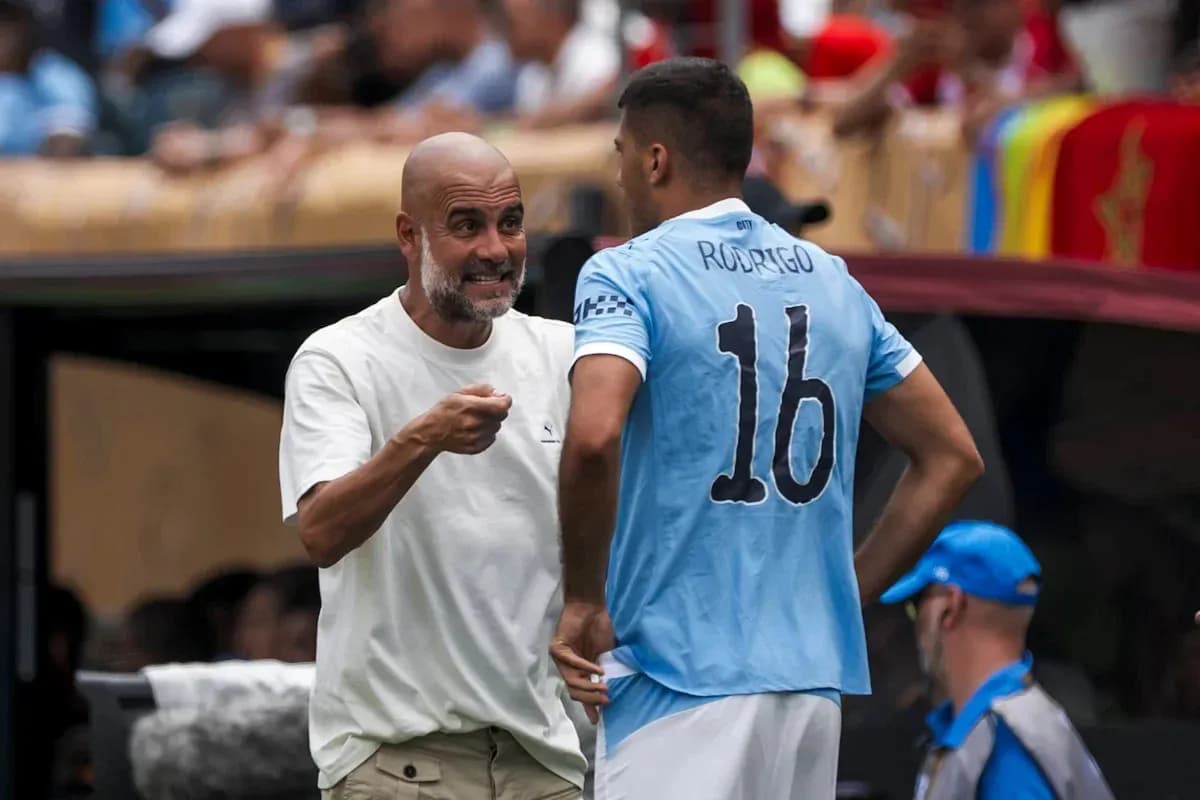
Rodri’s decision to join Barcelona has the feel of a turning point. Not just another big-name move, but a transfer that cuts right into the heart of Spanish football’s old fault line. Barcelona or Real Madrid. Catalunya or the capital. Style, identity, project.
This time, Barcelona won.
This was not a romantic return to La Liga or a nostalgic nod to childhood colours. It was calculated. Thought through. The Spain midfielder weighed up offers from both Barcelona and Real Madrid while Manchester City tried to hold their ground. After a turbulent break dominated by phone calls, meetings and persuasion, he stepped back, looked at the whole picture and chose the project that, in his eyes, offered the clearest sporting path.
He went where he felt he could win more, grow more, and shape the game more.
Barcelona convince the strategist
Strip away the noise and Rodri’s logic was rooted firmly in football. That, in itself, feels significant in an era when transfer stories often drown in commercial spin and social media theatre.
Barcelona’s sporting structure, fronted by Deco and Hansi Flick, did the heavy lifting. They presented a plan, not just a pitch. They showed him where he would stand in the hierarchy, how the midfield would be built around his strengths, how his role would evolve as the team matures. In these battles, the margins matter: clarity of vision, honesty in conversation, the sense that a player is not just wanted, but understood.
Rodri listened. He tested their conviction. He measured it against what Real Madrid offered. Then he chose Barça.
That choice tells its own story. Barcelona did not simply benefit from timing or chaos elsewhere. They out-argued their greatest rival for one of the most coveted midfielders in the world.
Respect for Madrid, resolve for Barça
What stood out in Rodri’s explanation was the respect he reserved for Real Madrid. He did not trivialise the decision. He did not dress it up as easy.
He underlined how well Madrid had treated him, how seriously they pursued him, how hard they tried to bring him to the Bernabéu. In an age where players often lean into tribalism to win favour with a new fanbase, he went the other way. He acknowledged the weight of saying no to Madrid, the scale of what he was turning down.
His words about José Mourinho, who personally tried to lure him to Madrid, added another layer. Rodri said: “Bueno, no creo que sea lo suyo desvelar una conversación privada, pero evidentemente expresó sus ganas de que fuera y de lo que podía aportar al equipo. El trato fue muy bueno. Cuando tomé la decisión también le llamé para agradecer el interés y el trato. Me parece un grandísimo entrenador, ya lo ha demostrado allá donde ha ido en sus grandes etapas y el Real Madrid va a ser un duro rival para esta Liga.”
Diplomatic. Warm. Precise.
He made his choice, but he closed the loop with a phone call. Top-level football can be ruthless, but here was a player making sure respect went both ways.
Drawn to Barça, not running from City
There is a nuance in his reasoning that Barcelona supporters will cling to. Rodri did not frame this as an escape from Manchester City or as a reaction to discontent in England. He did not lean on grievances or politics.
He talked about attraction.
He spoke of Barça as a destination that pulled him in, not a safe harbour from elsewhere. That distinction matters. It gives the transfer a different weight. Barcelona did not simply catch a player on the rebound; they convinced one at the peak of his powers that this was where his next chapter should unfold.
The background noise around Madrid’s interest, the off-field theories and speculation, barely got a mention from him. He brushed it aside, stressing his focus on football, his national team, and his own path. That is the language of a player used to the spotlight, one who has learned to keep a healthy distance from the circus that swirls around him.
His observation that in England football largely remains about football hinted at something else. Years in the Premier League have hardened him, sharpened his edges, and perhaps left him ready for a different kind of scrutiny. Spain brings another type of pressure: political, cultural, emotional. Rodri has chosen to walk straight into it.
A clásico battle won off the pitch
On the grass, the implications are obvious. If Rodri performs anywhere near his Manchester City level, Barcelona have just secured control, composure and steel at the heart of their midfield for years.
He is the player who calms chaos. The one who organises possession. The one who makes great teams feel balanced.
And Barcelona did it by beating Real Madrid to his signature.
That is the real sting in this saga. This is not only about the quality of one midfielder, but about perception. Pull. Planning. Identity. At a time when Madrid are used to winning the biggest transfer duels, Barcelona have landed the player who knew exactly what the alternative looked like and still turned towards Catalonia.
For Madrid, frustration will be real but not humiliating. They moved decisively, made their case, behaved with class and were treated with equal respect. They simply lost a tight, high-stakes argument.
For Barcelona, the satisfaction runs deeper. This is validation. A sign that their sporting project, so often questioned and dissected in recent years, can still seduce the very best.
Manchester City left with a void
Viewed from Manchester, the story hits differently.
For Manchester City supporters, the emotions are split. Pride comes first. Rodri has become exactly what this chase from Spain confirms: one of the defining midfielders of his generation, the standard-setter others are measured against. He reached that level in sky blue, under the relentless demands of the Premier League and the unforgiving expectations of a team chasing every trophy, every season.
He arrived as a promising pivot. He leaves, if he truly has gone, as the heartbeat of a dynasty.
But there is irritation too. The familiar sense that when Barcelona and Real Madrid circle, the conversation quickly assumes that players naturally belong in their orbit. Rodri became this version of himself in Manchester. He grew there, carried enormous responsibility there, learned to decide the biggest games there.
The practical question now hangs in the air over the Etihad. Who controls matches for City? Who dictates the tempo when the game frays at the edges? Who brings that feeling of certainty when everything around starts to wobble?
That is the scale of the gap he leaves behind. You do not simply replace that authority with a like-for-like signing. You rewire the team.
A new fault line in La Liga
Back in Spain, the consequences will play out over months, not days. Rodri’s presence in Barcelona’s midfield has the potential to tilt clásicos, Champions League ties and, ultimately, title races.
His signing is a statement that stretches beyond tactics and formations. It touches on pride and power. Barcelona have reminded Madrid, and the rest of Europe, that their name still carries a particular force when the conversation turns to identity and style.
And now, somewhere between Camp Nou and the Bernabéu, a simple question will follow every big night in La Liga:
Did this title race shift the day Rodri chose Barcelona over Real Madrid?