Alexander Zverev: From Best Player to Two-Time Major Champion
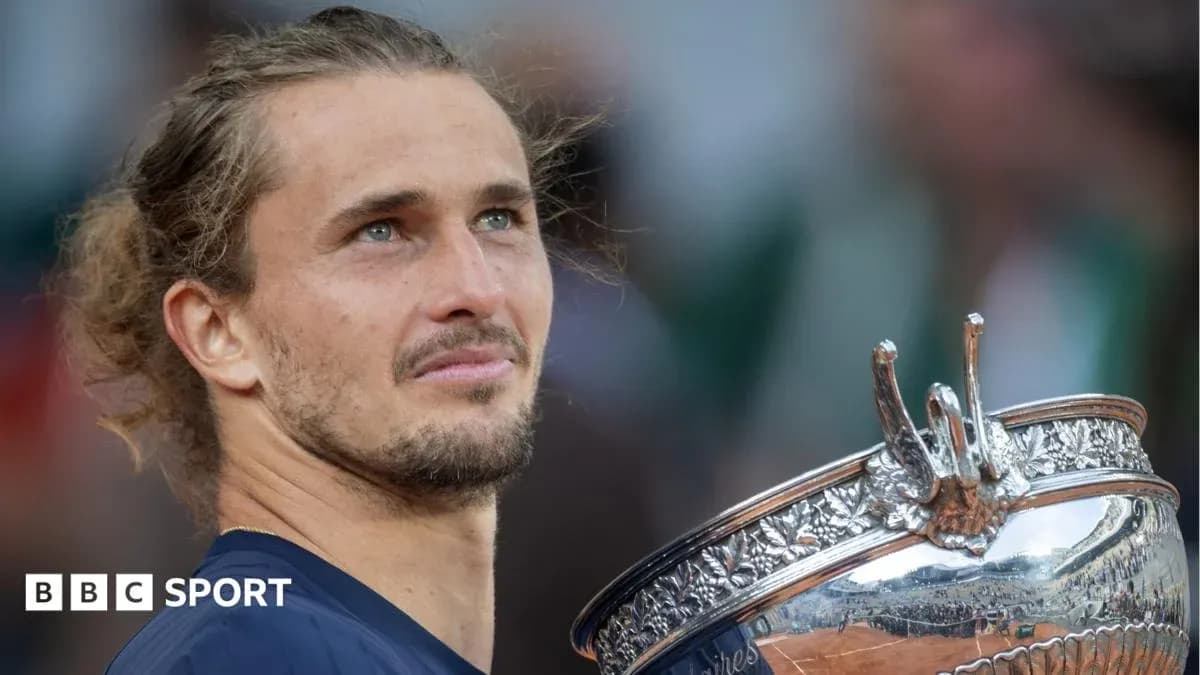
Alexander Zverev used to carry one of the heaviest labels in tennis: best player never to win a Grand Slam.
He will finish 2026 as a two-time major champion and the world number one. Not the heir apparent. The man at the top.
At 29, Zverev has become the oldest player in more than half a century to climb to number one for the first time. His surge came on the back of a breakthrough French Open title and a ruthless run to the US Open crown, a season that finally matched the scale of his talent with the size of his ambition.
This is the story of a champion forged in persistence, shaped by a famous tennis family, and shadowed by serious off-court allegations that will not simply vanish because the trophies have arrived.
From missed chances to major champion
For years, Zverev’s career felt like a riddle. The tools were obvious. The résumé, even before 2026, was formidable: Olympic gold, two ATP Finals titles, former world number two, three Grand Slam finals.
But the scar tissue was just as visible.
Nothing hurt more than the 2020 US Open final. Two sets up on Dominic Thiem, seemingly in control, he tightened, double-faulted in the decisive tie-break and watched the title slip away as Thiem cramped his way over the line. It became the defining image of Zverev’s early career: close, but not quite built for the last step.
The pattern repeated. The free-swinging, aggressive Zverev who terrorised opponents on the ATP Tour too often turned into a cautious, inward-looking version of himself on the biggest stages. The serve backed off. The forehand shrank. The doubts grew.
He decided this season had to be different.
He would hit bigger. Live with the errors. Accept the risk. Add more variety, more bite, more conviction to his baseline exchanges. That wasn’t just a slogan for a new year; it was a conscious reset born out of a pivotal 10 days in Mallorca in July 2025.
There, on the practice courts with Rafael Nadal and Toni Nadal, Zverev went looking for something more than topspin tips and tactical tweaks.
“I wanted to see and then hear a new vision of what tennis in their mind looks like – and how my tennis, in their mind, looks like,” he said. Nadal had faced him for a decade. Now he could talk as both opponent and observer, telling Zverev what it really felt like to stand on the other side of the net.
The message was clear: trust your weapons. Play like the player everyone fears, not the one who fears the moment.
Paris nerves, New York authority
The transformation did not come without tension. Roland Garros, where he finally broke through, almost turned into another chapter of torment.
In the French Open final against Flavio Cobolli, Zverev’s body betrayed his mind again. Cramp set in. The memories of New York 2020 lurked. The anxiety was real.
This time, he didn’t fold.
He ripped through the deciding set 6-1, hitting through the ball instead of guiding it, and walked off with his first major title. Years of expectation and frustration gave way to a raw, overdue release. A player long accused of blinking at the finish line had finally kicked the door down.
The US Open title later in the year confirmed it was no one-off. Zverev didn’t just survive the pressure in New York; he imposed his game, dictated from the back of the court, and looked like a man who finally believed he belonged at the summit.
A family game, with distance by design
Zverev’s rise has always been a family production.
His father, Alex Zverev Sr, has been a near-permanent figure in the coaching box, a steadying presence through the volatility of his son’s career. Older brother Mischa, once a touring pro himself, now sits alongside him after retiring, offering the perspective of someone who knows both the grind and the spotlight.
The relationship stretches back to childhood. Zverev was the little kid parked at the side of the court while Mischa practised with Andy Murray as a junior, absorbing the rhythms of the sport before he could fully understand them.
Yet Zverev often stresses that the closeness on court does not extend to everyday life. He has said his bond with his father works precisely because they spend “zero time together” away from tennis.
“The big difference with my parents is that they never forced me to do anything,” he has recalled. They even tried to nudge him away from the sport, urging him towards football or field hockey – the games he loved as a child – in part so they would not have to coach him. Both parents, former players themselves, knew exactly what the life demanded.
He chose tennis anyway. Now he stands at the top of it.
Grass strides, hard truths
Zverev’s season was not just about clay and hard courts. At Wimbledon, on the surface that once seemed least suited to his heavy baseline game, he produced what he called his best tennis of the year.
He attacked. He took the ball early. He went after his shots in a way that once seemed beyond him on grass. The run ended in a four-set defeat to Jannik Sinner in the final on Centre Court, but the manner of the loss mattered. Zverev played to win, not to avoid losing.
He will need more of that.
Because for all his success, the head-to-head numbers tell a harsher story. He has now lost 10 straight matches to Sinner. Carlos Alcaraz remains a constant threat. If both are fit at the start of 2027, Zverev’s challenge will be to turn this era into a genuine three-man struggle for the biggest prizes, not a passing reign interrupted by younger, faster rivals.
The allegations that won’t disappear
Zverev’s ascent comes with a complicated backdrop. The sport’s new standard-bearer has been accused of physical abuse by two former partners and has been at the centre of a major independent investigation.
In October 2020, ex-partner Olga Sharypova accused him of physical violence and controlling behaviour. Zverev rejected the claims from the outset, calling them baseless. There were no criminal proceedings, but the ATP commissioned a wide-ranging investigation by independent third-party investigators.
Their conclusion, published in January 2023, was stark in its legal language: there was “insufficient evidence to substantiate published allegations of abuse”. The ATP cited a lack of reliable evidence and eyewitness reports, as well as conflicting statements from Sharypova, Zverev and other interviewees. On that basis, the investigation could not substantiate the allegations.
The fallout still changed the sport. The ATP appointed a director of safeguarding and, this year, launched a new safeguarding programme, designed to create a clear global framework for preventing and responding to abuse – including harassment, bullying, domestic violence and other misconduct.
Another case followed.
In October 2023, a German court issued Zverev with a penalty order and a €450,000 fine for bodily harm against another ex-girlfriend, Brenda Patea. Zverev denied the allegation and challenged the order, triggering a public trial in Berlin in May 2024.
One week into the proceedings, the case ended abruptly. The court terminated the trial before any verdict, telling the BBC that a settlement had been reached between Zverev and Patea.
“The decision is not a verdict and it is not a decision about guilt or innocence,” the court stated. A key factor, it added, was that the witness – Zverev’s ex-partner – had expressed her wish to end the trial. Patea has not commented publicly on the settlement.
The timing intersected directly with his tennis. Zverev reached the French Open final on the day the settlement was announced. Earlier in the tournament he had described the trial as a chance to prove his innocence. When asked afterwards if he regretted settling before that could happen, he was blunt.
“That’s what dropping the case is. That is innocence,” he argued. “They’re not going to drop the case if you’re guilty at the end of the day. I don’t know what translations you have, but that’s what it means. Done. We move on. I never ever want to hear another question about the subject again. That goes out to everybody.”
The questions have not fully stopped. Nor have the reactions.
A volatile presence
Crowds have made their feelings known. Zverev was heckled at the 2025 Australian Open and the Munich Open, the allegations following him from continent to continent.
His on-court behaviour has also drawn scrutiny. In 2022, at the Mexican Open in Acapulco, he launched into a furious attack on umpire Alessandro Germani’s chair after a doubles defeat alongside Marcelo Melo. Incensed by a line call in the deciding tie-break, he smashed his racquet into the chair four times, swore at the umpire and accused him of ruining the match. One swing came close to hitting Germani’s foot.
The ATP found him guilty of a “major offence” and handed down an eight-week suspended ban. The punishment would only be activated if he committed another offence involving disrespectful or aggressive behaviour, or verbal or physical abuse, in the following 12 months. Zverev apologised, saying it was “difficult to put into words” how much he regretted the outburst. He stayed within the lines long enough that the ban was never enforced.
All this sits alongside another thread in his story: his diagnosis with type 1 diabetes at the age of four. Managing a chronic condition while competing at the highest level has demanded a constant, unseen discipline that runs parallel to his public career, another layer of control in a life often played out in extremes.
The era he wants to own
So where does that leave Alexander Zverev now?
On court, he is the world number one, the reigning French and US Open champion, a Wimbledon finalist, and a player whose game has finally grown into the frame that once seemed built for greatness. Off court, his name remains tied to serious allegations, legal complexity and a debate that goes far beyond forehands and rankings.
The next chapter will not just be about whether he can turn 2027 into a three-way fight with Jannik Sinner and Carlos Alcaraz. It will be about whether the sport – and the public – are willing to accept its new leading man on his terms, or whether the questions that trail him will define this era as much as his titles do.