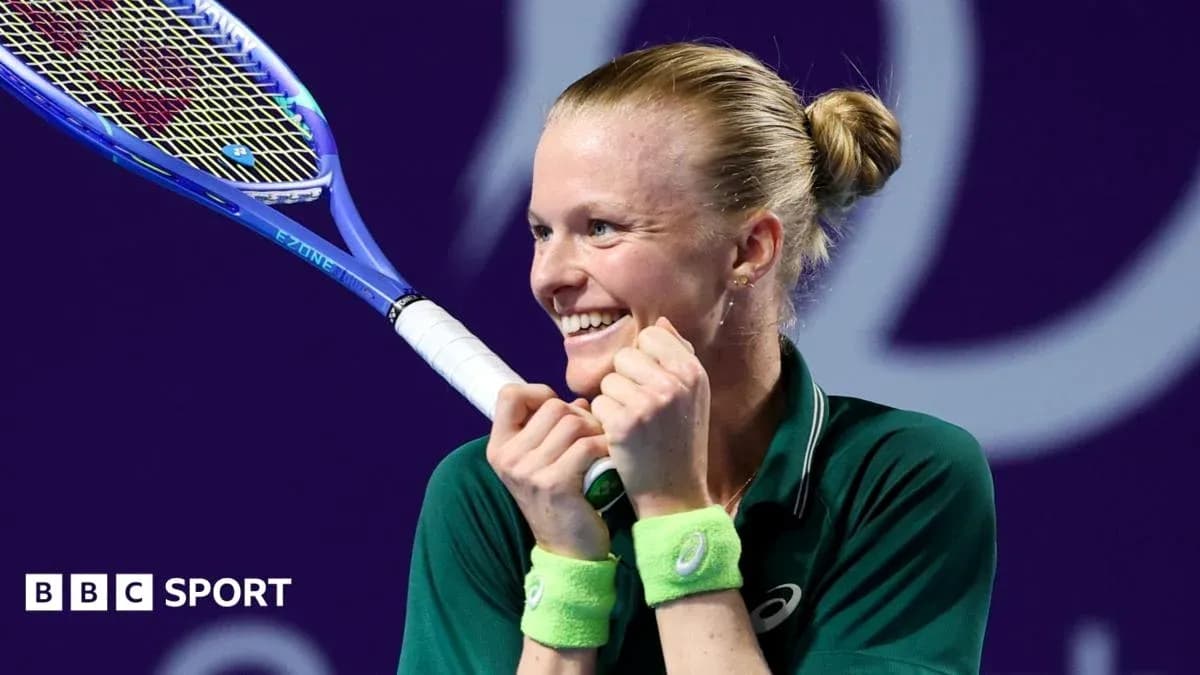
Harriet Dart's Breakthrough WTA Title in Guangzhou
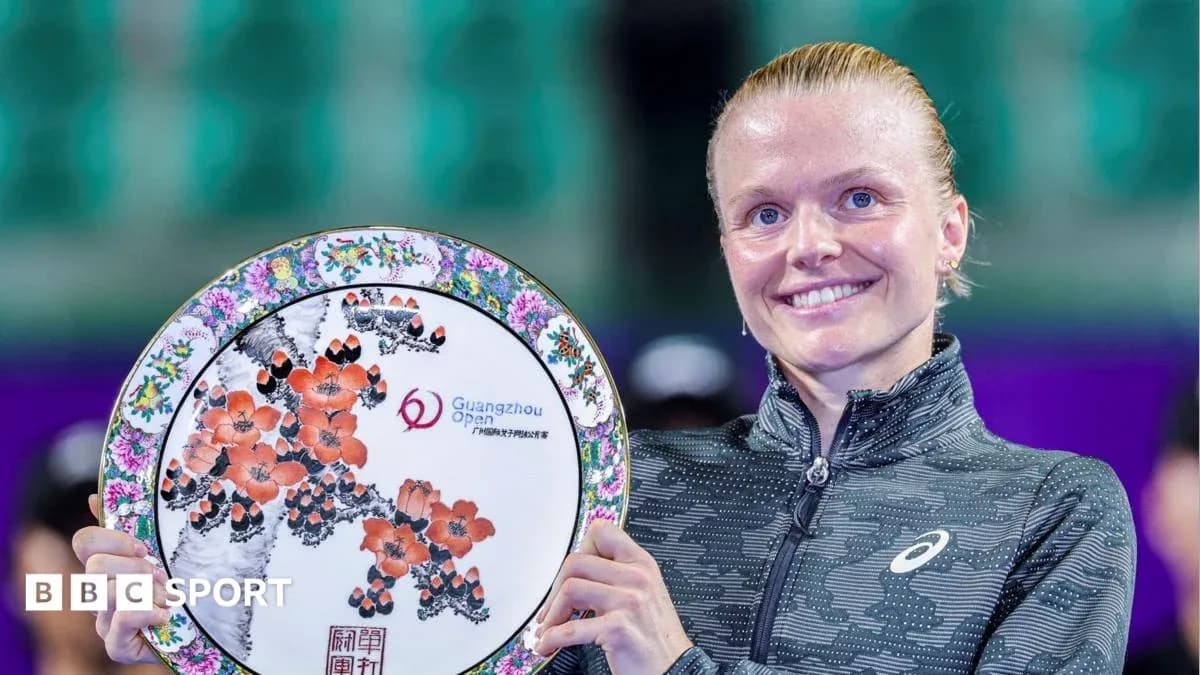
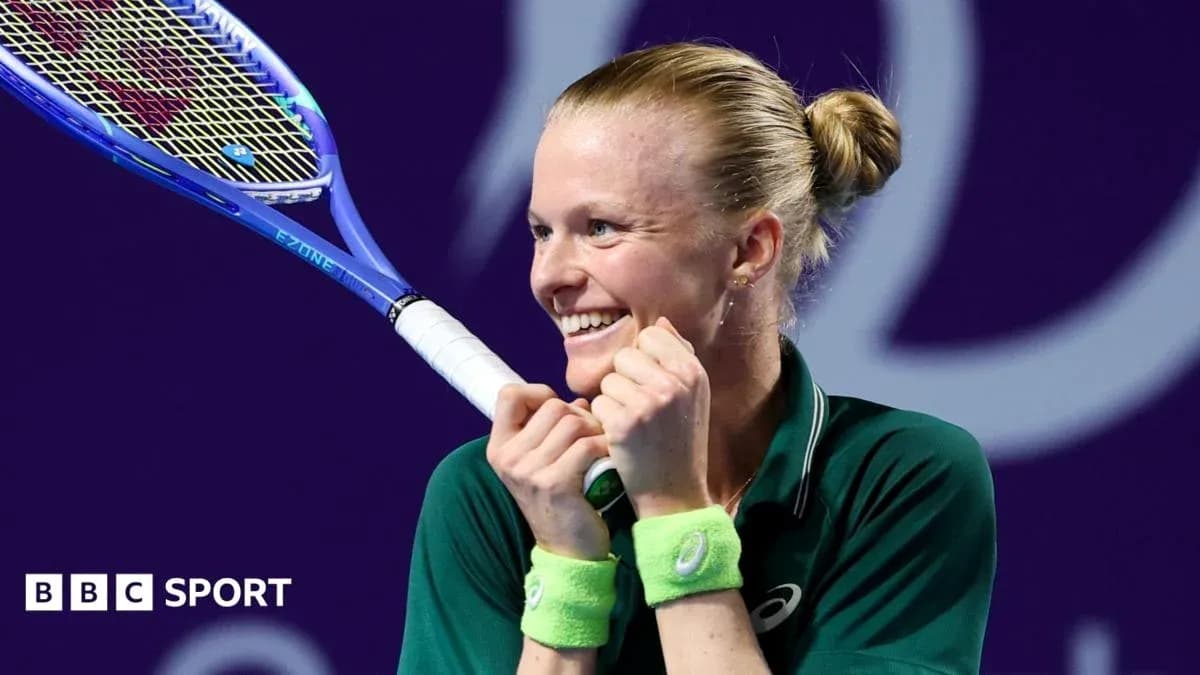
Harriet Dart had barely wrapped her fingers around her first WTA trophy when the messages started flooding in. Her phone lit up with congratulations from all over the tennis world, but there were three calls she wasn’t going to miss: her parents, Nick and Susie, watching nervously at their north London tennis club, and her sister Phoebe.
Then came another voice. Marion Bartoli.
The 2013 Wimbledon champion, now a part-time coach and full-time sounding board, has become the unlikely architect behind Dart’s late-blooming surge. Watching from home as Dart, ranked 115 in the world, closed out the Guangzhou Open title against Austrian teenager Lilli Tagger, Bartoli had every right to feel a quiet sense of vindication.
“It’s been quite incredible to work with Marion, and I was really fortunate she was open to working with me,” Dart told BBC Sport from Guangzhou, still processing the scale of what she had just done.
A partnership born in Dubai, rebuilt on belief
When Dart first linked up with Bartoli at the start of the season, she sat outside the top 160. At 30, she was closer to the age many players start thinking about life after the tour than to the bright-eyed 20-year-olds breaking through. That didn’t bother Bartoli. It bothered Dart more than it did her coach.
“I’m obviously at a very different stage of my career to someone who is, say, 20. But I still feel I have a lot to improve and there are gains to be made,” Dart said.
Bartoli agreed – and crucially, she told Dart so. Repeatedly.
“She really believes in me – that means the world to me. Seeing a Grand Slam champion having that belief has made me believe a lot more in myself.”
They live close to each other in Dubai, which has turned into their training base whenever Dart is off the road. The arrangement is modern and flexible. Bartoli, 42 and with a young family, doesn’t travel full-time, but she drops into key weeks, especially at the Grand Slams, and still hits in practice – “really well,” as Dart puts it, with a mixture of admiration and amusement.
In Guangzhou, though, Dart flew solo. On court, at least.
She had her fitness trainer Dario Gonfiantini and her boyfriend Stephen Falck with her in China, but no coach in the stands. Instead, Bartoli’s influence arrived in the form of detailed notes and observations sent remotely. The rest, Dart had to solve herself, point by point, match by match.
The numbers behind a breakout run
The trophy in Guangzhou is the headline, but the story has been building for months.
Since Wimbledon, Dart has quietly put together one of the best hard-court runs of her career. She has won 19 of 24 tour-level matches on the surface, and her overall record on the WTA Tour this season now stands at 23 wins from 34 matches – the highest winning percentage she has ever produced.
On Monday she is projected to rise to 83rd in the world, another step in a season where she has already hit a career-high of 70. The rankings column, once a stubborn reminder of missed chances, suddenly looks like momentum.
This hasn’t come out of nowhere. Dart reached the third round at Wimbledon and the second round at the US Open this year, but for much of the previous two seasons she lingered outside the top 100, stuck in the space where main draws feel just out of reach and confidence rarely survives a bad week.
Opponents had learned where to attack. Her second serve, often slow and fragile under pressure, leaked double faults. Her temperament came under scrutiny too. Could she handle the tight moments? Could she close?
In Guangzhou, she hit back at those questions with something more convincing than words: a string of comeback wins, each one demanding resilience rather than rhythm. She fought from behind, held her nerve, and refused to fold when the match tilted against her.
A different Dart
Anne Keothavong has watched Dart’s journey from close quarters. As Britain’s Billie Jean King Cup captain, she has seen the hard yards, the near-misses, and the doubts.
“She’s always had a fantastic work ethic and has always set the bar high with her professionalism,” Keothavong told BBC Sport. “But there is certainly more belief and confidence now. She’s in a very good place.”
Dart travelled with the British squad to the Billie Jean King Cup Finals in September. She didn’t get the nod to play in the tie, but she left a mark in practice, where Keothavong noted the quality of her ball-striking. That level has now spilled into the tour, and Guangzhou stands as the proof.
“She’s been grinding away on the tour for a long time and it’s great to see someone who has put in a lot of time to succeed and win a big title,” Keothavong said.
For Dart, Bartoli’s role stretches beyond tactics and technique. It’s personal.
“More than anything, Marion is just a great person. She cares about me as a person first and foremost, as well as improving me as a tennis player, of course,” Dart said.
“It’s been invaluable and amazing for her to share her experiences to make me better. I’ve learned a lot from her and look forward to continuing to learn more. I hope we will be able to spend more weeks together next year.”
A rising tide for British women
Dart’s breakthrough in Guangzhou is not an isolated spike; it’s part of a broader surge from British women as the season winds down in Asia.
Sonay Kartal reached the final of a WTA 1000 event in Wuhan, a huge leap on one of the sport’s biggest stages outside the Grand Slams. Katie Boulter made the semi-finals at a WTA 250 in Osaka, reinforcing her own rise up the rankings. Back in Europe, teenager Hannah Klugman captured the biggest title of her young career at the Wrexham Open, a W100 event on the Challenger tour.
“The way they’re all performing towards the end of the season – at whatever level – has been impressive,” Keothavong said. “It’s not easy at this time of the season because there has been a lot of tennis played, but they’ve all capitalised and risen to the occasion.
“It’s great reward for all their hard work and is encouraging for British tennis.”
For Dart, that encouragement now comes with something more tangible: a trophy, a rankings jump, and a game that finally looks aligned with her ambition. She has spent years grinding, recalibrating, and wondering if the big week would ever arrive.
Now that it has, the question shifts. Not whether she belongs at this level – but how far, with Bartoli in her corner and belief restored, she can push it.