Alan Shearer on His Premier League Goalscoring Record and Erling Haaland
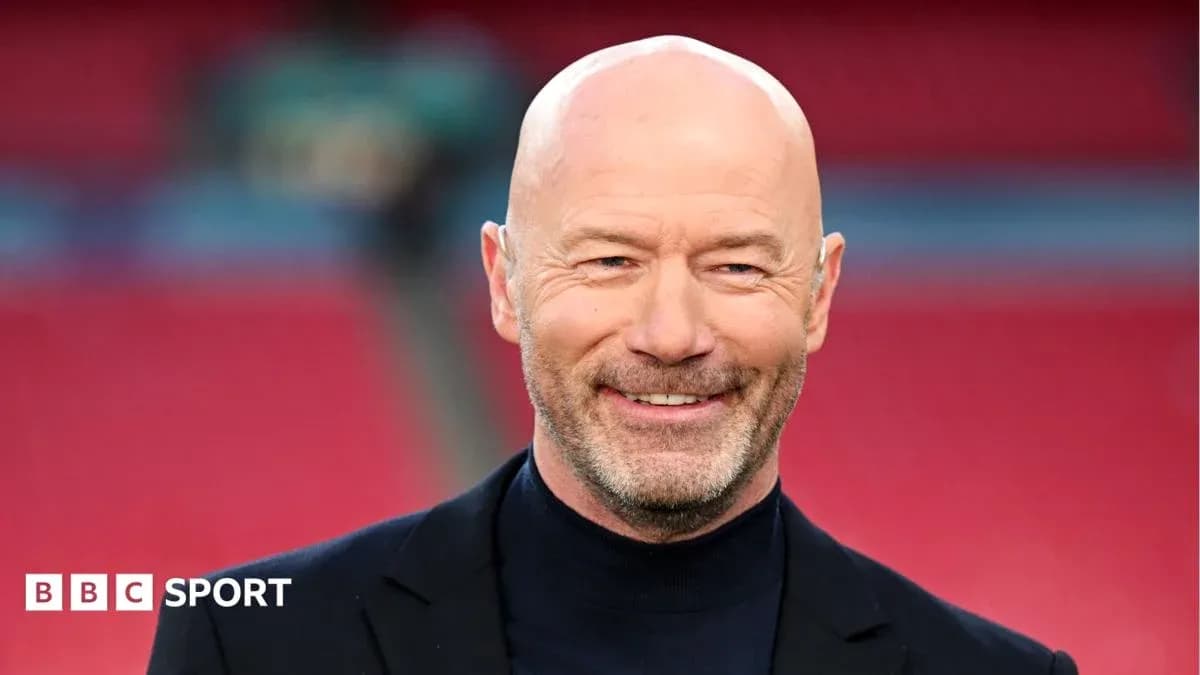
Alan Shearer knows exactly what would help his Premier League goalscoring record survive a little longer: Erling Haaland packing his bags and leaving England.
The numbers are stark. Shearer’s 260 Premier League goals, stacked up over 14 relentless seasons, have stood untouched for almost two decades. Haaland has already thundered in 120 in just over four campaigns for Manchester City. If the Norwegian stays put – and City keep rolling at the top – the maths is brutal. The record is in play.
Shearer, though, isn’t clinging on in denial.
“I’m sure it will be broken one day, but I’ll enjoy it while it lasts,” he told The Football Interview. Then came the punchline only half in jest: “If we can get Haaland out to Real Madrid or somewhere like that in the next couple of years then it should be alright.”
He’s seen this film before. Before Haaland, it was Harry Kane charging up the charts, dragging Tottenham along with him. Kane reached 213 Premier League goals, seemingly on a collision course with 260, then cut away to Bayern Munich in 2023 and froze his English tally in time. The danger passed. Temporarily.
For now, Shearer watches the next challenger from the best possible vantage point: front-row, every weekend, microphone in hand.
The boy who left home at 15
Twenty years on from his last competitive game, Shearer sat down with Kelly Somers to talk through the journey that made him both England’s most prolific Premier League striker and the beating heart of Newcastle United.
It started with a wrench. At 15, he left Newcastle for Southampton, a teenager heading to live in digs with another family on the south coast. At the time, it felt like a necessary leap. Looking back, now as a father, it feels almost impossible.
“I wouldn't change anything – one of the best things I did was move away from home at 15,” he said. “But when my kids got to 15 I thought, ‘how on earth did my parents let me leave home at that age?’
“There's no way I could have let my two girls and my son walk away from their home at 15 years of age.
“I remember getting on the train at Newcastle Central station, looking at my mum and dad and the tears rolling down my mum's face when I was pulling out of the station and waving thinking, ‘is this the last time I'm ever going to live back home?’”
He did come back north. First, in 1992, to Blackburn Rovers, where Sir Kenny Dalglish built a title-winning side around him. Shearer delivered the Premier League trophy in 1995 and, in doing so, made himself the most coveted striker in the country.
From there, one move always felt inevitable.
Coming home, chasing glory
In 1996, Shearer went home. Newcastle United, his boyhood club, his city, his streets. He had grown up on the Gallowgate End at St James’ Park, just another kid craning his neck to see Kevin Keegan, the superstar who seemed to float above the city.
“I saw the adulation that he [Keegan] had. He was like the pied piper in Newcastle, everyone followed him everywhere,” Shearer recalled. “I was one of those little kids that went to the training ground, to the ground – and I wanted a piece of that.”
Signing for Keegan, the man he once idolised from the stands, felt “surreal”. It also felt like destiny fulfilled. Shearer would spend a decade in black and white, scoring 206 goals in 405 games across all competitions, and becoming a symbol of Newcastle as much as a striker for them.
The medals, though, dried up. That Premier League title at Blackburn remained his only major club honour. With Newcastle he reached two FA Cup finals and lost them both. The team never climbed quite as high as its dreams.
Still, there was never any doubt where his loyalties lay. Whatever Newcastle’s league position, whenever the call came, he went back. The bond between Shearer and the club was too deep to fray.
The legend in a cap
That bond hasn’t faded. It just looks a little different now.
These days, when Shearer gets the rare chance to be just another supporter, he heads to Harry’s, a Newcastle pub owned by a friend, and does something he never could as a player: he walks to the ground with the fans.
“My friend owns a pub in Newcastle called Harry's and I get dropped off outside the pub and then I walk up from the ground,” he said. “I've got a cap on and I very rarely look up because it would take me forever to get from the pub to the ground. But I often do it.”
“They've [friends] done that all their life and I'm able to do that now and I love it.”
A cap, head down, slipping through the crowd. The club’s greatest modern icon hiding in plain sight on the way to watch the team he once carried.
Eight games in the dugout
For all his dominance in front of goal, Shearer’s step into management was brief and brutal.
In 2009, with Newcastle spiralling towards relegation, the club turned to their favourite son. They were bottom of the league and desperate. He didn’t hesitate.
“Newcastle were in desperate trouble and I could never say no – we were bottom of the league, fighting for our lives,” he said.
The timing, he jokes, should have been a warning. “I should have known that when I signed the contract on April Fool's Day that it wasn't going to work out!”
He took charge for the final eight games. It wasn’t enough. Newcastle went down, and Shearer never returned to the dugout.
He thought he would. He wanted to. “I always felt that I was going to go into it again and I wanted to. I had a couple of interviews and got offered the job at Cardiff. And then things changed ... and I thought, ‘what am I doing here?’”
That was that. The managerial itch went unscratched. His path veered away from the touchline and towards the studio.
The second career
If Shearer once terrorised defenders, now he dissects them.
Match of the Day, England co-commentary, The Rest Is Football alongside Gary Lineker and Micah Richards – he has become one of the most respected voices in the game, his analysis underpinned by the same ruthless clarity he showed in the box.
The workload is heavier than it looks from the sofa.
“It is such a long day. For me travelling from Newcastle, it's a probably 19-20 hour day,” he said. “What people don't realise is that you're meant to be at your brightest and your liveliest when you go on live at 10:30, whereas if you're watching football all day on the settee, you're ready to nod off at that time.”
He doesn’t nod off. He can’t. Not when every weekend is another opportunity for someone to chip away at that record, another chance for Haaland to close the gap.
Shearer watches it all unfold, live, in real time. The goals, the chases, the numbers ticking upwards. The record that defined his playing life now provides a running subplot to his broadcasting one.
He knows it won’t last forever. He’s fine with that.
Until the day it falls, though, don’t be surprised if he keeps half an eye on Manchester – and secretly wonders how good Haaland might look in white at the Bernabéu instead.