Carlos Alcaraz Dominates Alex de Minaur for First Vienna Title
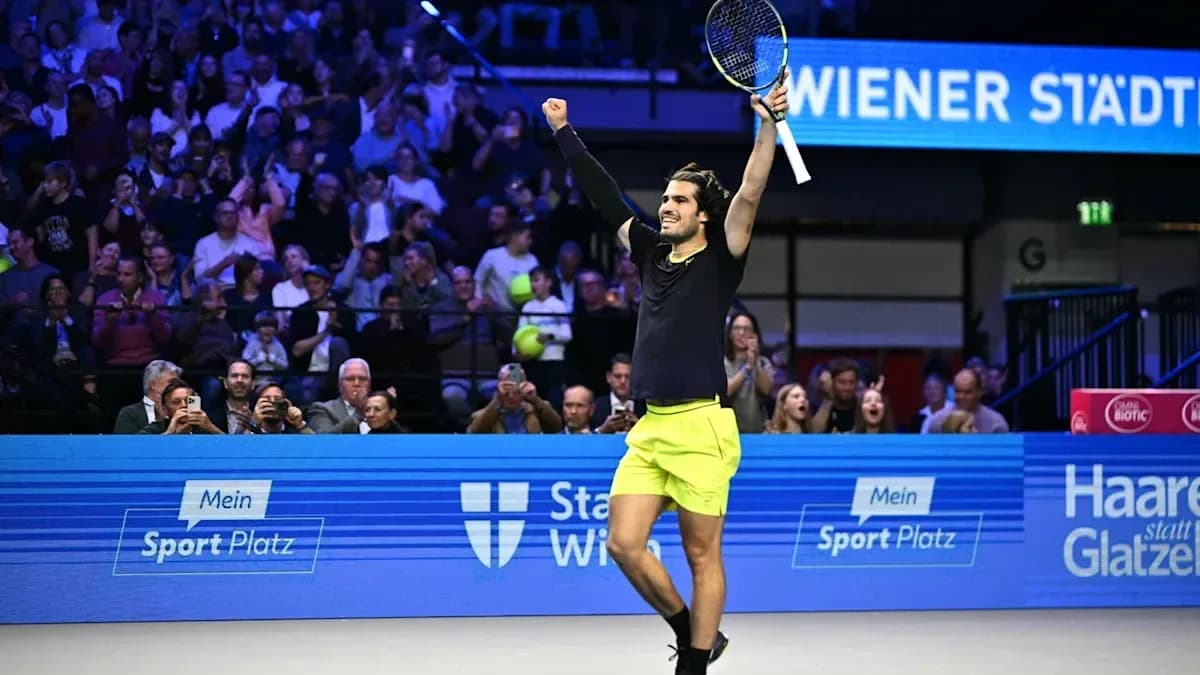
Carlos Alcaraz arrived in Vienna talking about learning, adapting, growing on indoor courts. He left with a trophy in his hands and a final that looked like a statement.
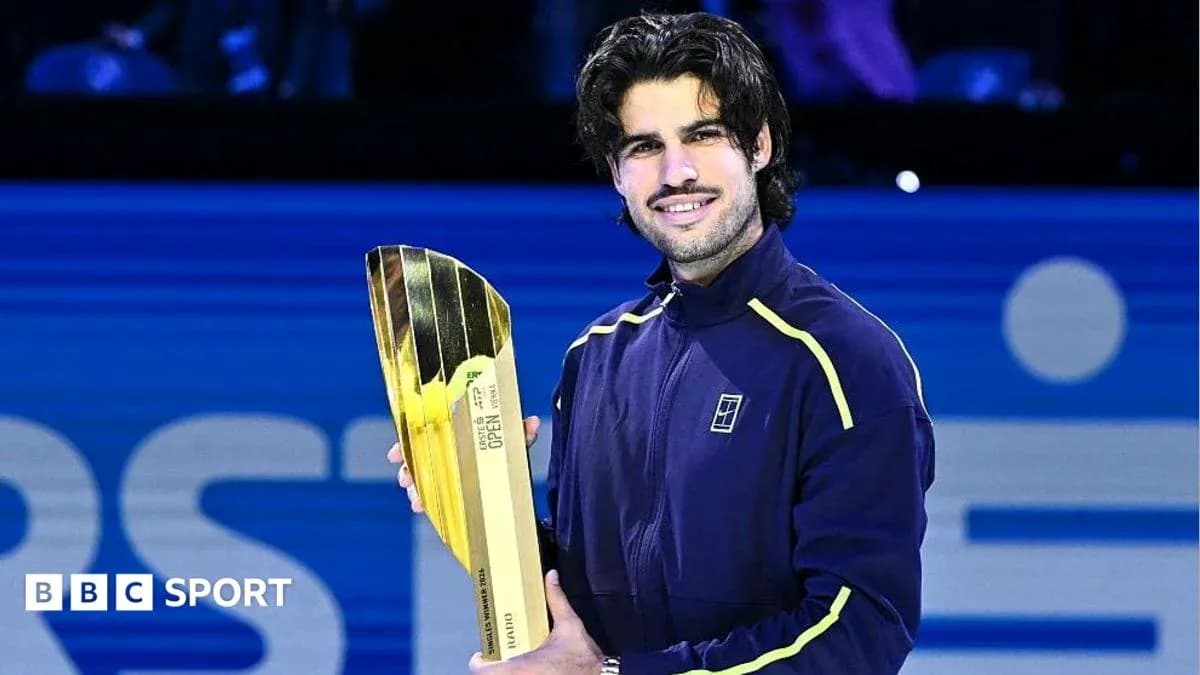
The Spaniard swept aside Alex de Minaur 6-1, 6-4 to win the Vienna Open title, his first in the Austrian capital, wrapping up the job in just under an hour and a half.
It sounds straightforward. His week was anything but.
Across five matches, Alcaraz never dropped a set, yet the scorelines hid a grind. He had to work through tiebreaks in all but one of his encounters, nudging his way through tense moments, feeling out the surface, pushing for rhythm. The tennis was often rugged, occasionally ragged. The final was something else entirely.
On Sunday, he walked into the arena and unleashed his best level of the week.
De Minaur, one of the tour’s quickest and most awkward opponents, barely had time to breathe in the opening set. Alcaraz stepped inside the baseline, took the ball early, and ripped through rallies, refusing to let the Australian turn defense into attack. The 6-1 scoreline told the story: this was controlled aggression, not chaos.
The danger, Alcaraz knew, was always there. Speaking courtside after the win, he laid out exactly why De Minaur demands such respect.
“My team and I know pretty well Alex de Minaur's level,” Alcaraz said. “His style is really, really dangerous, you know, really flat balls that slip a lot on the court, really low. It's really difficult to increase the power that I really want to increase, you know, in every shot, in every point.
“And he's really, really fast, you know? So you have to earn every point, and you might hit a winner, you know, against everybody except him. So I had to be really careful with that. I had to be really focused on that.”
That respect shaped his game plan. No slow start. No drift. No charity.
“So we know that I had to start the match really focused, increasing my speed, my pace in every shot, trying to be aggressive and show him that if he wants to win, he has to play better, more aggressive, more solid, and be smarter than me.”
The pressure told early. Alcaraz’s weight of shot pinned De Minaur back, his court coverage cut off angles, and the Australian’s famed resilience never really found a foothold in the opening set. When De Minaur did stretch points, Alcaraz had the answers, threading winners into corners that usually stay closed against such a relentless retriever.
The second set tightened. De Minaur dug in, raised his first-serve percentage, and began to drag Alcaraz into the longer exchanges he prefers. The match edged closer to the kind of dogfight many expected from the start.
But whenever the final threatened to tilt, Alcaraz surged again. A heavy return game here, a bold forehand there, and the door slammed shut. The 6-4 finish felt fitting: competitive, but never out of his control.
On stage, with the trophy in his hands and the Vienna crowd in full voice, Alcaraz circled back to the bigger picture of his week.
“So, I'm just really happy that, you know, at the end, I found my way and just played great,” he said. “And obviously, it's been a really emotional and an amazing week for me that I learned a lot to keep going forward, step by step, playing on indoor courts, trying to gain more confidence playing on this surface.
“I'm just really happy and looking forward to the rest of the season.”
Indoor tennis has often been the domain of the big servers and flat hitters, those who thrive in controlled conditions. In Vienna, Alcaraz showed he can bend that script to his own will. The title is more than another line on his résumé; it’s another surface, another environment, starting to feel like home.
With the indoor swing rolling on and the season’s finish line in sight, the question now is simple: if this is Alcaraz still “learning” indoors, what happens when he’s finished studying?