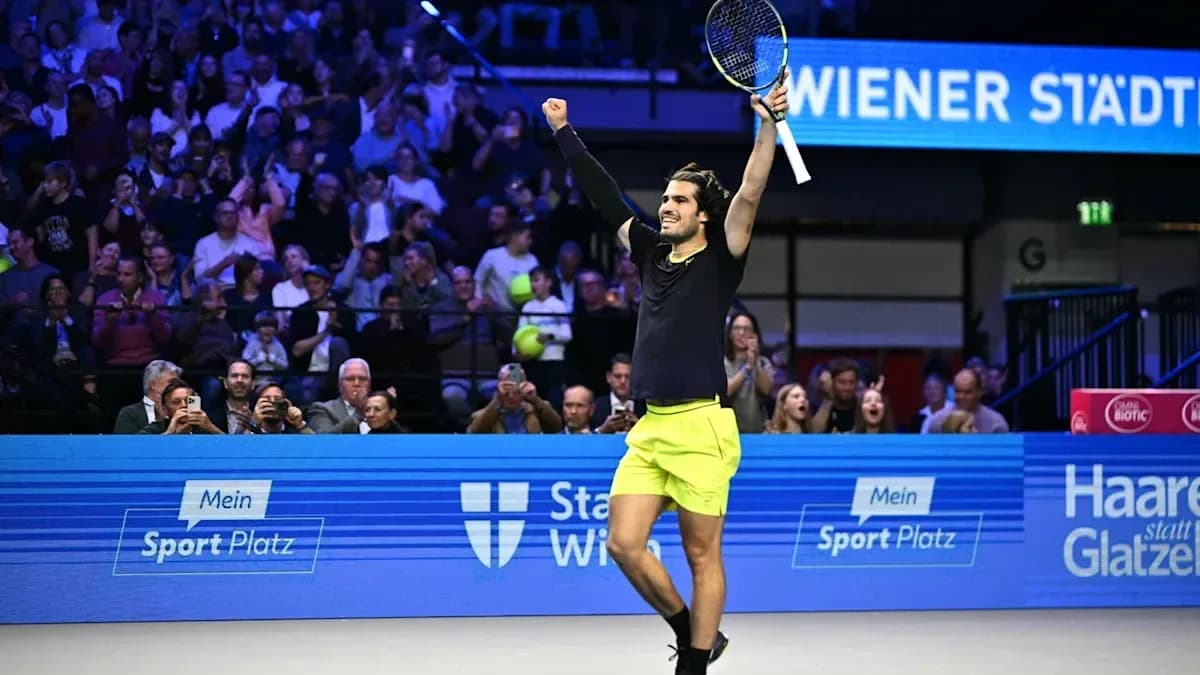
Alexander Zverev: From Nearly Man to Two-Time Major Champion
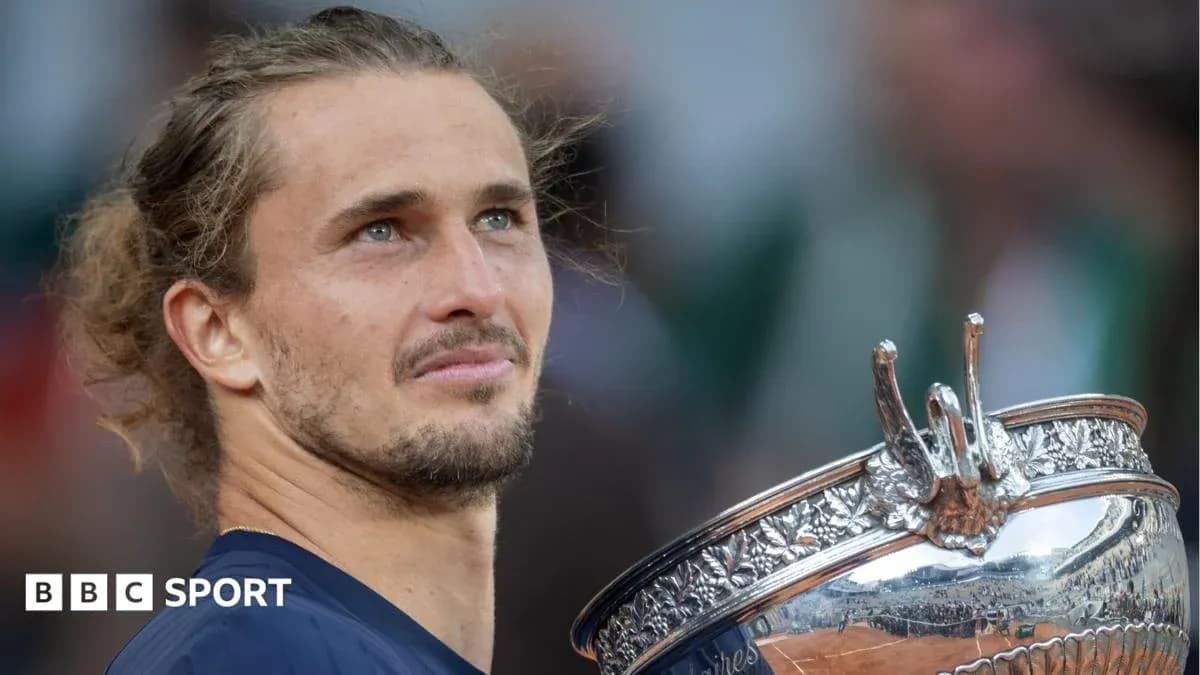
Alexander Zverev used to be the nearly man. The talent was obvious, the trophies plentiful, the promise endless – but the Grand Slams kept slipping away.
He will finish 2026 as something very different: a two-time major champion and a world number one who finally has the résumé to match the reputation.
At 29, Zverev has climbed to the top of the rankings for the first time, becoming the oldest man in more than half a century to make his debut at number one. His surge has been powered by titles at Roland Garros and the US Open, the twin peaks of a season that has redefined his career and his place in the sport.
This is the story of a player who rebuilt his tennis – and of a figure who remains deeply contentious away from the baseline.
From “best without a Slam” to double major champion
For years, Zverev sat in an awkward bracket. Olympic champion. Two-time ATP Finals winner. Former world number two. Three Grand Slam finals, no trophies. His ceiling seemed clear, his barrier psychological as much as tactical.
The most painful scar came in New York in 2020. Two sets up on Dominic Thiem in the US Open final, he tightened, retreated, and watched the title slip away in a fifth-set tie-break, double-faulting twice as Thiem cramped and staggered yet somehow survived. It was the kind of collapse that clings to a career.
The pattern repeated often enough to become a theme. The fearless, first-strike tennis he produced on the ATP Tour rarely translated to the biggest stages. He played within himself when the trophies mattered most.
This year, he swore that version of himself was finished.
Zverev resolved to hit bigger, take more risk, open the court with variety rather than grinding through rallies on autopilot. The promise was easy to make, harder to live with when the scoreboard tightened and the mind wandered back to old failures.
The turning point came far from the spotlight, under the Mallorca sun.
Ten days in Mallorca
In July 2025, Zverev spent 10 days training with Rafael Nadal and Toni Nadal on the Spaniard’s home island. It was part reality check, part reinvention.
"I wanted to see and then hear a new vision of what tennis in their mind looks like – and how my tennis, in their mind, looks like," he said later. Nadal, who had battled him for a decade, could now step back and dissect his game with brutal clarity.
For Zverev, it was a chance to hear from someone who knew exactly what it felt like to stand across the net from him, to sense his patterns, his hesitations, his tells. That perspective, he believed, could unlock the next step.
The effect was not instant calm. Far from it.
In the French Open final against Flavio Cobolli in June, his body betrayed the tension. He cramped, the old doubts lurking at the edges of his mind. But this time, the script flipped. Instead of folding, he attacked.
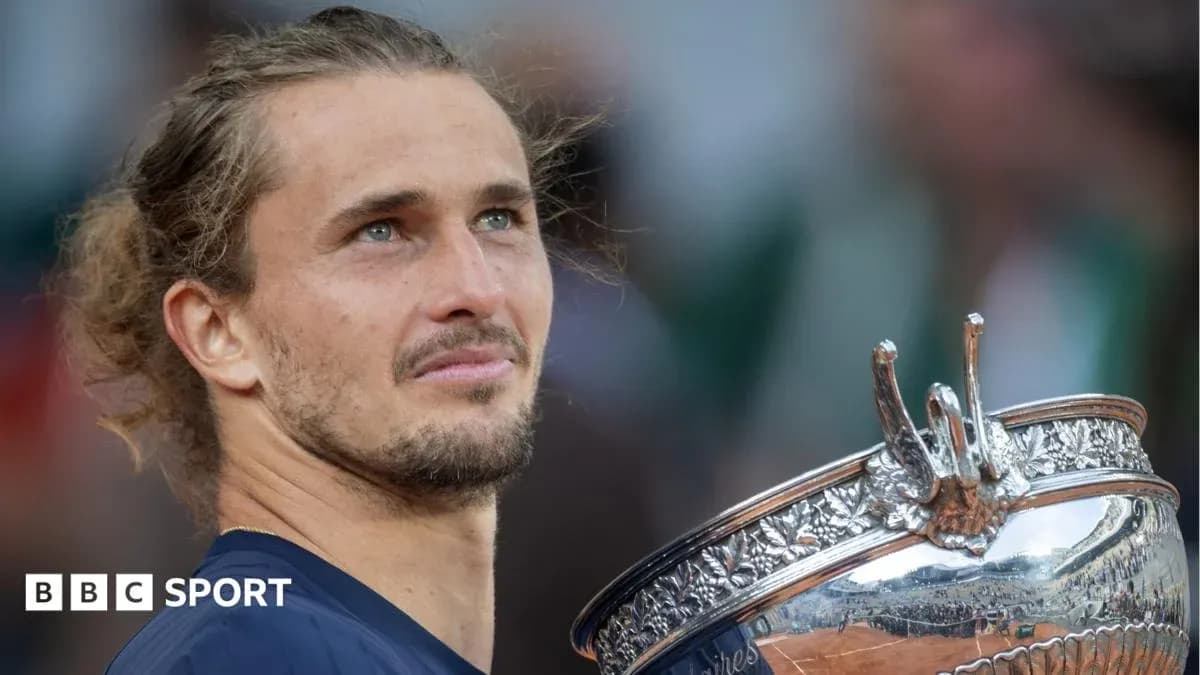
He ran away with the deciding set 6-1, finally lifting the Coupe des Mousquetaires and with it the suffocating weight of being the “best player never to have won a Slam”. The overdue breakthrough was not just a tennis triumph; it was a vindication of persistence for a player who has lived his entire career managing type 1 diabetes, diagnosed at the age of four.
A family business
Zverev’s rise has always been a family project. His father, Alex Sr, has been a constant figure in his coaching box, the steady presence through the highs and humiliations. His older brother Mischa, once a touring pro himself, has joined the team since retiring.
The roles have reversed over the years. Zverev was once the toddler on the side of the court, watching Mischa practise with Andy Murray as a junior. Now Mischa watches him chase history.
Curiously, Zverev says the secret of his working relationship with his father is distance.
They spend "zero time together" off court, he has said, a boundary that keeps the father-son dynamic from suffocating the player-coach one. His parents, both former professionals, pushed him less than most tennis families.
"The big difference with my parents is that they never forced me to do anything," he once recalled. They encouraged him to try other sports – football, field hockey – anything that might spare them from coaching their own son. "They are very smart. They've been through it. They've been tennis players themselves."
The approach has produced a player who, at 29, is finally playing his best tennis when it matters most.
A new rivalry – if he can crack Sinner
Zverev’s 2026 season did not stop in Paris or New York. On the grass of Wimbledon, he produced arguably his most complete tennis of the year, charging into the final with a brand of aggressive, front-foot shot-making that once felt foreign to him on the biggest stages.
He lost that final to Jannik Sinner in four sets on Centre Court, but he did not shrink. He went after his shots, took the ball early, and forced the Italian to earn it. It was the kind of defeat that, paradoxically, confirmed the progress.
Yet one problem refuses to go away. Zverev has now lost 10 matches in a row to Sinner. Carlos Alcaraz, the other pillar of the sport’s new era, also looms over the landscape.
If all three arrive healthy in 2027, the challenge for Zverev is clear: turn a season of personal redemption into a genuine three-way rivalry at the top of men’s tennis. To do that, he will have to carry the same aggression he showed at Wimbledon into every meeting with Sinner and Alcaraz, not just when the mood takes him.
Allegations, investigations and a divided image
For all the on-court success, Zverev’s image remains sharply contested. The new world number one carries more than a racquet bag into every arena.
In October 2020, his former partner Olga Sharypova accused him of physical violence and controlling behaviour. Zverev denied the allegations from the outset, calling them baseless. No criminal case followed, but the ATP Tour launched a major independent investigation, handled by third-party investigators.
In January 2023, the ATP announced it had found "insufficient evidence to substantiate published allegations of abuse". The governing body cited a lack of reliable evidence and eyewitness reports, and said conflicting statements from Sharypova, Zverev and other interviewees meant the claims could not be substantiated.
The case did, however, force the tour to confront its own responsibilities. A director of safeguarding was appointed, and this year a new safeguarding programme came into force, establishing a global framework for dealing with harassment, bullying, domestic violence and other forms of misconduct.
The controversy did not end there.
In October 2023, a German court issued Zverev with a penalty order and fined him 450,000 euros (£392,000) for bodily harm against another ex-girlfriend, Brenda Patea. Zverev denied the allegations and challenged the order, triggering a public trial in Berlin in May 2024.
A week into proceedings, the court terminated the case after a settlement between Zverev and Patea. No verdict was reached. "The decision is not a verdict and it is not a decision about guilt or innocence," the court said. A key factor was the stated wish of the witness – Patea – to end the trial. She has not commented publicly on the settlement.
The timing was stark. On the day the settlement was announced, Zverev reached the French Open final. Earlier in the tournament, he had framed the trial as a chance to prove his innocence. Asked afterwards whether he regretted settling before any formal judgment, he was adamant.
"That's what dropping the case is. That is innocence," he argued. "They're not going to drop the case if you're guilty at the end of the day. I don't know what translations you have, but that's what it means. Done. We move on. I never ever want to hear another question about the subject again. That goes out to everybody."
The questions have not entirely stopped. He was heckled by spectators at the 2025 Australian Open and in Munich, reminders that the court of public opinion rarely closes its doors.
A volatile streak
Zverev’s disciplinary record on court has also raised eyebrows. In 2022, he was thrown out of the Mexican Open in Acapulco after an extraordinary outburst at the end of a doubles match.
Furious with a line call during a deciding tie-break, he repeatedly smashed his racquet into the umpire’s chair, swore at official Alessandro Germani and accused him of ruining the match. One of the four violent swings came close to striking the umpire’s foot.
The ATP found him guilty of a "major offence" and handed him an eight-week suspended ban. The punishment would only activate if he committed further offences involving disrespectful or aggressive behaviour, or verbal or physical abuse, within a year. He avoided triggering the ban.
Zverev later apologised, saying it was "difficult to put into words" how much he regretted the incident. The episode, though, added to the picture of a combustible competitor whose temper sometimes spills beyond acceptable boundaries.
The complicated number one
Strip away the noise, and the numbers say this: Alexander Zverev is now a French Open and US Open champion, a Wimbledon runner-up, and the world’s top-ranked player. He has rebuilt his game, retooled his mentality and finally delivered in the matches that define careers.
Nothing about his story is simple. Not the childhood spent managing type 1 diabetes while climbing the junior ranks. Not the family dynamic that keeps him both close to and distant from his father. Not the allegations, the investigations, the court cases and the heckling.
He stands at the summit of men’s tennis as both standard-bearer and lightning rod – a player who commands the sport’s biggest stages and divides opinion far beyond them.
The next question is not whether Alexander Zverev can win majors. He has answered that. It is whether, with Sinner and Alcaraz closing in and the spotlight fixed firmly upon him, he can stay there.