.svg&w=384&q=75 "logo")
JJ Gabriel: Manchester United's Teenage Prodigy Faces European Giants
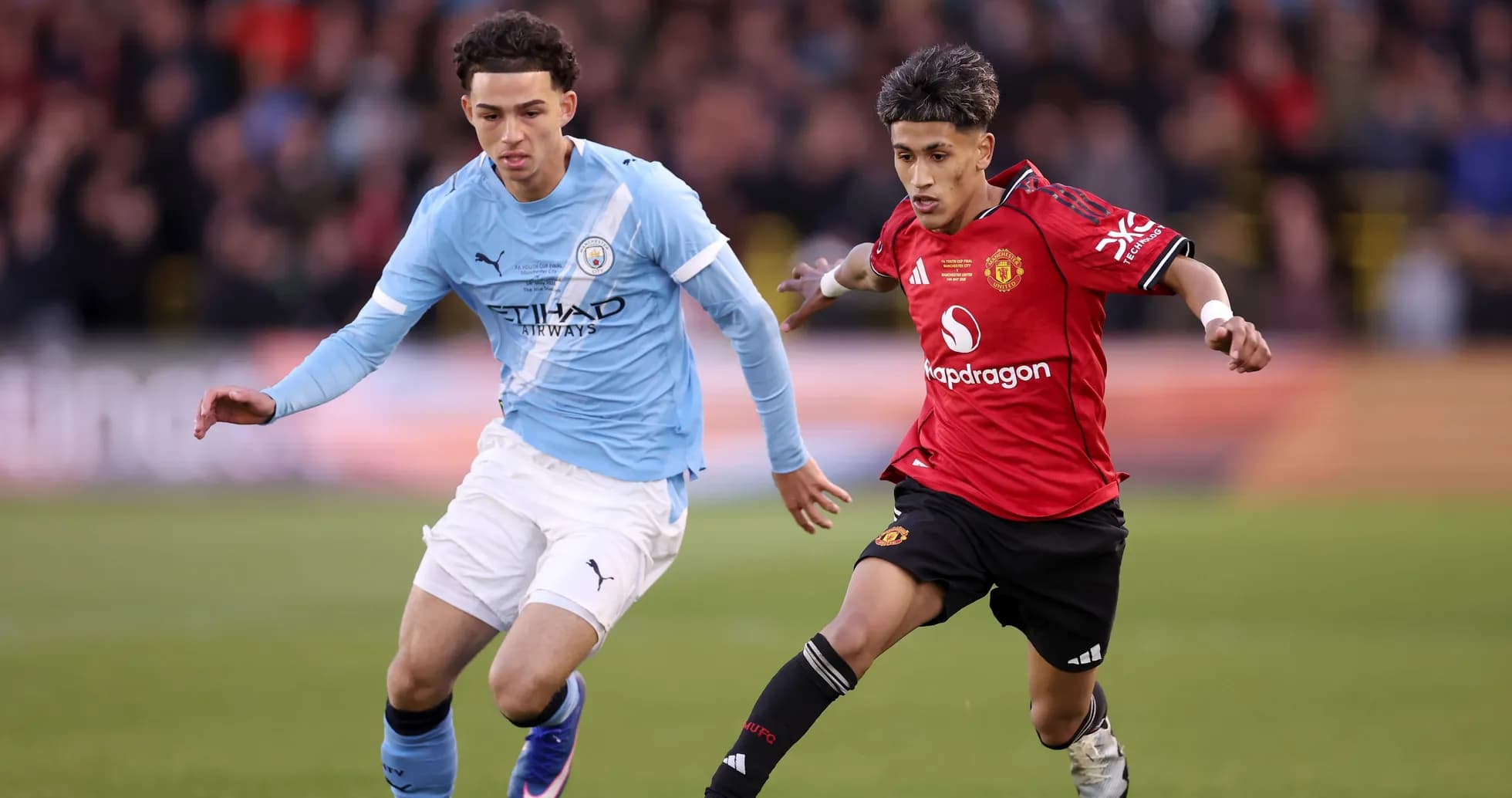
Paris Saint-Germain have moved to the front of Europe’s talent hunt, joining the scramble to prise teenage prodigy JJ Gabriel away from Manchester United after the 15-year-old stunned the club by asking to leave.
The boy they call “Little Messi” has long been regarded as one of the jewels of United’s academy, a player staff believed could one day light up Old Trafford. Instead, his request has detonated inside Carrington at the very moment his star appeared to be rising fastest.
A Record-Breaker Who Wants Out
The timing could hardly be more dramatic. Gabriel has just rattled in a hat-trick in the UEFA Youth League against Azerbaijani side Sabah, underlining why scouts have been circling his name for years. Over the summer, he stepped onto an even bigger stage, becoming the youngest player ever to wear the United shirt in any match when he came on in a 2-1 friendly win over Atletico Madrid in Stockholm.
That cameo in Sweden was supposed to be the first step in a carefully managed ascent. Instead, it may end up as a curious footnote in the story of a wonderkid who walked away before he ever truly arrived.
United, blindsided, are not surrendering easily. The club still have Gabriel under contract for another year and, according to The Athletic, are determined to fight his departure on every front. Sir Jim Ratcliffe has been briefed, and senior figures across the football department are engaged in a full-scale charm offensive to convince the youngster and his family to stay.
Gabriel, though, holds a key piece of leverage. He has the right to request termination of his deal, though any exit would still require mutual agreement. For United, that clause has suddenly gone from a legal technicality to a looming threat.
A Birthday That Changes Everything
All eyes now fix on one date: 6 October. Gabriel turns 16 that day, and with it, the legal landscape shifts.
Under British law, a 16-year-old can leave England more easily if he holds an Irish or Cypriot passport. Without either, he would typically need to wait until he turns 18 to secure such a move.
Gabriel’s case sits right in that grey area. His father is a former Irish international, his mother of Cypriot origin. That heritage opens the door to a ruling that could free him to move abroad as early as this year. It is precisely why his situation has become one of the most closely watched youth sagas in Europe.
Clubs are not just tracking his goals and assists; they are tracking his paperwork.
Europe’s Giants Circle
The list of suitors reads like a who’s who of European royalty. Chelsea, Bayern Munich, Real Madrid and Barcelona are all monitoring developments, with enquiries already made about both his contractual status and his dissatisfaction at United.
Into that mix now steps Paris Saint-Germain. The Athletic reports that PSG are pushing hard, fully aligned with a strategy that has shifted towards hoovering up elite young talent to complement their star power. For a club intent on building the next generation in Paris, landing a 15-year-old English phenom fits the brief perfectly.
Yet the French champions are not alone, and perhaps not even leading.
Rumours from England suggest Real Madrid may be the closest to securing his signature. Los Blancos have made a habit of stockpiling the world’s brightest teenagers, and they see Gabriel as another potential gem for their Castilla side. The plan would be clear: drop him into that fiercely competitive environment, let him grow in the shadow of the Bernabéu, and see if “Little Messi” can one day handle the real thing.
Crucially, the youngster is said to be open to the idea. For any teenager, the pull of Madrid – of following a path trodden by some of the game’s greats – is hard to ignore.
United’s Fight Against the Tide
Back in Manchester, the mood is one of defiance mixed with unease. United still believe they can sell Gabriel on the vision of becoming the next homegrown hero at Old Trafford, the latest in a line that stretches from the Class of ’92 to the present day.
They can offer minutes, a clear pathway, the comfort of home. What they cannot easily match is the glamour and financial muscle of Europe’s giants, nor the fresh start that a teenager and his family might crave if trust has eroded.
The next few weeks will be decisive. Paperwork, persuasion, promises of game time and development plans will all be thrown onto the table. Gabriel, barely old enough to drive, finds himself at the centre of a tug-of-war that could shape not just his future, but the way English clubs protect their brightest kids.
If United lose “Little Messi” before he has even played a competitive senior minute, the question will linger long after he has gone: how did they let another generational talent slip through their fingers?