.svg&w=384&q=75 "logo")
Team USA’s World Cup Win Shines Amidst NFL Dominance
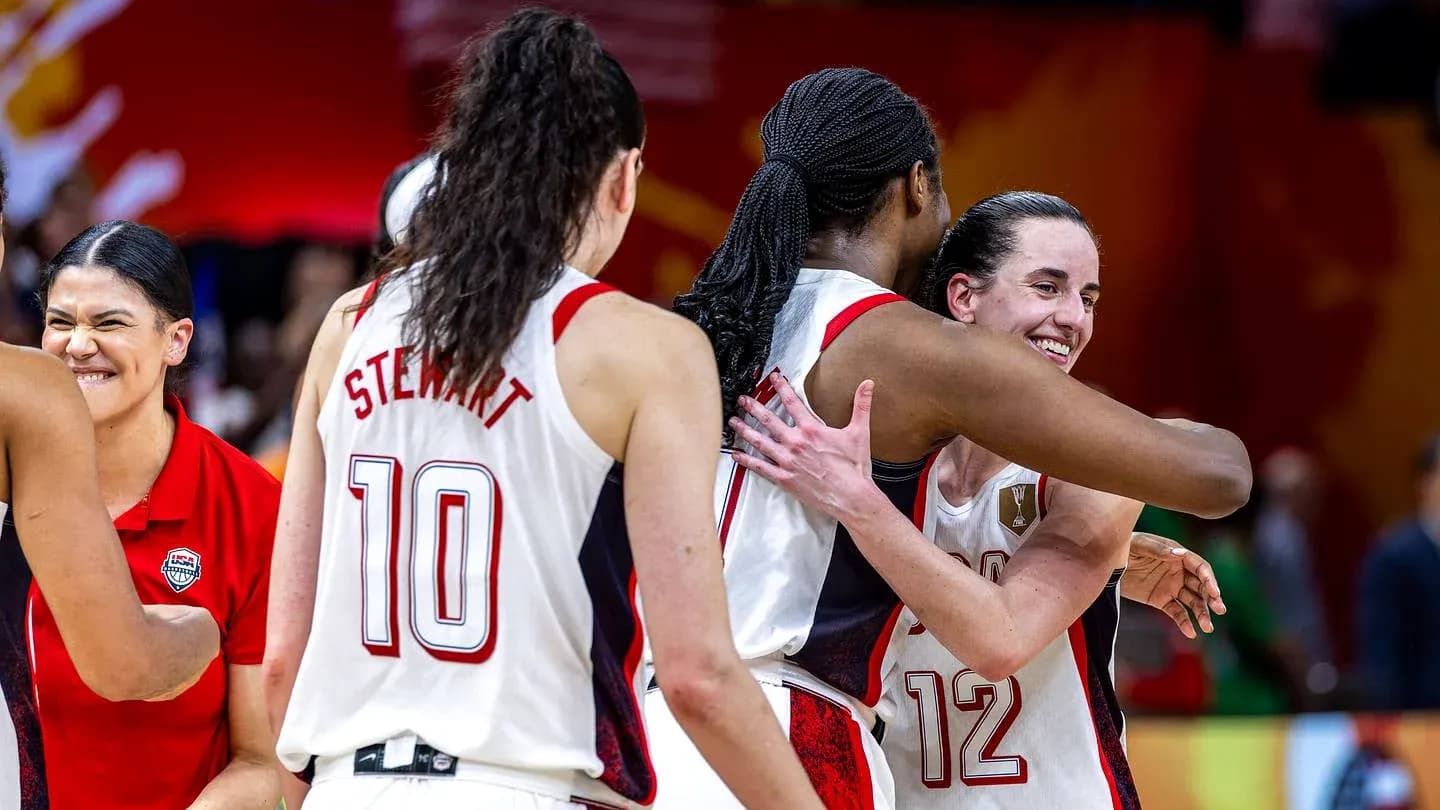
The numbers are in, and they tell a story that stretches well beyond a box score in Sydney or a medal ceremony on foreign soil.
Team USA’s 97–79 win over France in the FIBA Women’s World Cup final pulled in an average of 1.2 million viewers across HBO Max, TNT, and truTV. That’s not a gentle bump. That’s a jolt: up 158% from the 2022 final, and an eye-popping 750% from the 2018 title game.
For a women’s basketball game tipping off in the middle of an NFL Sunday, those are not just respectable figures. They’re a statement.
A Final Overshadowed, But Still Rising
On paper, the knockout rounds should be the ratings crescendo of any tournament. Bigger stakes, better opposition, medals on the line. Yet two of Team USA’s group-stage games actually outdrew the final.
The near-upset against Italy averaged 1.3 million viewers, making it the most-watched game of the tournament. The final group clash with Czechia matched the final’s 1.2 million, edging it slightly in the pecking order. Only those two games ranked higher than the France showdown, which still finished as the third most-watched FIBA Women’s World Cup game ever.
The semifinal against Spain landed in rare air as well. That game averaged 938,000 viewers, enough to become the fourth most-watched contest in tournament history. Four historic viewership marks. One tournament. One team.
So why did the final and semifinal trail some of the earlier games? The answer sits thousands of miles away, on American football fields.
Running Into the NFL and College Football Wall
The World Cup final tipped off right in the heart of Week 1 of the NFL regular season, the most powerful ratings machine in American sports. Every network, every screen, every highlight show was already jammed with football. The U.S. Open men’s final was unfolding at the same time, too, featuring American Ben Shelton and drawing its own share of national attention.
Any event trying to breathe in that kind of traffic jam is going to feel the squeeze.
The semifinal against Spain didn’t get much relief. It fell squarely in the middle of a packed college football Saturday, another ratings juggernaut that dominates the fall calendar. The overlap was impossible to ignore, and plenty of media voices did anything but ignore it, openly criticizing the scheduling that shoved the FIBA Women’s World Cup’s marquee games into the teeth of America’s two biggest football days.
They had a point. The tournament’s most important moments were forced to fight for oxygen.
And yet, even with that, the audience showed up.
A Different Kind of Breakthrough
Strip away the NFL helmets and college marching bands for a moment, and the picture sharpens.
A women’s basketball final, played overseas, going up against Week 1 of the NFL and a Grand Slam tennis final, still averaged more than a million viewers. That’s not a niche sport sneaking onto a quiet night. That’s women’s basketball walking straight into the busiest weekend on the U.S. sports calendar and refusing to disappear.
It reflects two things: the broader growth of the women’s game, and the magnetism of this particular Team USA group.
Caitlin Clark sits at the center of that surge. She is the headline act, the one name that cuts through even for casual fans. But she’s not alone. Paige Bueckers and Angel Reese carry their own gravitational pull, their own followings, their own ability to turn a neutral viewer into an invested one.
This World Cup felt like a preview. Not of what women’s basketball might become, but of what it is already turning into—appointment viewing, even when the schedule does it no favors.
The ratings prove it: people went looking for this team.
Eyes on Paris 2028
The numbers from this World Cup won’t topple the NFL. They don’t need to. What they show is something subtler and, for the sport, far more promising: a young, star-driven U.S. core that can command attention in the harshest possible conditions.
Clark, Bueckers, Reese—names that already move the needle domestically—just got a global stage and delivered both on the floor and in the ratings column. This tournament was a glimpse, not the finished product.
Paris 2028 looms in the distance, with a bigger stage, a friendlier time slot for American audiences, and four more years of storylines, rivalries, and highlight reels ahead.
If this is what they can draw in the shadow of the NFL and college football, what happens when the spotlight is finally theirs alone?