.svg&w=384&q=75 "logo")
Lindy Waters III Joins Beijing Ducks After Spurs Tenure
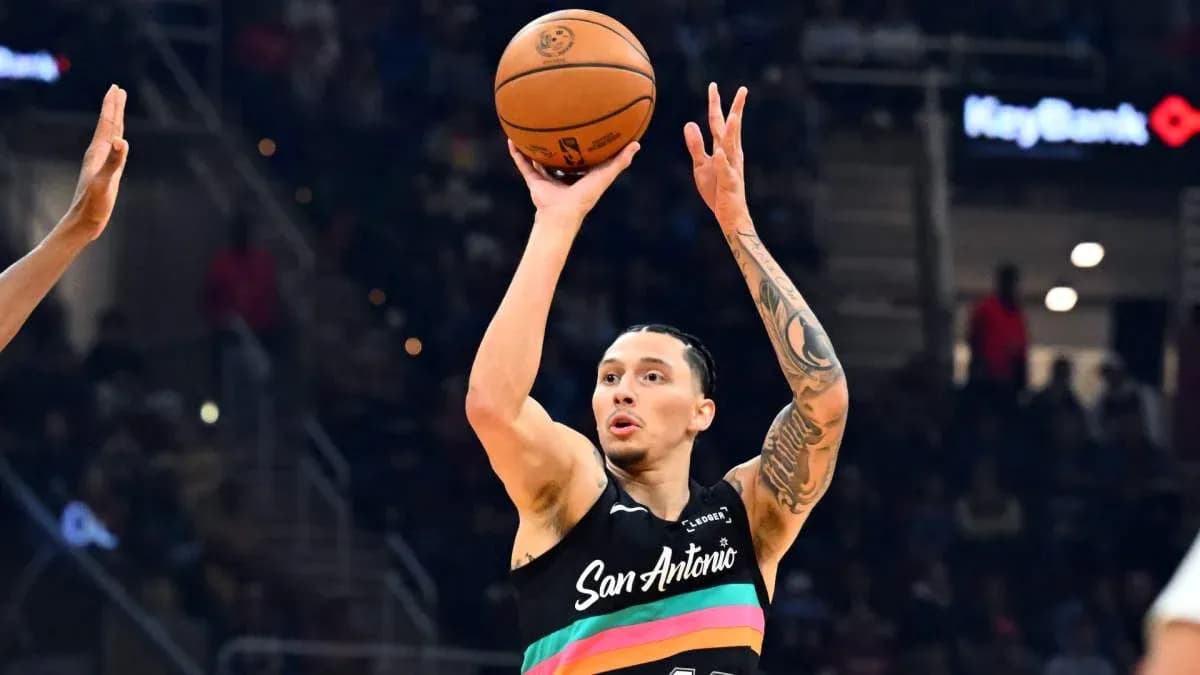
Lindy Waters III is trading NBA arenas for one of the loudest stages in Asian basketball.
The former San Antonio Spurs guard has signed with the Beijing Ducks of the Chinese Basketball Association, ending a five-year run in the league and opening a new chapter overseas. Brett Siegel of ClutchPoints first reported the move, noting that Waters is “leaving the NBA to join the Beijing Ducks in the CBA.”
In Beijing, Waters will link up with another former NBA name, JaKarr Sampson, on a Ducks team that expects to contend. They finished fourth in the CBA last season at 29–13, pushed through to the semifinals, and only bowed out to the eventual champions, the Shanghai Sharks. This is not a soft landing spot. It’s a pressure job on a team that believes it’s close.
For Waters, it’s another unconventional turn in a career that’s never followed the easy path.
From Undrafted to Five NBA Seasons
After four seasons at Oklahoma State, Waters went undrafted in 2020. No guaranteed contract. No lottery-night celebrations. He started instead with the Enid Outlaws in The Basketball League, grinding for a shot most players never get.
Oklahoma City finally opened the door.
The Thunder brought him in and used him as a swing piece between their NBA roster and the Oklahoma City Blue in the G League. Over three seasons with the Thunder, Waters carved out a niche as a floor-spacer and depth wing, averaging 5.3 points and 1.8 rebounds across 104 games. Nothing flashy, but reliable minutes on a team constantly shuffling its rotation.
Golden State came calling in the summer of 2024. On a Warriors team built around movement and shooting, Waters found a more defined role. He appeared in 38 games, starting nine, and posted 5.5 points, 2.5 rebounds and 1.1 assists per game. For a stretch, it looked like he might lock himself in as a steady rotation piece.
Then came the trade.
Midway through the 2024–25 season, Waters landed with the Detroit Pistons as part of the five-team Jimmy Butler blockbuster. In Detroit, the opportunities shrank. In 14 games, he averaged 3.4 points and 1.0 rebound, fighting for minutes on a roster in flux.
The Spurs picked him up last summer, offering a fresh chance and a defined role on a team quietly building toward contention. Waters suited up in 40 games for San Antonio, mostly off the bench, averaging 2.4 points in just 7.1 minutes per night. The numbers were modest, but he stayed in the mix on a deepening roster.
His most meaningful stage with the Spurs came in the postseason. As San Antonio surged all the way to the 2026 NBA Finals, Waters appeared in nine playoff games, averaging 1.7 points in 3.8 minutes. He wasn’t a headliner, but he was part of a group that pushed through the West and fell just short of the title.
This summer, the Spurs chose not to bring him back. Beijing moved quickly.
Spurs Stay the Course After Finals Run
San Antonio’s decision not to re-sign Waters fits into a broader offseason theme: tweak, don’t tear down.
Fresh off a Finals appearance, the Spurs front office stayed close to the core. The centerpiece move came early — a five-year, $252 million extension for Victor Wembanyama, the franchise’s towering axis and the reason expectations have accelerated.
They also locked in familiar faces around him. Harrison Barnes, Julian Champagnie and Jordan McLaughlin all received new deals, giving Gregg Popovich continuity in key rotation spots.
The one notable outside addition: Tobias Harris on a two-year contract. The veteran forward arrives with a clear mandate — push Champagnie for the starting power forward role and give Wembanyama a steady, experienced frontcourt partner. That position had been circled as a priority area, and San Antonio didn’t wait long to address it.
The draft brought more frontcourt and backcourt depth. The Spurs used their first-round picks on Jayden Quaintance and Tarris Reed Jr., then added Ja’Kobi Gillespie and Maliq Brown in the second round. It’s a blend of size, energy and upside designed to keep the roster young, competitive and flexible around Wembanyama’s prime.
In that crowded landscape, a veteran depth wing like Waters became expendable.
Now, instead of fighting for fringe minutes on a Finals hopeful, he steps into a prominent role on a CBA contender. Beijing gets a 6-foot-6 shooter with NBA experience and a history of adapting to whatever role he’s handed.
For Waters, the journey has already taken him from Enid to Oklahoma City, from the Warriors’ motion offense to Detroit’s rebuild, from a Spurs Finals run to one of China’s biggest clubs.
The next question is simple: how loud can his game sound when he’s no longer just a supporting note?