.svg&w=384&q=75 "logo")
Kawhi Leonard Returns to Toronto: A Champion Comes Home
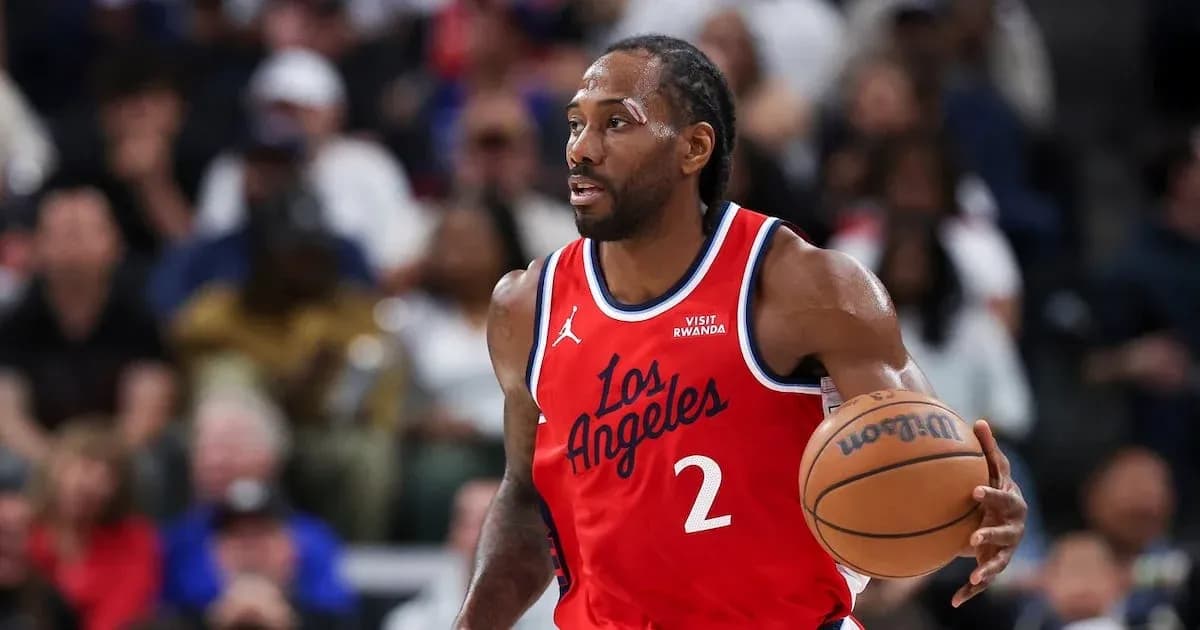
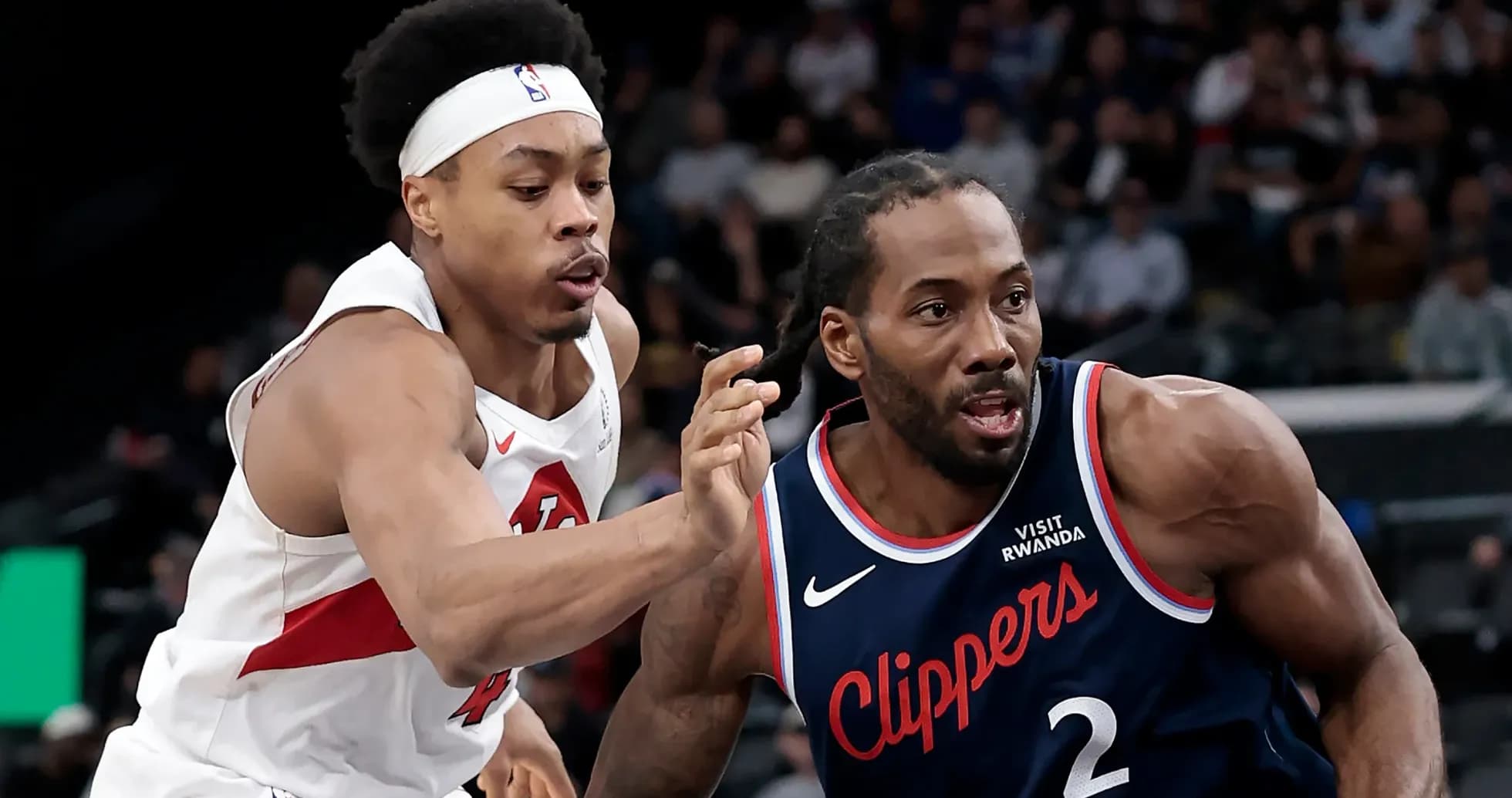
Kawhi Leonard walked back into Toronto like a man stepping onto a familiar stage, not chasing ghosts, not chasing headlines — just ready for a second act.
The blockbuster deal that sent him from the Los Angeles Clippers back to the Raptors finally became official this week, closing the book on an uncomfortable investigation into salary cap circumvention during his seven-year stay in L.A. The league hit Leonard with a $700,000 fine for his role, a sizeable number even for a superstar, but the real impact of the ruling is where he’ll spend his twilight prime.
Back where he became a legend.
A Champion Comes Home
Toronto has waited years for this. Leonard didn’t just pass through the city in 2018-19; he rewrote its basketball history. One season, 60 regular-season games, 26.6 points, 7.3 rebounds, 3.3 assists, 1.8 steals, and a cold-blooded playoff run that ended with the Raptors’ first and only NBA title. He averaged 30.5 points across 24 postseason games and walked away with his second Finals MVP after toppling the Golden State Warriors in six.
That version of Leonard turned a hockey town into a basketball fortress.
So when he appeared in the latest episode of Bell’s Open Gym, strolling into the Raptors’ practice facility, shaking hands with head coach Darko Rajaković and staff, it didn’t feel like a ceremonial visit. It felt like a reintroduction.
He hasn’t had the full media circus yet. No packed podium, no extended Q&A. But on Open Gym, Leonard made one thing clear: this move isn’t about ring-chasing.
“I didn’t want to put on a thousand jerseys,” he said. The line landed like a quiet jab at the era of constant movement. “The city took a liking to my family, I took a liking to the city. Really enjoyed it. My son was born here and he’s been asking me forever when he’s going to come back. So now he’s back and he’s able to see it rather than me telling him great stories that happened.”
For Leonard, this isn’t nostalgia. It’s unfinished business.
A Different Kawhi, Same Edge
His Clippers chapter never matched the hype. Injuries, stop-start seasons, and rosters that never quite fit turned a superteam project into a long disappointment. Yet buried in that stretch was a reminder of who he still is. In 2025-26, Leonard quietly put together a superb year: 27.9 points, 6.4 rebounds, 3.6 assists across 65 games. The explosiveness may not be what it was in 2019, but the craft, the strength, the timing — they’re all still there.
Toronto, meanwhile, finally climbed out of its own lull. After three straight years without a playoff appearance, the Raptors went 46-36 last season and pushed the Cleveland Cavaliers to a Game 7 in the first round. They weren’t contenders yet, but they were no longer drifting.
That caught Leonard’s eye.
During his sit-down with Rajaković, he didn’t walk in like a savior. No declarations, no “my team” rhetoric. Just a veteran star reading the room.
“I’m not here to take over anything,” he told the coach. “I want to help your vision. Help Scottie [Barnes]. I just want to win. If it’s Scottie’s team, it’s his team. I just want to do whatever it takes to help you guys win.”
For a franchise that has spent the past few years reshaping itself around Scottie Barnes, that sentence matters. Leonard isn’t returning to reclaim the throne. He’s stepping in beside the new face of the franchise.
Barnes’ Team, Leonard’s Standard
Leonard has watched Barnes closely. So has the rest of the league. Over the last two or three seasons, Barnes has gone from intriguing prospect to All-Star, the kind of all-around force that can anchor a franchise for a decade.
“You’ve got Scottie Barnes, [he] showed his talents over the last two, three years. He’s become an All-Star. He’s going to be a problem this next coming year,” Leonard said.
That’s not empty praise. Leonard knows what it takes to be “a problem” in the East. He’s been that player, the matchup nobody wants, the system-breaker.
And he’s clearly done his homework on the rest of the roster.
“I love the young guy [Collin Murray-Boyles]. He brings a lot of energy to the team, shows relentlessness on the court, not scared of nobody. [Jamal] Shead is good. [He’s] a Pitbull. He looks like he wants to win every game. I think we got a good chance and you never know what could happen.”
That’s the competitive edge talking. Leonard doesn’t do big speeches, but he doesn’t hide his ambition either.
“You know, I’m competitive. I think we’ve got a great chance. This group played great last year. I watched them a lot.”
The message is simple: he’s not dropping in blind. He’s been tracking this team, its growth, its identity. Now he wants to plug into it.
Raptors Back in the Conversation
With Leonard back in the fold, the Raptors instantly jump a tier. Not just in talent, but in how they’re perceived. Around the league, the conversation has shifted quickly: Toronto is no longer a plucky up-and-comer; it’s a legitimate threat in a tougher Eastern Conference.
They’ll have to go through heavyweights. The defending champion New York Knicks. A LeBron James-led Philadelphia 76ers team that refuses to fade. Deep, hungry rosters everywhere you look.
But Leonard changes the math. He changes how teams scout, how coaches game-plan, how late-game possessions feel in May and June.
He also changes the stakes for the front office. Leonard has one year left on his three-year, $149.5 million deal, and talks are already reportedly underway on an extension. Toronto isn’t treating this as a one-year nostalgia tour. They’re trying to lock in a partnership between their past and their future.
The last time Kawhi Leonard wore a Raptors jersey, a city exploded into a championship parade. This time, the story is different. He’s older. The roster is younger. The East is stronger.
But the question hanging over this second act is just as sharp: can Toronto, with Leonard mentoring Barnes and driving a rising core, crash the top of the conference again — and force the league to relive a familiar nightmare?