.svg&w=384&q=75 "logo")
Wasim Akram's Take on India vs Pakistan: It's Just a Game
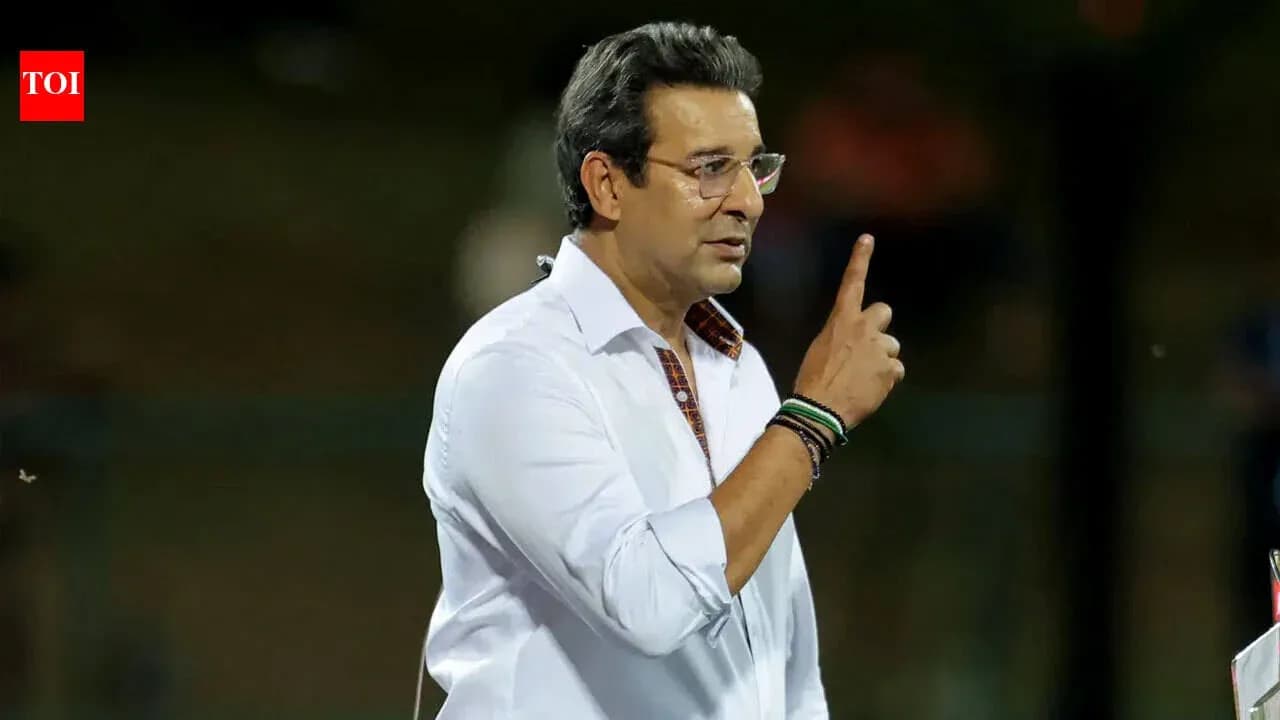
Wasim Akram has lived the full weight of India–Pakistan cricket. Packed stadiums, deafening noise, pressure that makes even legends tighten up. He has seen it all, and he has had enough of one thing.
The baggage.
The former Pakistan captain has urged fans on both sides to stop dragging history and politics into a sport he insists should be treated for what it is — a game, nothing more, nothing less.
“People have too much time. Why can’t they understand? It’s only a frikkin game,” Akram said on the 1 Mint podcast, cutting straight through the sentiment that often engulfs the rivalry. “At the end of the day, it’s just a match. Somebody has to win, somebody has to lose. And move on to the next one.”
That last line is his mantra. Win, lose, move on. Simple. The problem, he believes, lies far away from the pitch.
“Revenge and all is so 1970,” he said, dismissing the idea that cricket should carry the weight of “what happened many moons ago”. For Akram, the cycle of outrage and point-scoring that erupts online around every India–Pakistan clash comes from one place: “It’s the classic ‘an empty mind is a devil’s workshop’ thought process.”
In an era where every boundary, every dropped catch, every handshake is clipped, shared and weaponised, Akram’s voice cuts against the noise. He has played in Sharjah thrillers, World Cups, high-voltage Tests in front of hostile crowds. Yet his message now is stripped of drama: one side wins, the other loses, and both should walk away.
The Irfan Pathan connection
The conversation turned lighter when Akram spoke about a player who once idolised him and later became one of India’s most effective weapons against Pakistan — Irfan Pathan.
“Irfan met me in 2004 on his first tour to Australia; I was commentating. He was a big fan. Grew up watching us,” Akram recalled. A young left-armer with a whippy action, Pathan arrived with the weight of comparisons already building. Pakistan had produced a line of great left-arm quicks. Akram was the reference point, whether he liked it or not.
“I gave him a few tips here and there, but he did well early on in his career,” Akram said. Pathan’s action, he pointed out, didn’t need rebuilding. “His action was similar to mine from the very beginning. But when players ask you about something, what you tell them is mostly about the mindset.”
The advice was not about changing who Pathan was. It was about sharpening what he could do.
“Action and all is fine, because at that stage, you have reached that level where you’re representing the country,” Akram explained. The real lessons came in the details: “Things like wrist position and how to suss out a batsman. When to use variations, when not to.”
That, from one of the greatest fast bowlers the game has seen, is the core of elite craft — knowing not just how to bowl, but when, and why. “So yeah, it was good fun. Irfan is a good boy; he still keeps meeting me,” Akram added.
From fan to tormentor
Pathan took those lessons and turned into a serious problem for Pakistan’s batting line-ups.
Across formats, he claimed 67 wickets in 36 internationals against Pakistan — 27 in Tests, 34 in ODIs and six in T20Is. The numbers tell one story. One spell tells another.
Karachi, 2006. First over of the Test. New ball in hand. Pathan ripped through Salman Butt, Younis Khan and Mohammad Yousuf to become only the second Indian to take a Test hat-trick, and he did it in the opening over of the innings. It was a searing burst, the kind that stays in the rivalry’s folklore.
Pathan’s ability to swing the new ball, to bend it late and make it talk, fed the comparisons with Akram that had followed him from the start. Over time, his batting developed too, and he grew into a genuine all-rounder. But against Pakistan, it was the ball that spoke loudest.
The modern rivalry: on the field, and on the phone
Pathan has not exactly gone quiet in retirement either. Now a prominent voice on television and social media, he has been one of the more outspoken former Indian cricketers, especially in the aftermath of big India–Pakistan matches. At times, that has included sharp comments aimed at Pakistan and its players.
Akram, though, handled it with a mix of humour and realism.
“It’s a different thing that he keeps tweeting some or the other thing against Pakistan,” he said with a laugh. “But our fans are ready too. They don’t have the tendency to ignore either. They just have to reply.”
There lies the other battlefield — not Karachi, Kolkata or Melbourne, but timelines, comment sections and quote tweets. Every remark becomes a spark. Every spark finds fuel.
Akram doesn’t pretend the rivalry will ever be gentle. India vs Pakistan will always carry an edge, always stir emotions. What he wants is a line. A boundary that fans refuse to cross.
For him, the principle is non-negotiable: it begins as a game and should end as one.
“Somebody has to win, somebody has to lose. And move on to the next one,” he repeated.
The question now is whether anyone listening is ready to do exactly that.