.svg&w=384&q=75 "logo")
Towhid Hridoy's Historic 350* in Potchefstroom: A New Era for Bangladeshi Cricket
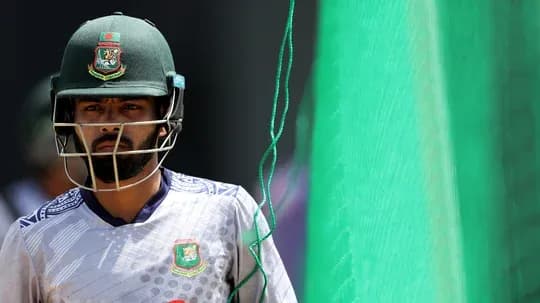
In Potchefstroom, a ground stitched into his cricketing memories, Towhid Hridoy walked in as a late addition and walked out a record-breaker.
Unbeaten on 350 against South Africa A. The highest first-class score by a Bangladeshi batter. A triple hundred that wiped out Tamim Iqbal’s 334* and Raqibul Hasan’s 313* from the top of the list.
This was not supposed to be his tour.
He boarded the flight to South Africa almost as cover – drafted into the Bangladesh A squad alongside Nurul Hasan, Rishad Hossain and Mohammad Saifuddin after injuries and visa problems thinned the original group. The board needed numbers. Hridoy became far more than that.
At the airport in Dhaka, he did not sound like a man obsessing over four-day cricket or a Test recall. He spoke instead about conditions, white-ball plans, and a World Cup horizon.
“The preparation is very important and as we have a national team tour and the World Cup (ODI), will try to prepare for it,” he told reporters before disappearing into departures. For him, South Africa was a dress rehearsal for a white-ball assignment later this year and the ODI World Cup next year, not an audition in flannels.
That mindset may have set him free.
From discarded to undeniable
Hridoy’s relationship with Test cricket has been brief and bruising. He waited more than three years after his white-ball debut to finally pull on the whites. Three days later, it was over.
One Test. One failure in Harare against Zimbabwe. One swift exit.
The debate around him hardened quickly. Some said he had been thrown in too early. Others circled his technique and stamped him as a white-ball specialist. Backing for his place in the Test side was thin, and the door quietly closed.
The national selection panel has often stressed that breaking into the Bangladesh side is tough, but once in, a player will be given time to prove himself across formats. That promise never quite reached Hridoy. His Test career was judged almost before it had begun, and he learned not to think too far ahead when it came to red-ball ambitions.
So he arrived in Potchefstroom with little baggage, at least publicly. No grand statements about reviving a Test career. No talk of redemption. Just a young batter looking to get used to South African pitches before the white-ball series against the Proteas and the World Cup beyond that.
Then came the innings that changes conversations.
A triple hundred that demands answers
Becoming only the third Bangladeshi to score a first-class triple hundred would have been enough to grab attention. Going past Tamim and Raqibul to stand alone at the top of the all-time list turns that attention into scrutiny.
Selectors cannot brush aside 350* in an away A game, especially not in South African conditions and especially not from a player previously dismissed as a limited-overs option. It forces a rethink.
Yet Hridoy himself stayed measured when the inevitable questions about Test cricket followed his marathon knock.
“This is not entirely my call, as a professional player I always want to do well, I have said this on many occasions before, how many matches I will play for the national team will depend on the selectors, if I get the opportunity I will try to do well,” he said after the game.
No demands. No ultimatums. Just a reminder that the decision now lies elsewhere.
The irony is sharp. The less he worried about his red-ball future, the better he batted. Free of the fear of another quick rejection, he expressed himself fully, stitched together a monumental innings and showcased a red-ball ceiling that many doubted he possessed.
The real test starts now
Hridoy will inevitably dominate discussion when Bangladesh’s next Test squad is drawn up. A 350* away from home is not a number you quietly file away. It is a statement, and it sits on the selectors’ table in bold print.
But the real challenge for Bangladesh cricket goes beyond simply squeezing his name into a squad list.
If they bring him back, they must commit to him. He cannot be the batter who is handed one Test and then discarded again at the first sign of struggle. This innings in Potchefstroom should not become just a quirky entry in the record books; it should be the start of a proper examination of his red-ball potential.
For now, Hridoy has done his part. He came as cover. He left as a record-holder.
The next move belongs to the selectors: will they treat this as a one-off explosion, or the foundation of a Test career that was cut short before it ever truly began?