.svg&w=384&q=75 "logo")
Pakistan's Chaos in Birmingham: Hesson's Challenge
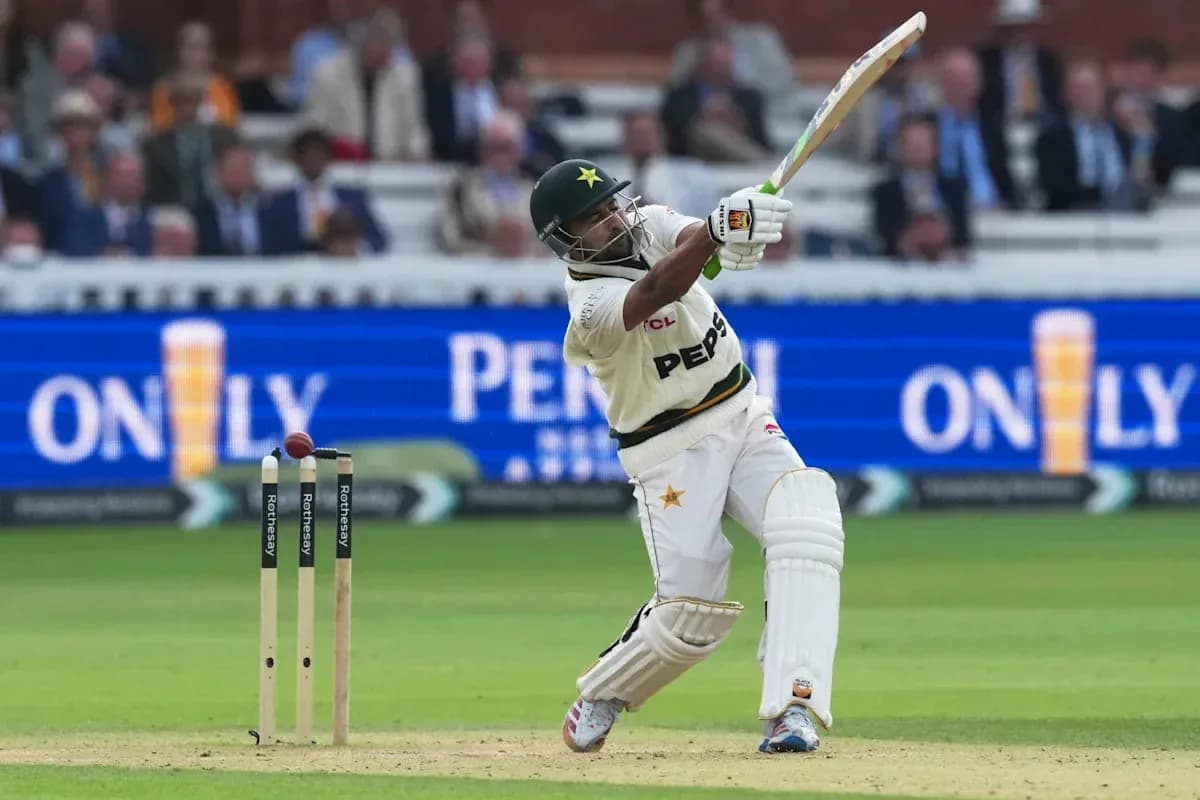
Mike Hesson has walked into many dressing rooms in his coaching career. Few will have felt like this.
Players coming, players going, bags being packed in hotel corridors, new faces arriving with jet lag and hope in equal measure. Pakistan, a team long accused of thriving on chaos, have leaned into it again — this time midway through a Test series in England.
Hesson, the interim red-ball coach parachuted in for a dead rubber at Edgbaston next week, is still catching his breath.
“The last couple of days have been challenging for being in a hotel with some players coming, some players going and then the arrival of everyone,” he told reporters in Birmingham. Then came the line that summed it up. “The guys are probably more used to a little bit of chaos than I am.”
Seven players dropped. The Test coach removed. The bowling coach changed. All after two brutal defeats at Lord’s and Headingley that left Pakistan 2–0 down in a three-match series and searching, once again, for an identity.
A Knee-Jerk Overhaul
The Pakistan Cricket Board did not nibble at the edges. It tore the thing up.
Sarfaraz Ahmed, the Test coach, is out. Hesson, already the white-ball head coach, is in charge of the red-ball side for the third Test. Ashley Nofke replaces Umar Gul as bowling coach. On top of that, seven players have been sent home and a clutch of uncapped names have been summoned from around the cricketing world to plug the gaps.
Wicketkeeper-batter Mohammad Rizwan, opener Imam-ul-Haq and Salman Ali Agha — who captained in the first Test — were among the first to exit before Hesson even landed in the UK. Fast bowler Khurram Shahzad and left-arm spinner Ali Usman, both used in the opening two Tests, have also been released. Allrounders Aamir Jamal and Mohammad Awais leave without a ball faced or bowled in this series.
By the time Hesson took formal control, the exodus was already well under way.
“When I took over, three players had already left the squad, Rizwan, Imam and Salman Ali Agha,” he said. “I don't think anyone wants these to happen in the middle of a series, clearly not.”
The changes have drawn fire back home. Former stars Shahid Afridi and Shoaib Malik have questioned the timing and the logic. Inside the PCB, though, there is no hint of regret. Selector Aaqib Javed and chairman Mohsin Naqvi have defended the mid-series shake-up as necessary after the hammerings in London and Leeds.
Hesson’s Task: Find the X-Factor
Hesson was not even supposed to be here in this capacity. He had been in Japan preparing Pakistan’s white-ball side for the Asian Games and was only due in the UK for a ceremonial audience with King Charles last Wednesday. Instead, he got a phone call and a new job title.
The remit is clear: stop the bleeding, restore some pride, and rediscover the old Pakistan traits that England have not yet had to face in this series.
“From my perspective, it's about putting a balanced squad together, not only for this test, so we actually have some variety in our attack,” Hesson said. “Pakistan is known for the pace, unusual actions, mystery spin — we haven't really been able to present any of that.”
That is the heart of his argument. Pakistan have looked blunt. Predictable. The selectors have responded by gambling on rawness and range.
Five uncapped players come into the squad: spin allrounder Arafat Minhas, left-arm quick Mohammad Imran Jr., wicketkeeper Saad Baig, allrounder Mohammad Imran and fast bowler Razaullah. Saim Ayub and Abdullah Fazal are also flying in, with only 10 Tests between them.
It is a lot of inexperience. It is also a lot of possibility.
“From a bowling point of view, we have got to find some variety,” Hesson said. “We need a little bit of an X-Factor in there as well to try and create some opportunities … to support Mohammed Abbas who's done incredibly well.”
Abbas, relentlessly accurate and quietly effective, has been one of the few constants. Around him, Hesson wants unpredictability, the kind of angles and spin that once made Pakistan the most awkward assignment in Test cricket.
Learning Names on the Fly
The speed of the transition is jarring. Hesson is learning on the job, and learning names in the team hotel.
“I know all the players that are here now,” he said. “Some I've worked with a bit, some I've said hello to a handful of times and watched them play.”
There is no time for a long bedding-in period. No gentle warm-up. England await in Birmingham with the series already won and the mood buoyant. Pakistan arrive with a new coach, a new bowling leader in the dressing room, and a group of players who have spent the last week wondering if their phone might ring with bad news.
“The guys… have been disappointed, incredibly disappointed,” Hesson admitted. “We've had to park that and go 'righto, where to from here?' They've been really good over the past couple of days.”
That is the pivot now. The hurt of Lord’s and Headingley must turn into something more constructive, or this third Test will become a long, cold examination of Pakistan’s depth and resolve.
Dead Rubber, Live Questions
On paper, the match at Edgbaston is a dead rubber. In reality, it bristles with consequence.
For Hesson, it is an early examination of his authority across formats. For Naqvi and the PCB, it is a test of their conviction after such a dramatic reset. For the new faces, it might be the doorway to long Test careers or a brutal introduction to the hardest format in one of its hardest environments.
Pakistan have rolled the dice again. The chaos is real. The question now is whether, once more, they can turn it into something only they seem capable of producing: order on the field, when everything off it feels anything but.