.svg&w=384&q=75 "logo")
Nigar Sultana Steps Down as Bangladesh T20I Captain After Asian Games
Nigar Sultana, the face of Bangladesh women’s cricket in the shortest format for the past few years, is set to walk away from the T20I captaincy after the Asian Games, choosing to bet on her batting and wicketkeeping rather than the armband.
The decision, long in her mind, has now been made official. She informed the Bangladesh Cricket Board that she would relinquish the role in T20Is while continuing to lead the ODI side, a split-responsibility model that underlines where she believes she can give most to the team.
From Japan, where she is with the squad, Nigar formalised her call in a letter sent on Tuesday (September 15). BCB president Tamim Iqbal accepted the move, clearing the way for a new T20I leader to emerge as Bangladesh look ahead to their next cycle.
A Tenure Marked by a Long-Awaited World Cup Win
Nigar took over the T20I captaincy in 2022, inheriting a side searching for identity and consistency. Her spell in charge has not been smooth, but it has delivered one landmark moment that will sit in Bangladesh’s history for years.
At the 2024 T20 World Cup, Bangladesh finally broke a decade-long drought on the global stage with victory over Scotland. It was not just a result; it was a release. Ten years without a World Cup win had hung heavily over the group. Under Nigar, that weight finally lifted.
She was at the heart of it. Across the tournament, Nigar scored 104 runs in four innings, anchoring the middle order, and backed it up with sharp work behind the stumps, finishing with seven dismissals. It was the kind of all-round contribution that underlined why she now wants to strip away one layer of responsibility to sharpen the others.
Highs, Lows, and Questions Over Leadership
The story of her captaincy in T20Is is not just about that World Cup win, though. It is a reel of contrasting images.
Earlier in 2026, Bangladesh surged through the T20 World Cup qualifiers as unbeaten champions, a run that suggested a team finally learning how to control tight moments and finish tournaments strongly. Nigar’s leadership looked settled, her methods vindicated.
Then came the stumbles.
A 2-1 home series defeat to Sri Lanka cut into that optimism. The Scotland-Netherlands tri-series brought mixed results rather than a statement of dominance. At the T20 World Cup itself, Bangladesh managed only two wins from five matches. The scrutiny sharpened. Questions about tactics, selections, and in-game calls grew louder around her.
For a captain who also carries the dual load of being a key batter and the first-choice wicketkeeper, the strain was obvious. Stepping back from one role, while holding on to the ODI captaincy, is a calculated decision to protect her primary skills at a time when Bangladesh can ill afford to lose her runs or her glovework.
What Comes Next for Bangladesh?
The timing, just after the Asian Games, gives the BCB a narrow but clear window. They must identify a new T20I captain who can build on the foundation Nigar leaves behind: a team that has tasted a World Cup win again, but still sits some distance from the elite.
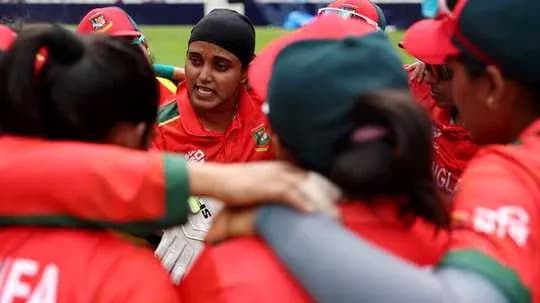
Nigar, meanwhile, stays in the thick of Bangladesh’s plans, just in a different shape. As ODI captain and a senior pro in T20Is, she will remain a central voice in the dressing room, freed from the relentless scrutiny that comes with leading in both formats.
Her T20I captaincy chapter is closing. Her influence on Bangladesh’s next phase, with bat, gloves and in the ODI huddle, is nowhere near finished.