.svg&w=384&q=75 "logo")
NBA Penalizes LA Clippers and Kawhi Leonard with Major Fines and Suspensions
The NBA has delivered one of the most severe punishments in modern league history, and it lands squarely on the LA Clippers and Kawhi Leonard.
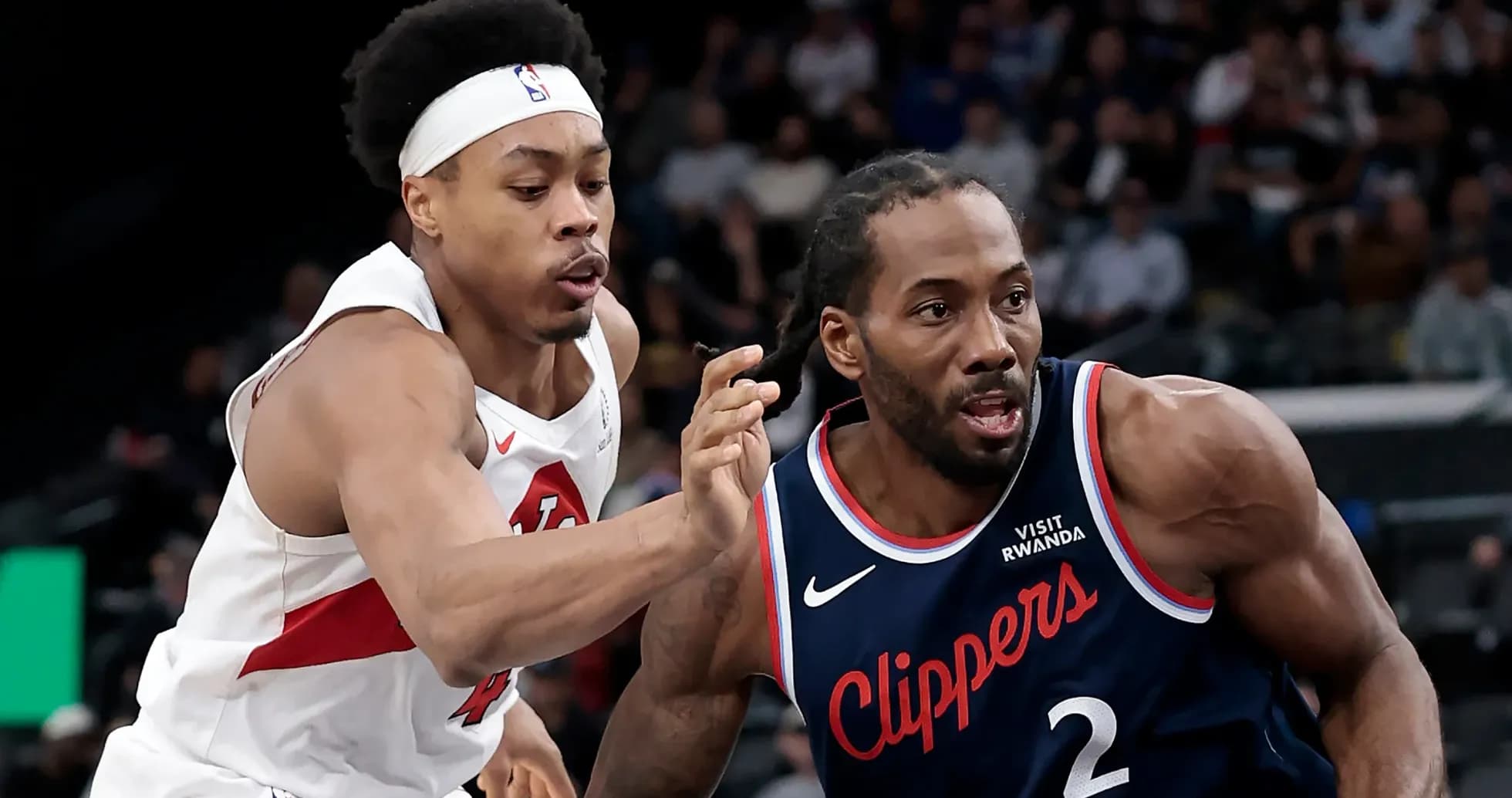
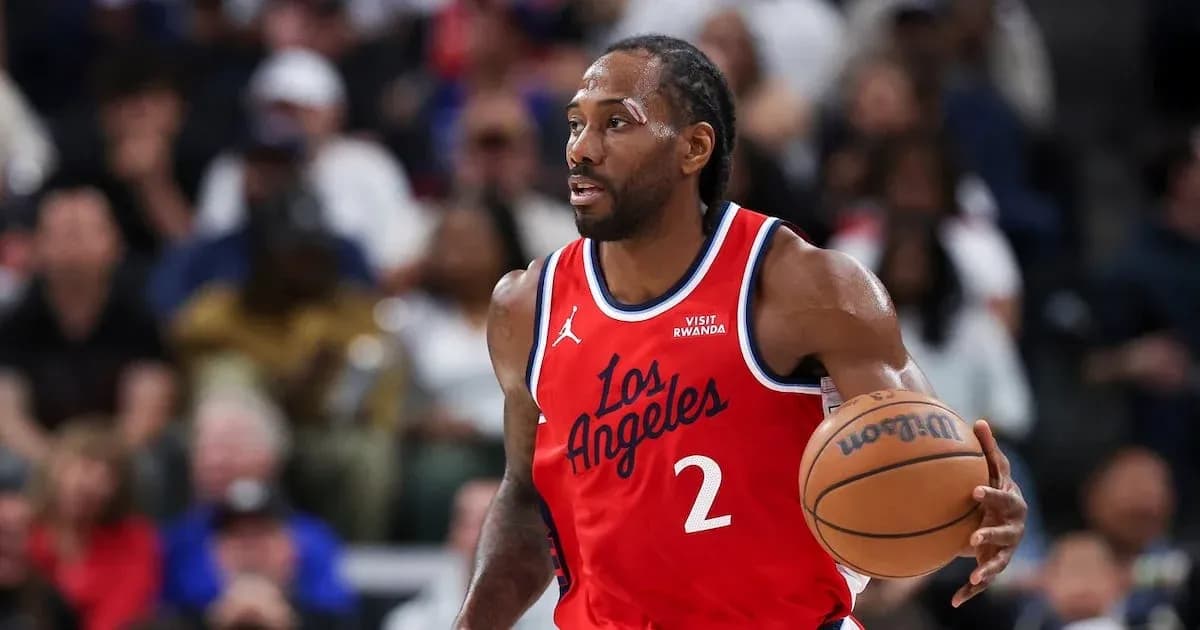
After a nearly yearlong investigation into alleged salary cap circumvention tied to Leonard’s 2021 contract extension, the league has fined the Clippers $30 million, suspended owner Steve Ballmer for a year and stripped the franchise of five future first-round picks. The cost of doing business with a superstar has rarely looked this steep.
And this story is only just beginning.
A Yearlong Probe, Four Companies and One Central Question
The case turned on a deceptively simple issue: where does “middleman” end and “cap circumvention” begin?
Investigators focused on the Clippers’ role in arranging endorsement deals between Leonard and four companies that also did business with the team. The organization argued it merely connected interested sponsors with its star — a practice teams have long considered standard in the modern NBA economy.
The league didn’t buy it.
In a detailed report, investigators concluded the Clippers “flagrantly and repeatedly” broke circumvention rules, accusing the franchise of going far beyond introductions and stepping directly into the structure and terms of Leonard’s off-court income. Emails, internal notes and interviews with company executives formed the backbone of the case.
One example jumped off the page: Daktronics, the scoreboard manufacturer. The report alleges the Clippers steered a kickback from a massive Intuit Dome scoreboard contract toward Leonard in the form of an endorsement deal, even helping set the terms. In other instances, investigators cited millions in “consulting” fees paid by the Clippers shortly after Leonard’s endorsement agreements were finalized.
The team’s defense — that these were merely “affirmative” and “responsive” introductions — was rejected repeatedly in the findings, with investigators pointing to admissions from company executives to undercut that narrative.
The punishment mirrored the infamous Joe Smith case in Minnesota in 2000: multiple lost first-rounders, a record-setting fine at the time, and suspensions for ownership and front-office leadership. This time, the league used its maximum allowable $7.5 million fine for cap circumvention and applied it four times, once for each company involved, to reach $30 million.
The message was unmistakable.
Why the Hammer Fell This Hard
On paper, the Wachtell report stops short of a smoking gun directly in Ballmer’s hand. There is no single email, no one document that explicitly shows the Clippers’ owner ordering a scheme.
But the league didn’t need one.
The report accuses Ballmer of failing to “create conditions under which his organization abided by the NBA’s circumvention rules” and says he “knowingly sought to help [Kawhi] Leonard obtain off-court income opportunities and, in at least one instance, engaged in a significant act of team facilitation.”
Investigators leaned heavily on contemporaneous notes from president of basketball operations Lawrence Frank. In those notes, Dennis Robertson — Leonard’s uncle and longtime adviser — is said to have complained to Ballmer that Gillian Zucker, the team’s president of business operations, was making “introductions” for “bulls--- deals” and that “I have to get paid.”
The same notes say Ballmer told Robertson that Clippers staff were “collective workers to try and help [Leonard] achieve his financial goals.”
Those lines, combined with interviews from executives at the involved companies, helped the league connect the dots. Frank, who cooperated with investigators, received a six-month suspension rather than a more draconian penalty.
The Clippers’ past didn’t help. Under Ballmer, the team was fined $250,000 in 2015 over a DeAndre Jordan recruitment issue, and in 2019 the league probed Leonard’s original signing. The Clippers were cleared that time but warned and sent through a seminar on the rules.
Repeat offender status raised the stakes.
Still, this could have been worse. In the Joe Smith case, the NBA voided Smith’s contract and wiped out his Bird rights. Leonard keeps his contract, his Bird rights, and avoids suspension, though he must pay a $700,000 fine. The Clippers and Toronto Raptors are also allowed to move ahead with the blockbuster trade that will send Leonard to Toronto, a deal that would bring two first-round picks back to LA.
The cost is enormous. But not total.
The Clippers’ Fightback
Publicly, the NBA insists the matter is closed. The league says it reached agreement with the NBPA on penalties that are “final and binding for all parties.”
The Clippers are not treating it that way.
In a statement, the franchise vowed to “vigorously challenge these findings and penalties through every avenue available to us” and said it looks forward to an “ethical and impartial arbitration process.” Ballmer’s attorney, David Kelley, went further, calling the punishment a “gross injustice” and promising to explore “every legal remedy.”
This has been the Clippers’ posture throughout the investigation. Team sources have long insisted they did not funnel money to Leonard through Aspiration, one of the companies involved, and privately vowed to “fight that to the end.” That stance has not changed.
What, realistically, can be overturned? History offers one intriguing example: the Timberwolves eventually had two of their five forfeited first-round picks restored after the Joe Smith scandal. It took three years.
The Clippers will need patience — and a compelling legal argument — to hope for anything similar.
A Draft Future in Ruins
On the court, the punishment hits the Clippers where modern team-building hurts most: draft capital.
Even before Wednesday’s ruling, LA’s future picks were tangled. The Paul George blockbuster with Oklahoma City in 2019 and the James Harden trade in 2023 had already stripped the franchise of much of its control.
Trading Ivica Zubac to Indiana last February was supposed to be the start of a slow draft rebuild. The Clippers picked up two first-rounders in that deal, one of which became Keaton Wagler at No. 5 in this year’s draft. For the first time in years, there was a faint outline of a long-term plan.
That’s gone.
Before the penalties, the Clippers held seven first-round picks over the next seven years, with four tradable. They still didn’t control their own first until 2030 — the Thunder hold swap rights in 2027, the 76ers own the 2028 pick and have swap rights in 2029 — but there was at least some flexibility.
Now? The NBA has taken five first-rounders: the 2029 pick from the Pacers, plus the Clippers’ own 2030, 2031, 2032 and 2033 selections.
What’s left are scraps: the less favorable of their own, Oklahoma City’s and Denver’s (if 6–30) in 2027, and a 2029 pick. None can be traded under current rules.
There is a sliver of relief on the horizon. The agreed trade sending Leonard to the Raptors includes unprotected first-rounders in 2031 and 2033 coming back to LA. But even those can’t be flipped. The Stepien rule prohibits any team from trading away first-round picks in a way that leaves it without a first in any two consecutive future years.
For a franchise that has spent the Ballmer era chasing stars and sacrificing draft flexibility, this is the bill coming due — with interest.
Ballmer on the Sidelines
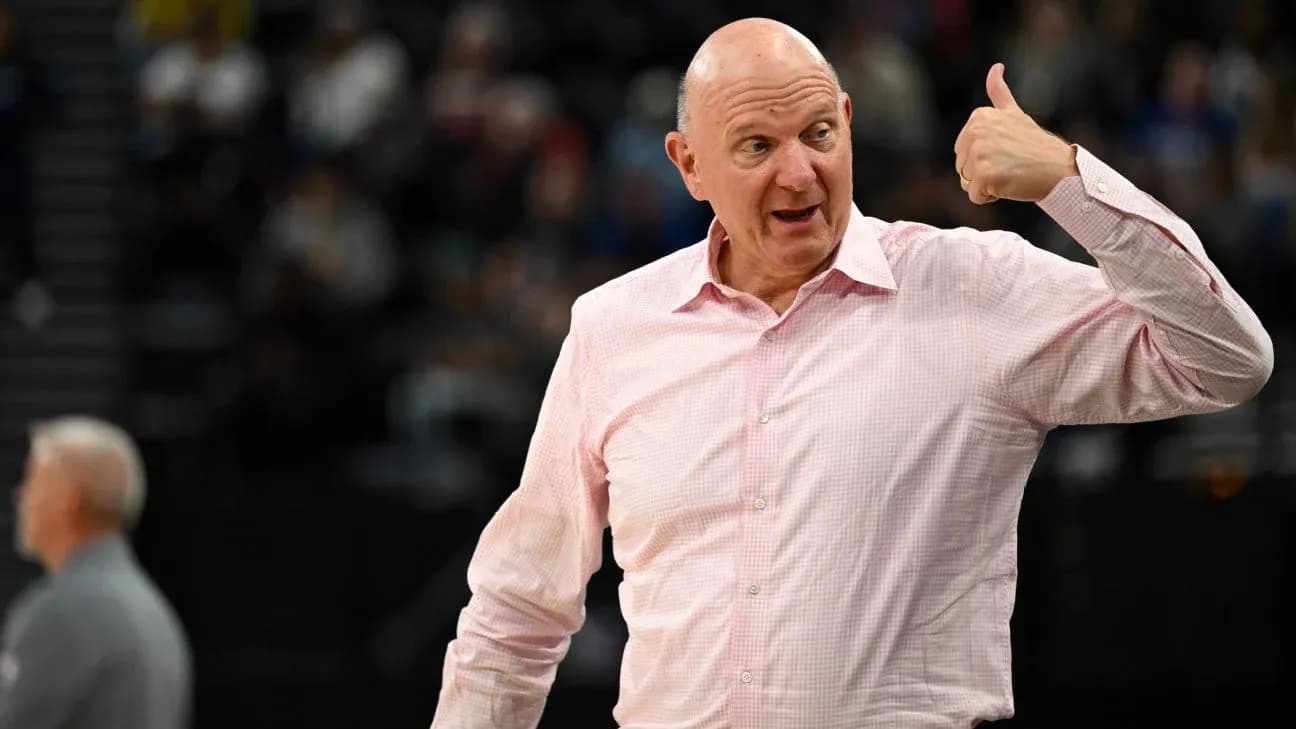
Steve Ballmer, the most visible and exuberant owner in the NBA, now faces a year away from his own team.
The league has suspended him for one season, though the exact start date — and whether he can delay the suspension via the courts or arbitration — remains unclear. His alternate governor, Dennis Wong, owns just 1% of the team but will serve as the formal point of authority in Ballmer’s absence.
This is not a Donald Sterling situation. Ballmer is not being forced to sell. Sterling’s exit came only after his wife, Shelly Sterling, agreed to sell the team before the Board of Governors could vote to strip him of ownership.
Still, the optics are stark. Glen Taylor served a one-year suspension in Minnesota over the Joe Smith scandal. Robert Sarver and Mark Stevens were suspended for separate conduct issues. Sterling was banned for life.
Now Ballmer joins the list of owners barred from day-to-day operations for a full season, a remarkable fall for one of the league’s most powerful figures.
Who Actually Runs the Clippers Now?
With Ballmer out for a year and Lawrence Frank facing a six-month suspension, the Clippers’ power structure suddenly looks fragile.
The team has not accepted the punishment, so no interim basketball operations chief has been formally named. The logical candidate is general manager Trent Redden, a well-regarded executive expected to guide basketball decisions if Frank is sidelined.
Timing matters. A six-month suspension for Frank would take him past the 2027 trade deadline but allow him to return in time for the 2027 draft, when the Clippers finally project to have a first-round pick again. He’d also be back for 2027 free agency, where the team could have up to $50 million in cap space.
In other words, the architect of this era would miss a key in-season window but still shape the next major reset.
Gillian Zucker at the Center of the Storm
No executive comes under harsher scrutiny in the report than Gillian Zucker.
As president of business operations since Ballmer bought the team, Zucker served as the point person on all four sponsorship deals that overlapped with Leonard’s endorsements. Investigators accused her of making “misleading and false statements” during interviews and detailed her role in the Aspiration arrangement.
When Aspiration co-founder Joseph Sanberg told Zucker he wanted to pursue an endorsement deal with Leonard, the report says she promised to bring in a specific business agent — one already under a retention agreement with the Clippers — to help structure the deal. A day later, she contacted that agent.
Internal emails then show the agent telling colleagues that Sanberg would offer Leonard $5 million plus $7 million in stock per year, for four years, as long as Leonard remained with the Clippers. Investigators concluded Zucker improperly passed along the proposed financial terms that appeared in that email.
The agent later told investigators those numbers did not come from his team. Witnesses, including Zucker, agreed Sanberg did not have the expertise to design such a deal on his own.
The league connected those dots. Zucker received a one-year suspension without pay.
Dennis Robertson, Banned From the League’s Business
For years, Dennis Robertson has been a looming, controversial presence around Kawhi Leonard’s career. That era is over.
The NBA has banned Robertson for five years from “conducting business or otherwise engaging with NBA teams and their affiliates” on behalf of any player or league personnel. His influence had already been waning — Leonard hired Harrison Gaines of SLASH Sports in July to take over as his agent and lead all business affairs — but the league’s move makes the separation official.
Robertson’s role in this saga stretches back to Leonard’s 2019 free agency. According to prior reporting, he made a series of improper asks of the Clippers, Lakers and Raptors: part ownership of a team, use of a private plane, a house, and guaranteed endorsement money. The Toronto Star also reported that he sought ownership stakes in outside companies and corporate sponsorships where Leonard would not be required to do anything in return.
Those requests violated the collective bargaining agreement and rattled executives across the league. The fallout prompted the NBA to introduce a “rules enforcement initiative” specifically aimed at better policing circumvention, including a new requirement: teams must report any solicitation of illegal compensation, whether made by a player, agent or anyone claiming to act on their behalf — even if the team rejects it.
In his statement Wednesday, Leonard indirectly addressed Robertson, saying: “Integrity and respect for this game are fundamental to who I am. I accept full responsibility for lapses in judgment by people within my inner circle and regret the distraction this situation has caused the fans and my family.”
He keeps his contract. He keeps his Bird rights. He loses a key figure in his orbit.
Can the Clippers Ever Recover Their Picks?
History offers one faint lifeline.
When the Timberwolves were punished in 2000, they initially lost five straight first-round picks. Three years later, the league restored their 2003 and 2005 firsts, leaving them without picks in 2001, 2002 and 2004.
The Clippers now face a similar void, with five future firsts wiped out and their flexibility strangled by both the penalties and the Stepien rule. If they can convince the league — or, more likely, an arbitrator or court — that the punishment overshot the mark, there is precedent for partial restoration.
For now, though, the reality is harsh. The franchise that once sold itself as a superteam built on stars, splashy trades and the deep pockets of Steve Ballmer must navigate the next decade with a gutted draft cupboard, a suspended owner, and a front office under scrutiny.
The question hanging over the entire organization is no longer how high this era can climb.
It’s whether there’s enough left to build whatever comes next.