.svg&w=384&q=75 "logo")
The Serve That Changed Everything: Probst's Journey Through Injury and ACC
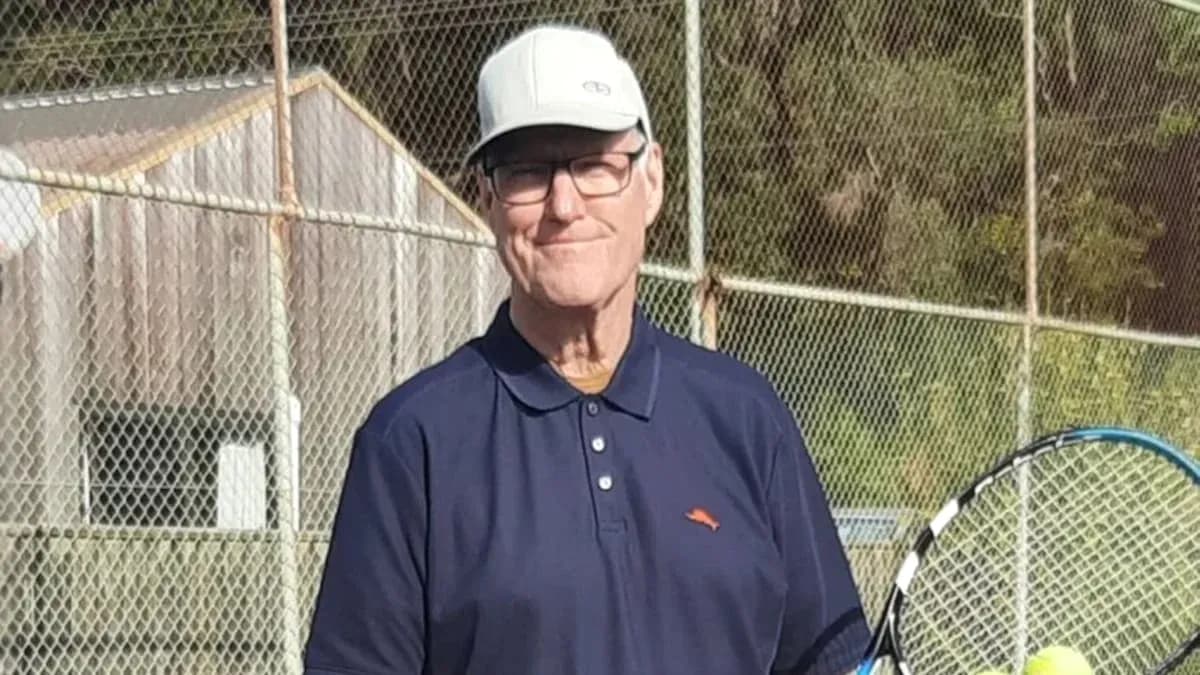
The serve that changed everything came on a family court, not Centre Court.
Midway through the first set of a friendly doubles match with his wife against her daughter and son-in-law, long-time tennis player Probst launched a big first serve – the kind he’d been hitting since childhood. He reckons it left the racquet at about 112km/h, far heavier than anything else he’d hit that day.
The moment the ball flew, his shoulder screamed.
“Right after I hit the serve, I thought, wow, my shoulder hurts.”
He played on. Competitors do. But by the next set, the pain had closed in. He could no longer hit a backhand without wincing. Tennis stopped being a game and started becoming a problem.
From one serve to the surgeon
Within a month, Probst was in clinics instead of on court. First came an X-ray, then an ultrasound, then a referral to an orthopaedic surgeon. The verdict was brutal.
An MRI revealed a full-thickness tear of the supraspinatus tendon with 16mm of tendon retraction, tendinopathy and muscle atrophy. In plain terms: a serious rotator cuff injury, and one that needed surgical repair.
This was a man who, before that day in February 2024, swam three times a week, surfed, paddled, played regular tennis and reported no shoulder trouble. After the serve, he stopped it all. No tennis, no swimming, no surfing, no paddling. He avoided pulling or lifting with his right arm altogether.
He turned to ACC for cover.
ACC says no
ACC declined the claim in January 2025. Its clinical adviser, a physiotherapist, decided the injury did not fit the profile of a traumatic tear.
The adviser focused on how the injury had been described: “hitting the ball awkwardly and hurting his shoulder” and “doing an awkward overhead shot and wrenching his shoulder.” That mechanism, the adviser said, didn’t match the unexpected high-energy force usually seen with traumatic rotator cuff tears.
The physiotherapist also pointed to the MRI findings – tendon retraction, tendinopathy, muscle changes – and to Probst’s age. Those features, the adviser argued, were more consistent with degeneration than with a one-off accident.
Probst pushed back. He said the wording failed to capture the violence of the serve. This wasn’t a casual social lob; it was a full-blooded hit from someone who had played competitively and still took his game seriously.
He took on ACC himself first. When that didn’t shift the decision, he hired a lawyer.
“Because it was wrong,” he said of his determination to keep going.
“When people are trying to get away with something that is incorrect and take advantage of people’s unwillingness or inability to challenge stuff, that just gets me fired up.”
The review turns the tide
At review, the picture changed.
The reviewer found that the tear was caused by the February 2024 accident, not wholly or substantially by a pre-existing or degenerative condition. The decision was blunt in its assessment of ACC’s clinical advice.
The reviewer noted the ACC physiotherapist had not properly considered the mechanism of injury as Probst described it. He also did not have the original ultrasound images or the initial physiotherapy notes when forming his opinion.
The timeline mattered. Probst felt immediate pain. His symptoms followed directly from the serve. There was, the reviewer said, a clear temporal connection between the accident and the onset of his shoulder problems. Added to that, Probst had been “incredibly active for his age” without any shoulder issues before the incident.
The MRI report, the reviewer pointed out, did not identify moderate or severe degeneration.
“Ultimately, [the ACC physiotherapist] has misunderstood the mechanism of injury, has commented without a full clinical picture, and has not provided any reasoning on why he considers that the injury was caused wholly or substantially by degeneration, with a no more than minimal contribution by the accident event,” the decision said.
The reviewer also drew a sharp line between the experts. Probst’s orthopaedic surgeon had examined him in person. The ACC physiotherapist had conducted a paper review. On that basis, the surgeon was considered better qualified to give an opinion on the nature and cause of the tear.
ACC concedes, but questions remain
ACC head of service operations Phil Riley acknowledged that cases like this sit in a difficult space.
“Cases like Mr Probst’s, where ACC is assessing whether a condition was caused by an accident or degenerative changes can be clinically complex, and clinical professionals may reach different conclusions despite assessing the same information.”
Riley said treating specialists play an important role, but their views are weighed alongside other medical information, and ACC can seek further specialist advice. He added that ACC had worked with orthopaedic specialists to develop guidelines “to help support consistent and accurate decision making”.
“After assessing the available clinical evidence, including the guidelines, we were unable to determine that Mr Probst’s condition was caused by his accident,” Riley said.
That position did not survive the review hearing. Probst provided additional information, and ACC ultimately accepted the ruling.
“We accept the reviewer’s decision and have approved cover and funded Mr Probst’s surgery,” Riley said.
A win, but not without cost
For Probst, the decision landed with mixed emotions.
“I was happy that the time and the money that I’d expended, and the mental effort had paid off, that you could prevail against an unjust decision.
“But it is bittersweet because it could have been done a year earlier and I could have risked further injury during that time period.”
The reviewer awarded him $1218.13 in review costs. After ACC’s contribution, he was still left with $3206.87 in legal bills.
Riley stressed that reviews are free to lodge. Clients do not need a lawyer, he said, and can represent themselves or be supported by an advocate, family member or other representative. ACC may contribute to review-related costs and offers a free Navigation Service for independent guidance and support.
Behind the individual story, the numbers tell their own tale. ACC figures show the proportion of rotator cuff surgery purchase orders declined jumped from 22% in 2024 to 35% in 2025. Across all orthopaedic surgery, the decline rate rose from 18% to 26%.
That shift is part of what pushed Probst to speak publicly. He had heard from others who believed their ACC claims had been wrongly turned down and decided his case shouldn’t stay private.
His message to anyone who thinks ACC has misread their injury is short and sharp.
“Challenge it.”