.svg&w=384&q=75 "logo")
Kuminga's $12.4 Million Deal: The Warriors' Missed Opportunity
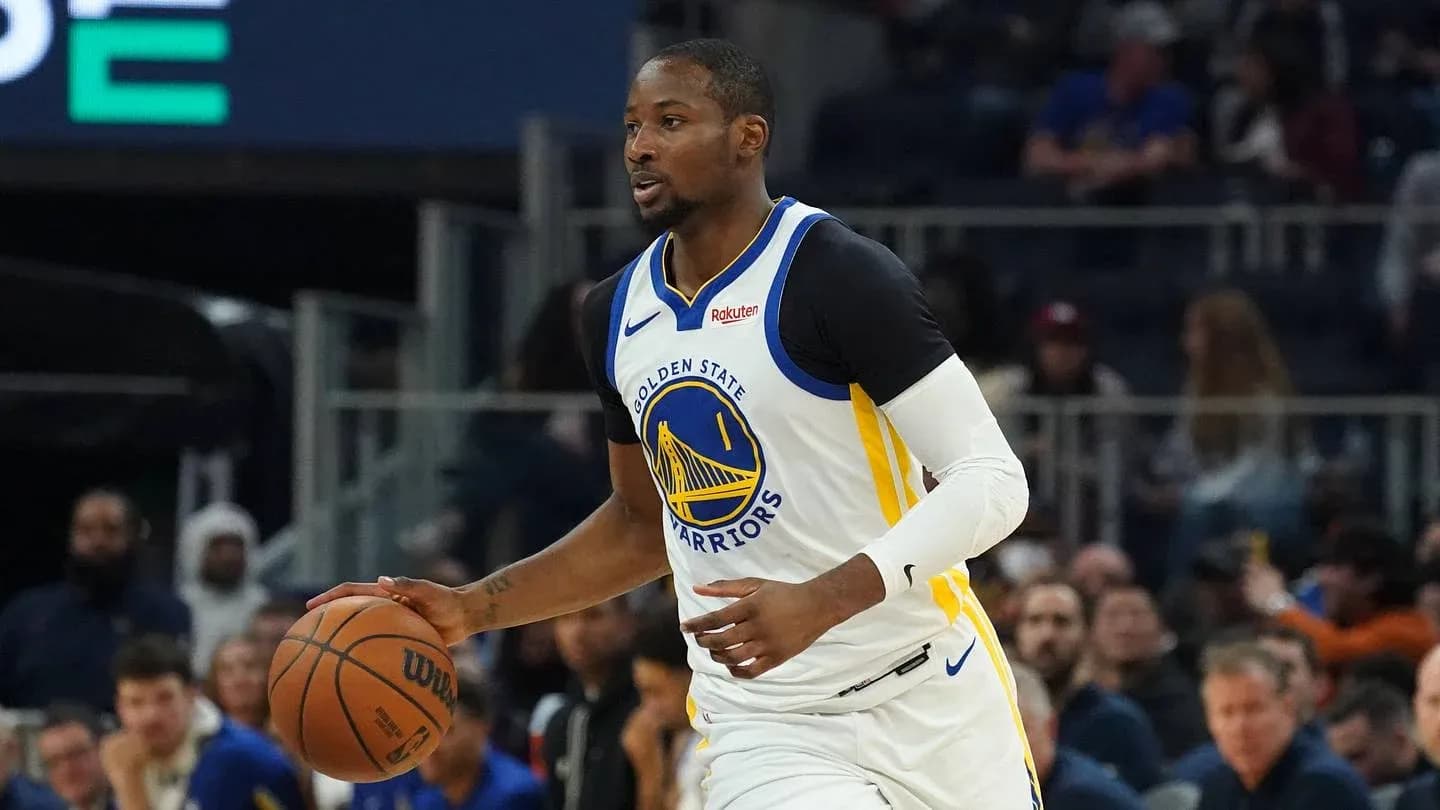
Jonathan Kuminga is a Minnesota Timberwolf now, tied to a two-year, $12.4 million deal agreed Wednesday. For Warriors fans, the number hit like a jolt.
Two years. $12.4 million. Taxpayer mid-level money.
Twelve months ago, Golden State had $75.2 million on the table for the same player.
That contrast is the entire story.
The $75.2 Million Bullet the Warriors Dodged
When ESPN’s Shams Charania and Anthony Slater detailed last year’s negotiations between Kuminga and the Warriors, it painted a picture of a franchise desperate to bridge eras and a young player determined to bet on himself.
Here’s how the dance went.
Mike Dunleavy Jr., early in his tenure as general manager, opened with a two-year, $45 million offer that included a team option in the second season. It was aggressive money for a player still more promise than product, but the team option became a sticking point. Kuminga’s camp wanted either more average annual value or control on the back end.
Dunleavy pushed harder. The Warriors came back with a three-year, $75.2 million offer, again with a team option—this time in the third year. That’s the offer that now looks outrageous. Kuminga declined it as well, again unwilling to accept a deal that didn’t give him some form of leverage.
Ownership had its own lines in the sand. Joe Lacob resisted the idea of a one-year “balloon” deal, wary of losing the former lottery pick for nothing the following summer. Eventually, the sides landed on a compromise: a two-year contract worth up to $48.5 million, with a team option in the second year.
Kuminga got what he didn’t want anyway: a team option. He did not get what he turned down: over $20 million more guaranteed.
Now, with the market having spoken loudly—two years, $12.4 million from Minnesota—last year’s $75.2 million offer looks less like a bold investment and more like a near-disaster.
The league has rendered its verdict. Whatever the Warriors once believed Kuminga could be, the rest of the NBA clearly doesn’t see a $25 million-a-year player entering Year 6.
The Alternate Timeline: If Kuminga Had Said Yes
Run it back and imagine Kuminga accepts that three-year, $75.2 million offer.
Does anything about the basketball fit actually change? Probably not.
The tension with Steve Kerr over role, minutes, and usage didn’t start with contract talks and wasn’t going to end because of them. The flashes of brilliance were always there. So were the lapses in focus, the inconsistent defense, the stalled development as a decision-maker. A bigger contract wouldn’t have fixed that. It would have amplified it.
The Hawks’ involvement underlines the point. Part of the appeal for Atlanta in trading for Kuminga was the flexibility: he arrived essentially as an expiring contract, with a team option looming. They treated it exactly that way, declining the option and letting him test the market.
Would they have sent out Kristaps Porzingis if Kuminga had a fully guaranteed 2026-27 salary at that $75.2 million rate? That stretches belief. A team is far less likely to gamble on a still-unproven forward if it’s locked into another hefty year on the back end.
In that alternate universe, Kuminga might still be in the Bay, frustrated with his role, pushing for a trade while the Warriors search for partners willing to absorb a contract the rest of the league clearly doesn’t value at that level. The front office would be trying to move a player they once treated as a franchise bridge, now weighed down by a deal that outpaced his production.
Instead, they were spared—by Kuminga’s own decision.
A Messy Era and a Shaken Front Office
Golden State got lucky. There’s no other way to frame it. Kuminga turned down the bigger offer, and the Warriors avoided a contract that would now be hanging over everything they do.
That doesn’t mean the organization comes out of this looking sharp.
The saga exposes how heavily the Warriors invested in the idea of Kuminga as their next star. They drafted him high. They poured years of development into him. They reportedly passed on multiple trade opportunities built around his potential. All of that for a player who, six seasons in, just signed for the taxpayer mid-level exception.
That’s not just a miss. It’s a structural misread of value, timing, and trajectory.
Some of this predates Dunleavy. Bob Myers was the general manager when Kuminga was drafted, and the decision to hitch part of the post-dynasty plan to him traces back to that front office. Since taking over, Dunleavy has shown a sharper eye on draft night. Brandin Podziemski looks like a hit. Quinten Post and Will Richard have drawn early praise. Yaxel Lendeborg’s summer league flashes hint at another possible find.
Those are encouraging signs. They don’t erase the Kuminga chapter.
Because for all the talk of “the next guy” to carry the torch from Stephen Curry, the Warriors’ grand experiment with Kuminga ends with this: a former cornerstone prospect leaving a trail of what-ifs, a $75.2 million offer that now reads like a warning label, and a front office still trying to prove it can navigate life after a dynasty without betting big on the wrong star again.