.svg&w=384&q=75 "logo")
International Court of Appeal Defends Integrity Amid Alpine Controversy
The International Court of Appeal has moved to defend its own house, issuing a firm rebuttal to accusations from Alpine boss Flavio Briatore that one of its judges held improper ties to McLaren during the Monaco Grand Prix appeal.
The court, which operates independently of the FIA and sits at the top of motorsport’s judicial ladder, came under fire after it overturned the decision to rescind Pierre Gasly’s penalties from Monaco – a ruling that infuriated Alpine and reopened an already raw controversy.
From Monaco chaos to legal crossfire
Monaco’s pitlane speed trap debacle set the whole chain of events in motion. Gasly, initially stripped of a podium for pitlane speeding, was later cleared when Alpine successfully pursued a right of review, arguing that several drivers had been incorrectly penalised.
But there was a catch. While Gasly’s sanctions were overturned, others had already served their penalties and could not be made whole. McLaren and Red Bull, unhappy with that imbalance, took the matter to the International Court of Appeal.
The ICA sided with the appellants and reinstated Gasly’s penalties. Alpine’s relief turned to anger. Gasly lost out again. And Briatore, never one to keep his powder dry, escalated the dispute from sporting grievance to institutional attack.
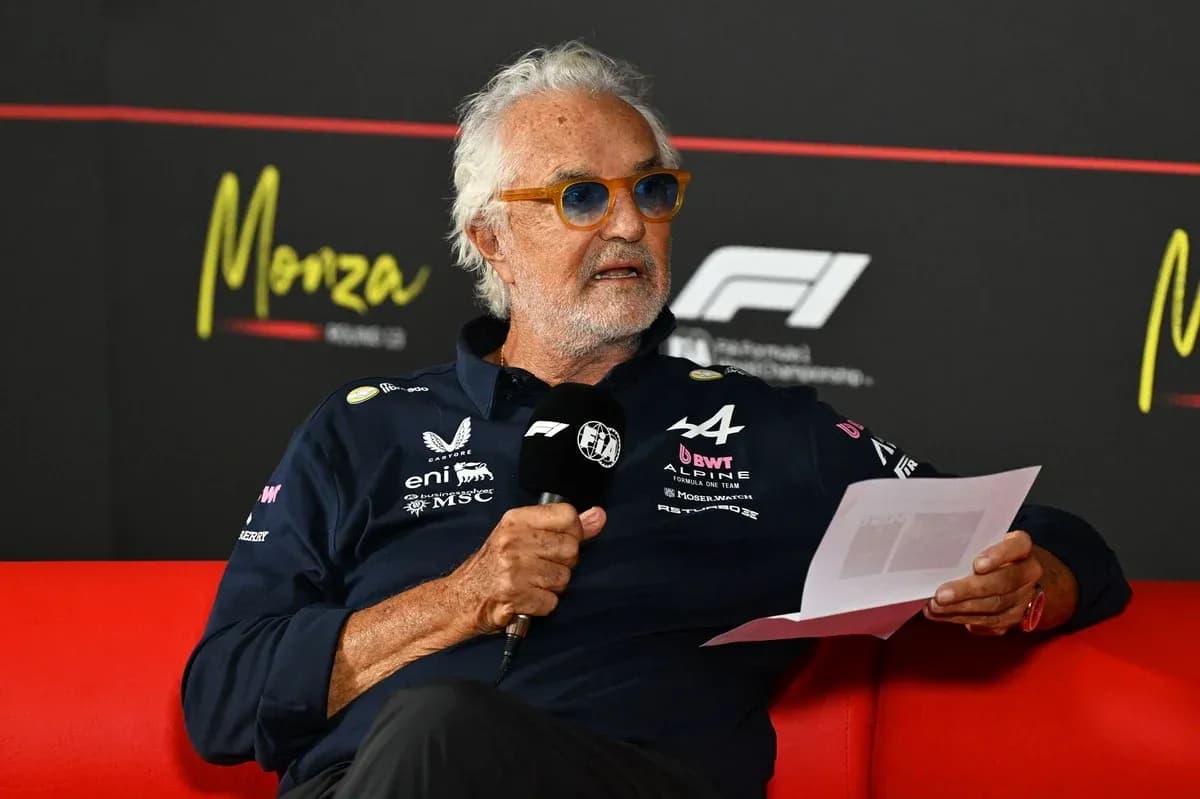
During a fiery Italian Grand Prix press conference, he openly questioned the integrity of the panel, homing in on one judge in particular: Filippo Marchino.
The Marchino connection
Briatore highlighted Marchino’s past role as CEO of the One Drop Foundation, a charity founded by Cirque du Soleil creator Guy Laliberte. In that role, the foundation had once received several McLaren road cars from the late McLaren shareholder Mansour Ojjeh, to be auctioned for charity.
Briatore also pointed to a 2018 McLaren Special Operations event in Beverley Hills, where Marchino appeared as a speaker. That event, however, had no link to the F1 team and sat squarely in the road-car and brand sphere.
Those details were enough for Briatore to allege a conflict of interest. For the ICA, they were enough to respond.
Court hits back: “Highest standards”
In a detailed statement, the International Court of Appeal rejected any suggestion that its panel had been compromised.
“The FIA Courts are aware of public comments questioning the independence and impartiality of the judges of the panel that decided Case ICA-2026-06-07-08-09,” the court said, referring directly to the McLaren and Red Bull appeal.
“The FIA Courts wish to make clear that the appointment and participation of the judges in that case, like for any other case, were conducted in accordance with the applicable FIA judicial procedures and usual practice, which are inspired by the highest standards like the IBA Guidelines on Conflicts of Interest in International Arbitration.”
The court underlined how its judges are selected and monitored. All are elected by the FIA General Assemblies, with some put forward by at least five F1 teams, as permitted by the FIA statutes. Every judge is bound by independence and confidentiality rules set out in the FIA Judicial and Disciplinary Rules.
They must file annual disclosures of interests with the FIA compliance officer and sign a specific declaration of independence for each individual case, tailored to the parties and issues involved. That declaration is shared with those parties.
No objections at the time
Crucially for the ICA, nobody objected when it mattered most.
“At both the beginning and conclusion of the hearing, the parties were invited to raise any issue concerning the proceedings or the composition of the court. None did so,” the statement continued. “No objection was raised during the hearing concerning the manner in which the court questioned the witness or conducted the proceedings.”
The message was clear: if there were concerns about the panel, they were not voiced when the teams had the formal opportunity to challenge it.
The ICA also defended the way it assembles its benches, stressing the value of diversity on and off the track.
“The ICA emphasises the importance of constituting panels with judges from different cultural and geographical backgrounds. This helps ensure that the deliberations and discussions reflect a diversity of legal traditions, perspectives and approaches, further strengthening the fairness, independence, credibility of the process and access to a fair trial.”
Integrity under the spotlight
With emotions still raw from Monaco and its fallout, the court acknowledged that its rulings will always be scrutinised.
“A court’s decision can leave room for various interpretations and comments as for its legal merits; that is fair and accepted by all the judges,” it added. “The court is confident in the soundness of the proceedings and the integrity of the judges. The FIA courts remain committed to the independence and impartiality of their judges and to the integrity of the judicial process.”
In a season where track limits, penalties and stewarding already dominate the paddock conversation, the sport’s highest court now finds itself part of the story. The question lingering over the paddock is no longer just who gets the next upgrade or the next win – it is how far teams are willing to go when they no longer trust the verdicts that shape their championships.