.svg&w=384&q=75 "logo")
Abhishek's Explosive 82 Leads India to Victory Against Afghanistan
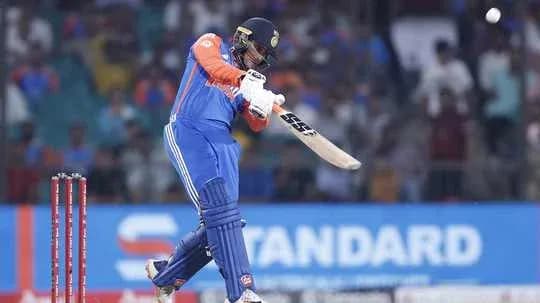
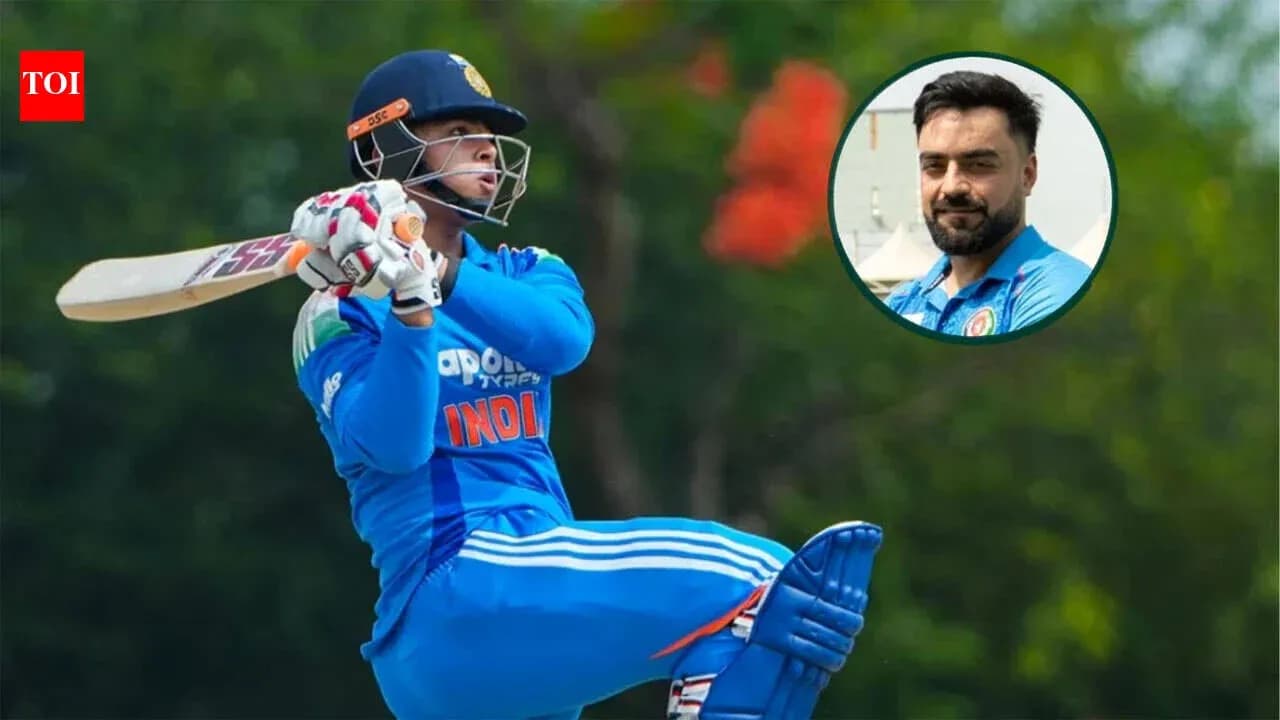
Abhishek walks out, looks up, and swings. By the time he walks back, the contest is over and Afghanistan’s bowlers are staring at the scoreboard as if it has personally wronged them.
India’s chase of 156 in the T20I series opener was never going to be a mountain in Delhi. On this surface, it was a suggestion, not a target. Abhishek turned it into a demolition exercise.
His first scoring shot set the tone. Fazalhaq Farooqi went wide, Abhishek went inside-out, and the ball sailed over cover for six. No sighters, no easing in. Just a clean, audacious statement that the night would move at his tempo.
Losing his opening partner early in the third over barely registered as a wobble. It simply shifted the camera fully onto him.
Azmatullah Omarzai walked in with the ball and walked straight into the storm. Abhishek lofted him straight and long, deep into the long-off stands, then rocked back to pull a short ball through square leg. Same over, same intent. Omarzai wasn’t being worked out; he was being hunted.
Farooqi’s return for the fifth over only deepened the damage. Abhishek jumped onto the front foot, picked up a slower short ball early and launched it for six over the leg side. Next delivery, he went flat-batted through the off side for four. The over disappeared for 26. Any lingering doubt about the direction of the chase disappeared with it.
Afghanistan’s seamers looked short of ideas and shorter still of surprise. Against a batter reading length this quickly, they had neither disguise nor deception. Abhishek cashed in. By the time Ibrahim Zadran turned to spin, the damage was already structural.
The change of pace didn’t change the story.
Mohammad Nabi came on to plug the flow; he ended up part of the highlight reel. Abhishek drilled him for back-to-back fours to close the Powerplay at a bruising 82 for 1. Fifteen balls faced, 41 runs, half the team total. It felt less like a chase and more like a personal exhibition.
Rashid Khan, Afghanistan’s trump card, walked in with all his experience and reputation. Abhishek greeted him with another imperious inside-out boundary over cover. Rashid wasn’t bowling badly. He was simply up against a batter in that rare zone where reputation is just another fielding position.
Noor Ahmad did earn a brief nod of respect. A couple of sharply turning deliveries drew something almost unseen in modern T20 batting: a proper, old-fashioned forward defence from Abhishek. It was a tiny pause in the chaos, a reminder that this was not blind slogging.
His fifty arrived in a far more understated way, a single tucked off Rashid to the leg side. Landmark ticked, throttle reapplied.
Abhishek danced down and muscled Rashid over midwicket for six, then carved him through deep cover to turn the over into a 15-run dent against Afghanistan’s most seasoned bowler. The message was blunt. No one was safe.
Noor’s brief respite ended soon enough. A short ball sat up and was nailed over deep midwicket. The fuller one that followed was treated even worse, launched high and handsome over deep extra-cover for a towering 83-metre six. Same bowler, two different lengths, both punished with clinical brutality. It showcased the full range: power, placement, and an unflinching clarity of intent.
By the time the innings closed on his terms, Abhishek had ransacked 82 runs, laced with seven sixes and seven fours. In the process, he became the second-fastest player to 6000 T20 runs and claimed a record 14th fifty scored in fewer than 25 balls. The next best on that list, Suryakumar Yadav, sits on nine. That gap speaks loudly.
Yet this was not a wild slog through a modest target. It was method dressed as mayhem.
Afghanistan tried pace. He took 28 off nine balls from the quicks, scoring at a strike-rate of 311.1. They turned to their famed spin core. He peeled off 54 from 23 deliveries against them at 234.78. Every adjustment from the fielding side met a sharper, quicker adjustment from him.
He picked length early. He used his feet. He waited just long enough on the slower balls, then punished anything remotely loose. When the ball deserved it, he defended. When it didn’t, it disappeared.
The numbers will live in the scorecard. The context lives in the recent past.
Abhishek came into this series with pressure riding on his shoulders. His T20 World Cup at home had started in nightmare fashion: three ducks in a row before he finally found rhythm in the back half of India’s title defence. Since that brief resurgence, the runs had dried again. Across his previous six T20I innings, he had only two scores in double figures, with 16 his best. Across the last 10 T20Is of this cycle, just 191 runs.
In a format where India are spoilt for choice at the top, that kind of return usually comes with a cost. Sanju Samson waiting. Vaibhav Sooryavanshi pushing. Three dangerous openers chasing two spots. And yet, within the dressing room, his place never quite felt under siege.
The management backed the player they believed could change a game in a handful of overs. On this night in Delhi, that faith looked less like a gamble and more like foresight.
From the balcony, Varun Chakaravarthy, who has suffered similar punishment from Abhishek in domestic cricket, watched it unfold with a mixture of empathy and inevitability. “I have personally bowled against them, I know how hard it is. I feel for their spinners,” he admitted later. For Afghanistan’s attack, that was the most honest verdict.
This wasn’t just an innings to break a lean patch. It was a reminder — to selectors, opponents, and perhaps to Abhishek himself — of what happens when his fearless batting aligns with form.
If this is the version India carry through the rest of the series, and beyond, the real question for every bowling unit isn’t how to stop him.
It’s whether they can even slow him down.