Top Tennis Players Halt Public Prize Money Dispute with Grand Slam Tournaments
Top Tennis Players Step Back from Public Prize Money Dispute
After nearly a year and a half of conflict, leading tennis players have paused their public campaign against Grand Slam organizers to concentrate on private discussions. Among those pushing for change are world No. 1s Jannik Sinner and Aryna Sabalenka, who seek better player welfare, a new athlete advisory council, and a larger share of tournament revenues aligned with other major events.
In August, the Grand Slam tournaments agreed to establish the requested player advisory council, signaling progress that encouraged players to end their public protests and lift media restrictions by mid-September.
What the Players Want
The creation of the advisory council is a key win, but the core issues remain under negotiation behind closed doors. The players want prize money adjusted so it reaches 22% of total revenue by 2030, matching ATP and WTA 1000 event standards. For context, the 2026 U.S. Open offered the largest prize pool ever at $108 million, but this was only about 18% of its operating income. Other Grand Slams typically allocate between 14-16% of revenue for prize payouts.
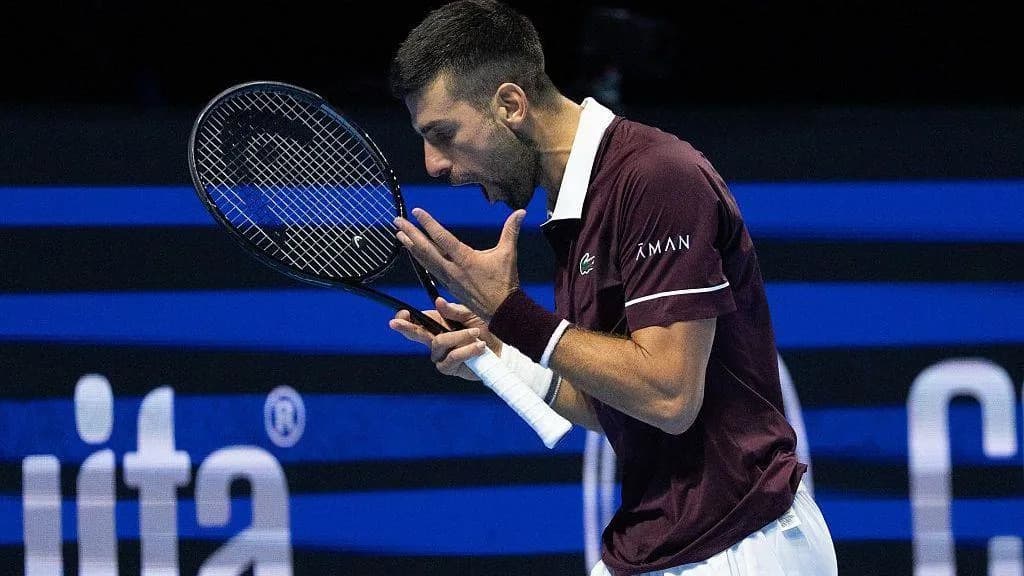
Player health is another pressing issue. Conditions on court have been challenging, with Jannik Sinner suffering heat-related illness during both the French and Australian Opens this year. Others like Novak Djokovic, Casper Ruud, and Lorenzo Musetti faced similar struggles in extreme weather.
Key Moments in the Dispute
The standoff began when players formally presented their demands to Grand Slam officials on July 31, 2025. Initially focused on prize money, the conversation expanded to include player welfare and the advisory council over the following months.
By May 2026, players limited press conferences to 15 minutes—a symbolic gesture representing their roughly 15% revenue share. Aryna Sabalenka notably cut one early conference short, emphasizing the campaign’s focus on fair earnings, especially for lower-ranked athletes.
This media restriction continued as their main form of protest, while suggestions of boycotts surfaced but never materialized. Wimbledon nearly became a flashpoint with talks of a coordinated refusal to play, but last-minute negotiations prevented disruption. The establishment of the advisory council after the U.S. Open led players to halt public actions.
Voices from the Tennis World
Carlos Alcaraz, ranked No. 2 in men’s tennis, initially joined the movement but stepped back before the U.S. Open. He explained that his focus lies more on health than revenue sharing, recalling a late-night quarterfinal match that ended at 3:33 AM. He suggested taking longer breaks between tournaments to manage the strain.
"In the future, I’m going to take some breaks, maybe one or two months off, missing some tournaments, because it’s impossible to play them all," Alcaraz said.
Meanwhile, John McEnroe spoke at the Laver Cup, advocating for stronger measures. He argued that players should be partners in the majors and criticized their small share of revenue. McEnroe suggested boycotting a tournament or two as a way to force change.
"The only way to succeed in doing that, in my opinion, is to boycott one or two of these," McEnroe stated.
New Advisory Council Formed
A twelve-player advisory council was announced in late September, evenly split between men and women. Both fans and players await to see if this group can bring the changes tennis has been demanding.
Recent Headlines
- Novak Djokovic addresses health concerns ahead of ATP Finals
- The skill behind Jannik Sinner's powerful serve
- Carlos Alcaraz comments on Grand Slam best-of-five format
- Novak Djokovic returns to China Open aiming to maintain perfect record
- Jakub Mensik rises to ATP Top 20 rankings