.svg&w=384&q=75 "logo")
Shafali Verma Becomes Youngest to 3000 T20I Runs in Asia Cup

Fatima Sana’s roar cut through the Dubai evening long before the result was a formality.
Pakistan’s captain had just bounced out Shafali Verma, India’s enforcer at the top, and chose not to hide a shred of emotion. A sharp send-off, finger pointed, eyes blazing. It was a flash of defiance from a side that had been humiliated with the bat minutes earlier.
The scoreboard, though, told a harsher story.
A captain fighting the tide
Pakistan had chosen to bat in this Women’s Asia Cup clash at the Dubai International Stadium, Fatima backing her line-up to post something competitive against their fiercest rivals. Instead, India’s bowlers ripped through them.
Fifty-five all out. Gone in 18.1 overs.
Shree Charani and Prema Rawat shared the wreckage, three wickets apiece, with Deepti Sharma adding two more. Pakistan never settled. They never stitched together a partnership of substance. Every attempted rebuild frayed almost as soon as it began.
Fatima, the captain, could only watch as the innings crumbled around her.
So when she took the new ball defending a total that was nowhere near enough, she bowled like a player with a point to prove.
Shafali lights up, then walks off
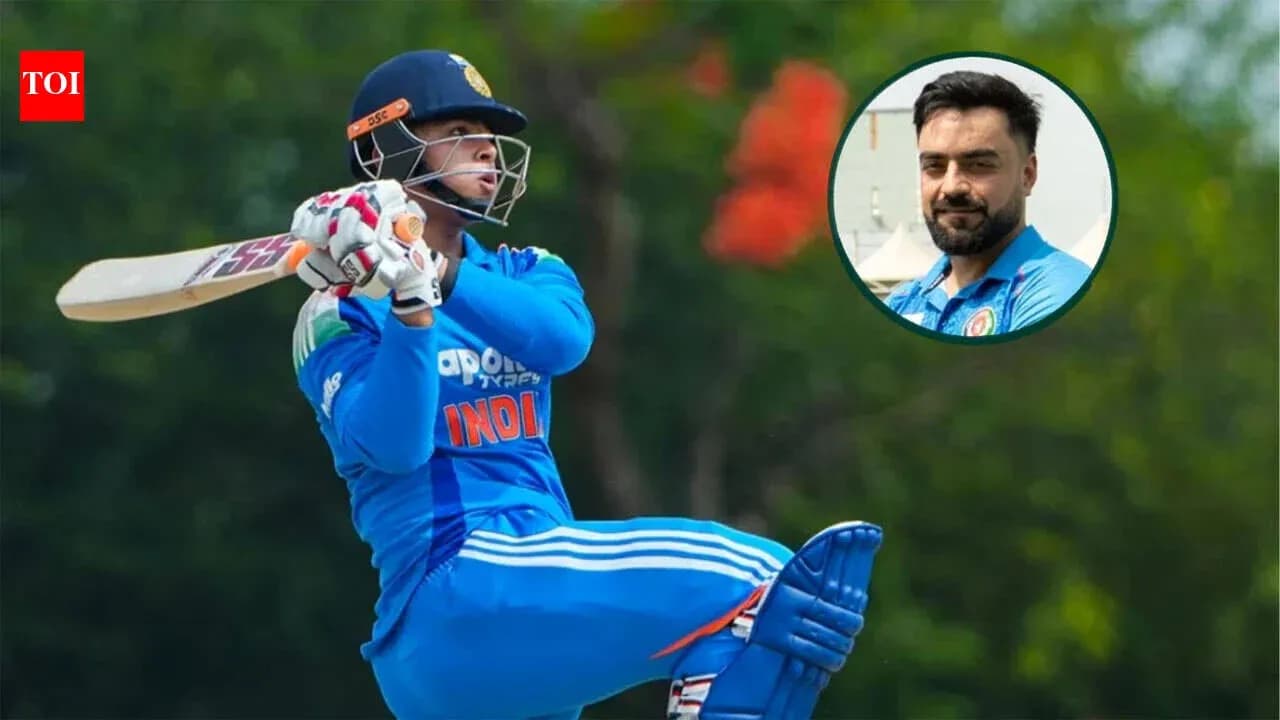
India’s reply began with intent bordering on disdain. First ball of the chase: Shafali Verma launched it for six. A statement swing, high and clean, as if to say this chase would be short and brutal.
She followed with more aggression, racing to 12 off 6 deliveries, one six, one four, the familiar swagger at the crease. Pakistan’s total looked even smaller with every stroke.
Then Fatima hit back.
On the third ball of her second over, she dragged her length just right. A good length delivery climbed a touch more than Shafali expected. The opener tried to work it through the leg side, closed the face too early, and the ball took the leading edge.
It looped tamely back down the pitch.
Fatima didn’t fumble. She completed the catch and then, in that charged India–Pakistan bubble, let the emotion spill out. A fiery send-off, arm gesturing Shafali towards the pavilion.
Up in the commentary box, Vivek Razdan gave voice to what many were thinking.
“Okay, you are showing her the way out. Your entire team just scored 55 runs, and now you're sending Shafali Verma back,” he said on air, capturing the contrast between the roar of the wicket and the reality of the scoreboard.
Shafali, for her part, offered nothing in response. No glance back, no gesture. She turned and walked off, head still, pads thudding down the turf towards the dressing room. Job not quite done, but damage already inflicted.
A record in a flash
Hidden inside that brief cameo was a milestone that underlined just how quickly Shafali has reshaped the women’s T20I landscape.
During the innings against Pakistan, she became the youngest batter to cross 3,000 runs in women’s T20 internationals. She did it at 22 years and 220 days, stripping almost two full years off the previous youngest, Ireland’s Gaby Lewis, who reached the mark at 24 years and 347 days.
Shafali didn’t just get there young. She got there fast.
She needed only 2,182 balls to reach 3,000 T20I runs, overtaking former Australia captain Alyssa Healy’s benchmark of 2,321 deliveries. It was the sort of record that speaks less to longevity and more to relentless, sustained aggression.
On a day when India barely needed her to break sweat, she still found a way to rewrite the record books.
Fatima’s resistance, India’s stroll
Fatima refused to let the game drift, even with the target almost insultingly small. She kept charging in, kept attacking the stumps, and for a brief spell, dragged Pakistan’s pride back into the contest.
After removing Shafali, she went on to dismantle India’s top order, claiming the wickets of Smriti Mandhana and Pratika Rawal as well. Three big scalps, all hers, a captain’s spell in isolation.
But there was no scoreboard pressure to go with it.
India, three down, still had time, wickets, and experience to spare. Harmanpreet Kaur walked in, Deepti Sharma joined her, and the chase slipped back into cruise control.
No drama. No alarms.
Harmanpreet finished unbeaten on 18, Deepti on 12, the pair knocking off the remaining runs with clinical calm. India got home with seven wickets in hand and a massive 68 balls left unused, a gulf that underlined the chasm between the sides on the day.
Fire, records, and a reminder
For Pakistan, the image of their captain screaming in celebration after dismissing Shafali will linger. It showed fight. It showed edge. It showed that even at 55 all out, they refused to go quietly.
But the scoreboard remains the ultimate judge.
For India, this was a statement of control rather than emotion. Their bowlers set it up, their chase was ruthless, and in the middle of it all, Shafali Verma quietly became the youngest and fastest to 3,000 T20I runs.
One side left with a roar and regret. The other with points, records, and the sense that their ceiling in this Women’s Asia Cup lies far beyond routine chases of 56.