.svg&w=384&q=75 "logo")
Pelicans Focus on Growth in Pivotal Season
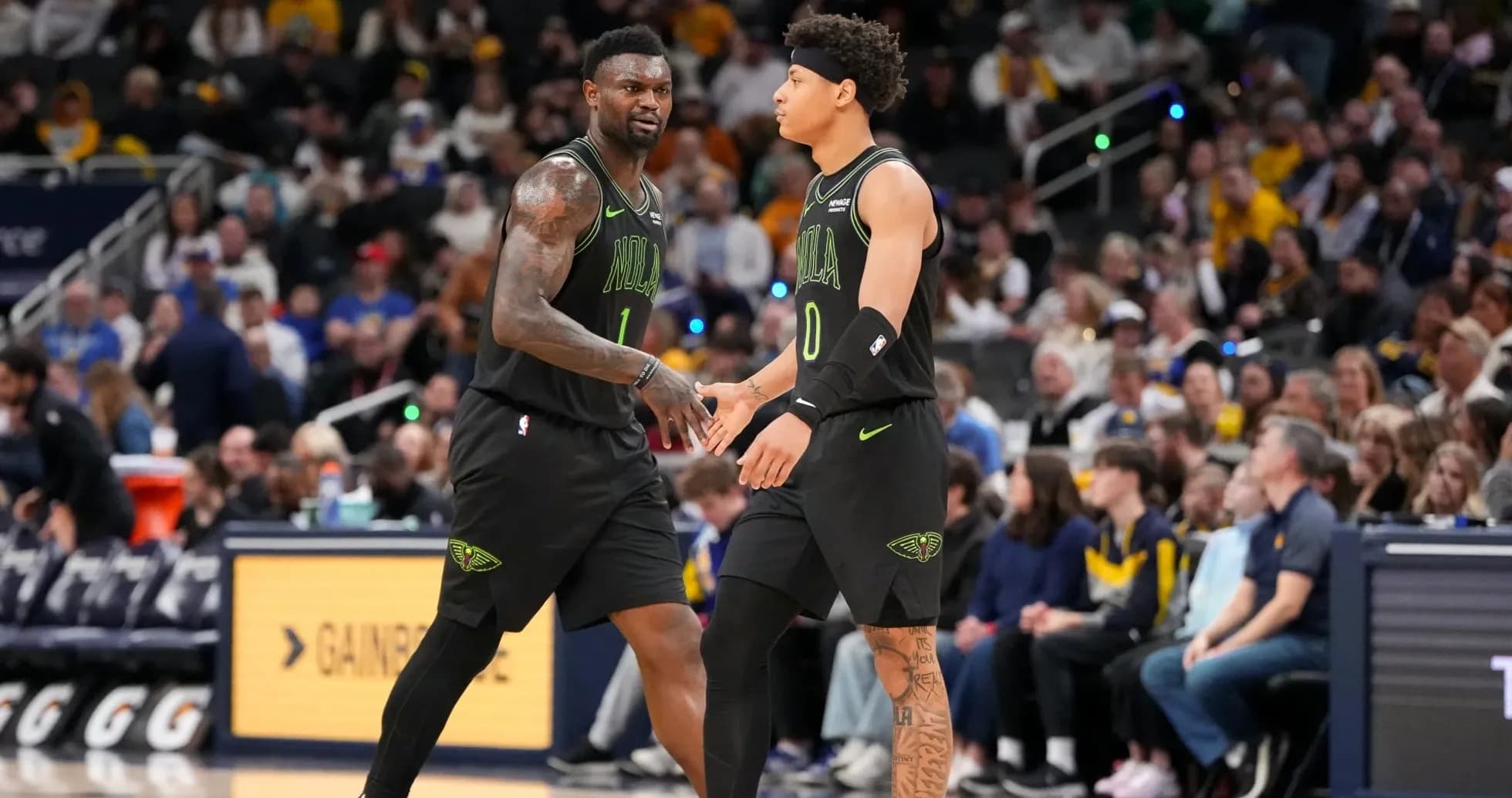
The New Orleans Pelicans are not tearing anything down. They’re not loading up, either. They are, quite deliberately, running it back with a 26-win team and daring their young core to grow up fast.
That’s the gamble.
Last season’s 26-56 finish left them 11th in the West and out of the postseason picture. The response wasn’t a splashy overhaul, but a series of targeted tweaks: AJ Johnson, Bennedict Mathurin, Jaron Pierre Jr. and Trendon Watford arrive, while the core remains largely intact. The message to the locker room is blunt enough: the answers have to come from within.
Zion, Murray, Mathurin – and the Weight of Expectation
The future in New Orleans still orbits Zion Williamson. When he’s on the floor, the Pelicans look dangerous. When he isn’t, everything frays.
The numbers underline that dependence. New Orleans led the league in the percentage of shots taken in the paint last season – 58% of their attempts came at the rim or close to it. Williamson ranked third in the league with 791 field-goal attempts in the paint and converted 60.3% of them, his best mark in three years and comfortably above the league average of 57.8%.
The problem? Almost everyone else.
As a team, the Pelicans shot just 55.4% in the paint, the second-worst mark in the league. They had three of the 41 players – Herbert Jones, Micah Peavy and Jordan Poole – who shot below 50% on at least 100 attempts in the paint. For a team built to live at the rim, that’s a brutal inefficiency.
Mathurin, the headline addition, doesn’t arrive as a cure-all in that specific area; he’s at 51.5% in the paint over his career. But he brings something this offense desperately needs: the ability to get to the free-throw line and tilt the math back in their favor. If he can live at the stripe while Zion bends defenses at the rim, New Orleans’ scoring profile suddenly looks a lot less wasteful.
Dejounte Murray remains the other veteran pillar. If games bog down late, it will fall to Murray, Zion, Trey Murphy and Mathurin to manufacture answers. If they can’t, Murray’s name will surface loudly as the trade deadline approaches. That’s the reality of his stature and his contract in a league that never stops dealing.
Fears, Queen and the Quiet Foundation
Beneath the headline names, the front office is banking heavily on internal elevation from Jeremiah Fears and Derik Queen. Both flashed in their rookie seasons – enough to tease, not enough to transform. That has to change.
The organization clearly views them as the foundation of whatever comes next. Bigger roles, more minutes, more responsibility. If they hit, the Pelicans’ decision to stay patient will look shrewd. If they stall, this season could feel like a holding pattern that cost them time.
Herbert Jones at a Crossroads
No player better encapsulates the stakes of this season than Herbert Jones.
A few years ago, Jones looked like one of the league’s rising defensive stars. His length, anticipation and versatility allowed him to guard up and down the lineup, and in 2024 he was rewarded with a spot on the All-Defense First Team. He was a crucial part of the Pelicans’ improvement on that end.
Then the growth slowed. The impact dipped. The regression was subtle at first, then hard to ignore.
Now he’s 28, squarely in his prime, and this feels like a defining year. His 3-point shooting has sagged to 31% over the last two seasons, a number that clogs spacing and invites defenders to cheat off him. If he can drag that percentage up and re-establish himself among the league’s elite defenders, New Orleans suddenly has a two-way wing every contender covets.
If he can’t, his “true worth,” as viewed both by the Pelicans and the trade market, becomes clearer in a far less flattering way. For Jones, this isn’t just another season. It’s a verdict.
A New Voice on the Sideline
On the bench, the biggest change is the one that doesn’t show up in a box score.
The Pelicans have turned to Jamahl Mosley, hired to bring structure, accountability and a defensive edge to a young roster that’s drifted. In Orlando, Mosley earned respect for his work with Franz Wagner and Paolo Banchero, and for building a Magic team that defended with discipline and bite.
He now inherits a Pelicans group that has sat in the bottom 10 defensively in each of the last two seasons. That won’t fly under his watch. If he connects with this core the way he did in Orlando, New Orleans can stop searching for a voice and start searching for more talent around the nucleus.
For team president Joe Dumars, this is a defining call. Get the coach-player dynamic right now, and the rest of the rebuild can accelerate. Get it wrong, and the cycle of change continues.
Dates That Will Tell the Story
We won’t have to wait long to see where this is heading.
On Oct. 21, the Pelicans open against the Pacers in a game that will offer an early look at their identity under Mosley. Mathurin faces his former team, and Dejounte Murray goes head-to-head with Tyrese Haliburton in a backcourt duel that should set the tone.
On Nov. 6, the Timberwolves come to town. Zion and Anthony Edwards entered the league as No. 1 overall picks, but their paths have split. Edwards has surged into superstardom. Zion’s story keeps detouring back to the trainer’s room. Can he stay on the floor long enough to chase the same arc?
A three-game stretch starting Nov. 18 – Pistons, Thunder, Spurs – offers a clean early-season measuring stick against fellow young, ambitious teams. By then, we’ll know whether the Pelicans’ internal growth is real or just preseason optimism.
On Nov. 29, the Trail Blazers arrive, and with them Ja Morant. Zion and Ja went 1-2 in the 2019 Draft, both burdened with franchise-saving expectations. Both are now fighting to reclaim their trajectories. That night will carry more subtext than a typical regular-season game.
Then on Feb. 2, the Magic visit, and Mosley returns to Orlando, where he guided the franchise to three straight playoff trips. His new team will walk into that building as a measuring stick of his impact: have the Pelicans absorbed his defensive edge, or are they still searching for an identity?
The Margin for Error Narrows
The Pelicans’ plan is clear. Trust the youth. Trust Zion’s health. Trust Mosley’s voice. Trust that Herbert Jones finds his shot and his old defensive fury. Trust that Fears and Queen grow into the roles the franchise has reserved for them.
It’s not a rebuild. It’s not an all-in push. It’s a bet on internal answers in a league that rarely waits.
If that bet pays off, New Orleans becomes one of the West’s most intriguing risers. If it doesn’t, how long before patience turns into a teardown and the trade phones start ringing off the hook?