.svg&w=384&q=75 "logo")
Tara Moore’s Damages Bid Against WTA Dismissed by US Court
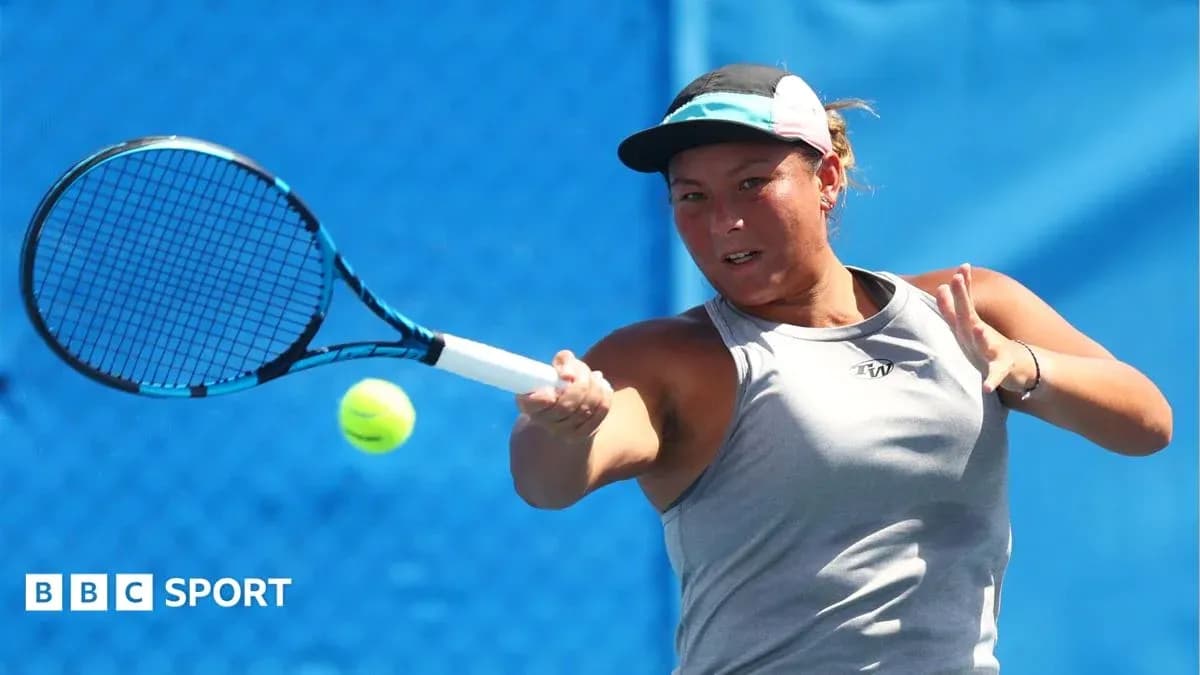
Tara Moore’s £15m damages bid against the Women’s Tennis Association has been thrown out by a United States court, drawing a stark legal line under one of the most bruising doping sagas in recent tennis history.
The 34-year-old Briton, once her country’s leading women’s doubles player, had argued that the WTA failed in its duty of care by not warning competitors about the risk of contaminated meat at a 2022 tournament in Colombia. She claimed that failure directly led to her positive test and the four-year ban that has effectively cut the legs from under her career.
The United States District Court in New York disagreed. Judge Andrew Carter dismissed Moore’s motion and ordered the case closed, ruling her challenge was “not justified” on a legal basis.
For Moore, it was another crushing blow in a battle she has fought on several fronts.
She tested positive for the anabolic agents nandrolone and boldenone at the WTA 250 event in Bogota in April 2022. An independent tribunal later accepted that contaminated meat was the source, found her to bear “no fault or negligence”, and initially cleared her path. It was a rare victory in a doping case – and a short-lived one.
The International Tennis Integrity Agency appealed. The Court of Arbitration for Sport sided with the ITIA last year and imposed a ban running until 2028, a sanction that, given Moore’s age and ranking profile, could prove career-ending.
Moore has never wavered in her insistence that she did not intentionally dope. Speaking to BBC Sport after the latest ruling, she described the process as a “nightmare” and said the case exposed how “broken the anti-doping system is in tennis”.
Her legal fight then moved from sport’s internal structures into the American arbitration and court system. She brought a claim to the American Arbitration Association, accusing the WTA of staying “silent in the face of a known and specific danger” in Colombia and then shifting blame onto the player when that danger materialised.
She sought no less than $20m in compensatory damages – about £15m – arguing that the WTA’s alleged negligence had cost her earnings, ranking, reputation and years of her career.
The arbitrator did not agree. The case against the WTA was dismissed, with the arbitrator effectively backing the CAS position. Moore responded by taking the fight to the United States District Court, arguing she had been denied a fair hearing and challenging the arbitration outcome.
That route has now closed as well. Judge Carter’s ruling leaves the CAS verdict and the ITIA-driven ban intact, with Moore sidelined from the sport until 2028.
At her peak in 2022, Moore reached a career-high doubles ranking of 77 in the world. Now she stands on the outside, banned, angry and convinced the system has failed her, while the institutions she challenged – the WTA and the ITIA – have been approached for comment and, for the moment, remain silent.
The legal battle is over. The ban is not.