.svg&w=384&q=75 "logo")
Denver Nuggets: Key Storylines Ahead of Opening Night
The Denver Nuggets are a month out from opening night, and the clock suddenly feels loud.
On October 22, in Oklahoma City, Nikola Jokic and Jamal Murray walk into a building that now belongs to Shai Gilgeous-Alexander and a rising Thunder team. It’s a marquee matchup on paper, a measuring stick in practice. By then, the Nuggets will already have answers—or fresh questions—about a roster that looks familiar at the top and very different underneath.
Training camp starts in a week. Preseason in two. The margin for error around Jokic is shrinking, not expanding. Denver’s storylines are clear, and none of them are small.
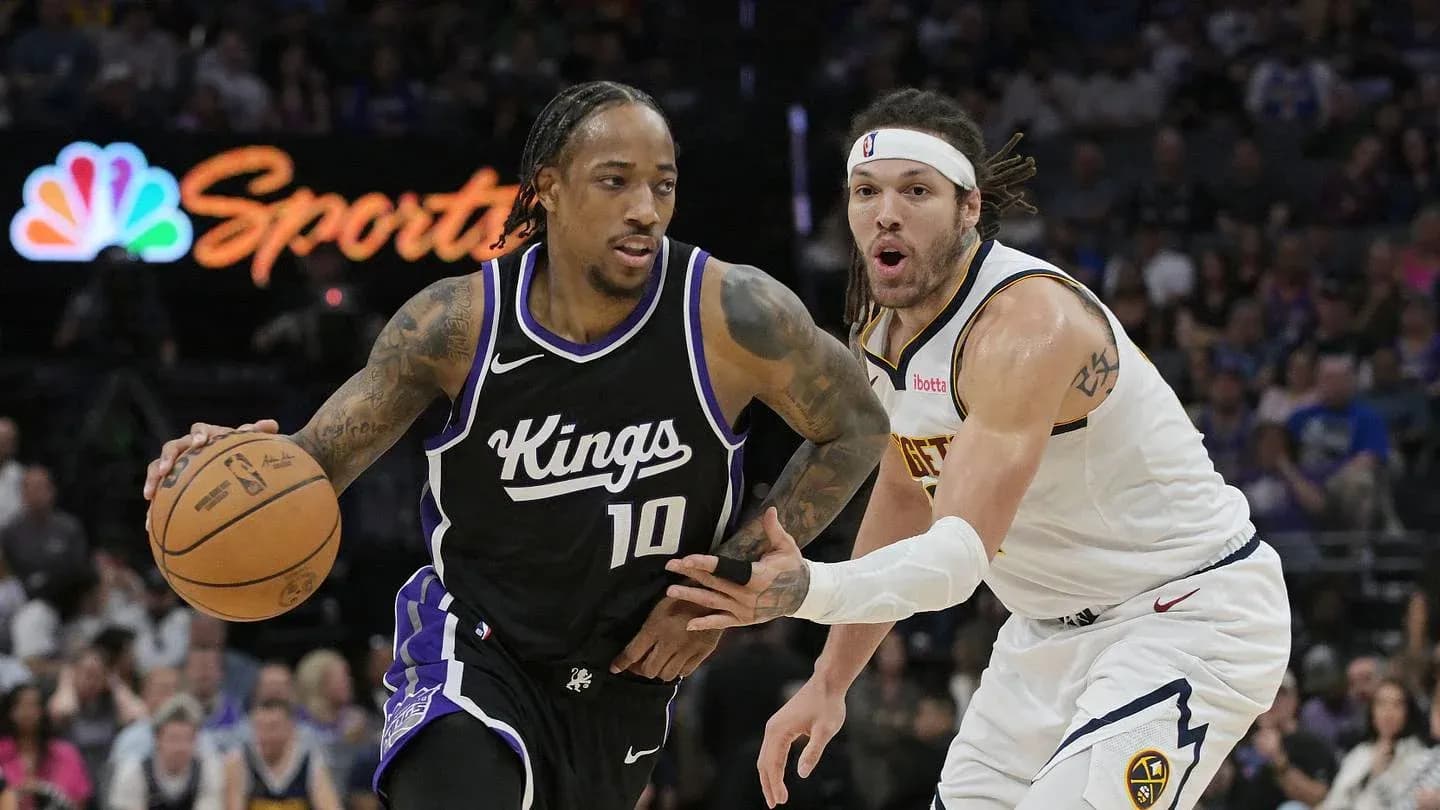
DeRozan, the sixth man?
DeMar DeRozan has spent 16 years as a headliner. In Denver, he might have to live with his name coming after the first timeout.
The Nuggets lost Tim Hardaway Jr. and Peyton Watson this summer, bleeding depth and shot creation from a second unit that already felt fragile. Their answer: a six-time All-Star, a 37-year-old wing who has seen just about every coverage and every playoff wrinkle the league can throw at him.
On talent, there’s no debate. DeRozan can still handle, still create, still get to his spots and make plays for others. He’s exactly the type of veteran scorer and organizer a thin bench cries out for.
The twist is role.
DeRozan has not come off the bench in an NBA game since his rookie season in 2009-10. For more than a decade, teams have built offenses around him or, at the very least, through him. In Denver, the offense already has a sun and a moon in Jokic and Murray. Everyone else orbits.
So what does DeRozan look like as a sixth man, asked to stabilize non-Jokic minutes, punish second units, and occasionally close games without dominating them?
The Nuggets need him to embrace it. Without him, the bench was bordering on unplayable in high-leverage spots—too little creation, too much pressure on starters to carry 40-minute loads from October to April. With him, there’s a chance to steal rest for Jokic without hemorrhaging leads.
DeRozan’s game has aged with remarkable consistency. The question is not whether he can still score or facilitate. It’s whether a future Hall of Famer, at 37, can rewrite his own script and accept a job title he hasn’t worn since he was a rookie trying to stick in the league.
Denver’s season may hinge on that ego check.
Lonnie Walker IV and the last seat on the bus
At the other end of the roster, another career hangs in the balance.
Lonnie Walker IV is back on an NBA fringe he probably thought he’d left behind. After a stint in the EuroLeague with Maccabi Tel Aviv in 2025-26, the 27-year-old guard returns on a non-guaranteed one-year deal, with the Nuggets holding the power to cut him loose before opening night.
He’s not a camp body. He’s an NBA-level scorer fighting the clock.
Walker’s last stretch in the league, with the Philadelphia 76ers at the tail end of the 2024-25 season, reminded everyone what he can do: 12.4 points, 3.2 rebounds, 2.5 assists over 20 games. He handled the ball. He attacked. He looked like a rotation guard, not a placeholder.
Now the question is whether Denver is willing to use its final roster spot on him.
There’s a school of thought in the front office that keeping that spot open has value—flexibility for trades, buyout season, or unexpected opportunities. But look at the backcourt depth chart. Behind Murray, the projected reserve group of Tyus Jones and Julian Strawther is steady but not exactly explosive.
Walker, at his best, brings a different gear. He can create his own shot, pressure the rim, and soak up ball-handling duties in lineups that need a jolt. There’s a real scenario where he outplays both Jones and Strawther in camp, forcing the Nuggets to make a choice between flexibility and immediate firepower.
For a team with championship expectations, that last seat on the bus might matter more than it looks on paper. Walker has two weeks to prove it.
The weight on David Adelman
The biggest pressure point in Denver doesn’t wear a jersey.
David Adelman enters his second full season as head coach with a roster that expects to contend and a playoff résumé that says otherwise. He took over just before the 2025 postseason. That run ended in the second round. This past season ended even earlier, with a first-round exit that stung far more than the box scores could show.
In the regular season, the Nuggets hummed. They finished with the league’s top offense, Jokic conducting a symphony, Murray dancing in the two-man game, shooters spacing the floor. But the defense sagged to 21st, and when the game slowed down in April, Denver paid the price.
Adelman has to change that. Not tweak it. Change it.
The front office handed him a new top assistant in Dave Joerger, a coach with a defensive reputation and a history of squeezing effort and structure out of imperfect rosters. The message is obvious: the Nuggets don’t just want a better defense; they expect a staff that can build it.
Because for all Jokic’s brilliance, all Murray’s shot-making, this group has hit a ceiling in Adelman’s short tenure. Twice now, the postseason has exposed the same imbalance—too easy to score on, too reliant on offensive perfection.
This season, there is no hiding place. The roster is good enough. The star power is unquestioned. The West is brutal, but Denver is supposed to live in that weight class.
If Adelman finds the right mix—if DeRozan buys into a sixth-man role, if the bench stabilizes, if the defense climbs from mediocre to merely respectable—the Nuggets can credibly chase a title.
If not, this might be remembered as the year when Denver decided its stars needed a different voice on the sideline.