.svg&w=384&q=75 "logo")
NBA Punishments and Ownership Drama: Clippers and Lakers
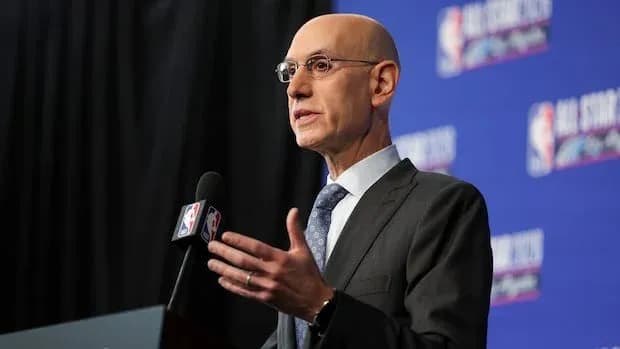
NEW YORK — Adam Silver didn’t blink.
The NBA commissioner walked into a midtown Manhattan ballroom on Thursday, closed the book on the Los Angeles Clippers’ salary-cap scandal and made it clear: the punishment is not up for debate, and it’s meant to scare everyone else straight.
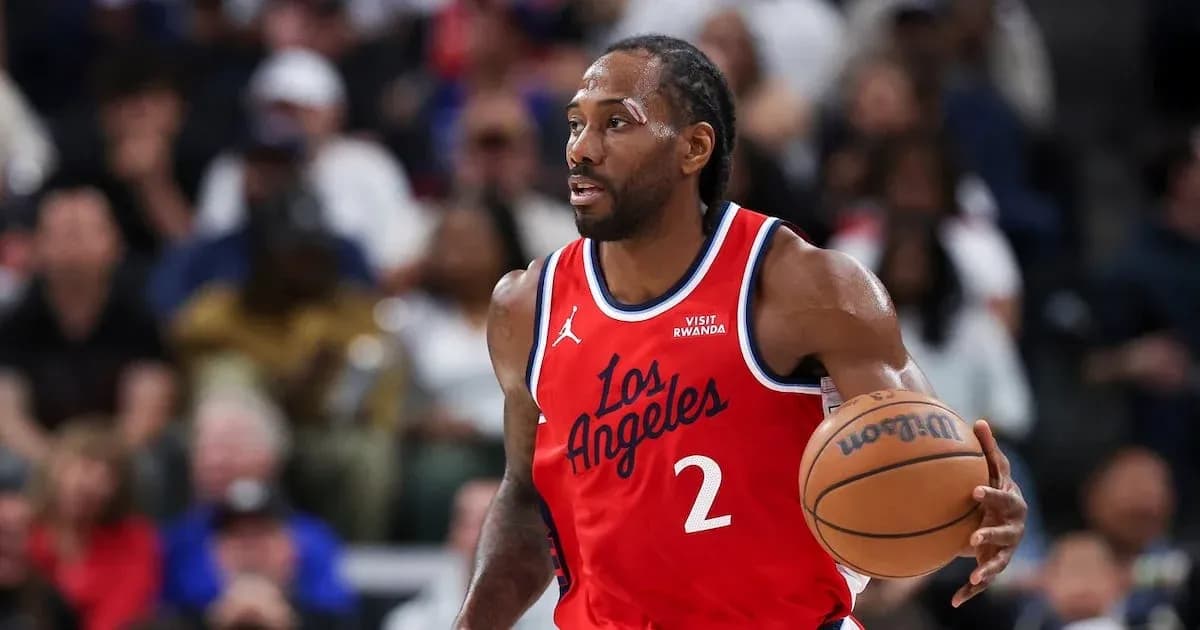
Five first-round picks gone. A $30 million fine. Owner Steve Ballmer banned from all league and team activities for a year. Kawhi Leonard fined $700,000. Two executives suspended. A franchise stripped of draft capital and its billionaire front man, all for what the league says was a deliberate effort to help Leonard secure off-court income in violation of salary-cap rules.
Final. Deterrent. Those were the themes.
“There had to be competitive consequences,” Silver said, acknowledging the difficulty of hammering one of his own teams while insisting the league had no choice if it wanted its rules to mean anything. He stressed he doesn’t believe the sanctions inflict permanent damage on the Clippers, but he didn’t pretend they were mild.
The commissioner also admitted what everyone in the room already knew: when you punish a team this hard, you hit the fan base too.
“We still want to be a 30-team league, and we recognize that, in some ways, we’re unfortunately punishing the fans of that team as well. And so that’s the balance we’re trying to seek,” Silver said. The point, he added, is to ensure other teams never feel tempted to follow the same path. Suspensions and fines weren’t enough. There had to be a competitive price.
The pressure on the Clippers had been building for months as the league dug into their dealings around Leonard. The franchise even froze a blockbuster trade at its own discretion while the investigation played out.
That deal finally went through on June 30: Leonard back to the Toronto Raptors, where he delivered a title in 2019, in exchange for forward Brandon Ingram, guard Gradey Dick, two unprotected first-round picks, a first-round pick swap and two second-rounders. A star out, a haul of players and picks in — but not nearly enough to offset the draft punishment handed down from the league office.
Ballmer, who was not at the Board of Governors meeting, has already waved the white flag. He apologized to fans and said he won’t fight the penalties.
While the Clippers absorb their hit, the other Los Angeles team sits at the center of a very different storm.
Lakers sale turns messy
Silver also addressed the unfolding drama around the Los Angeles Lakers, a franchise used to spectacle but not like this.
Los Angeles Dodgers co-owner and TWG Global CEO Mark Walter has agreed to sell the Lakers for a record $12.5 billion to businessman Josh Kushner and former Disney CEO Bob Iger. It’s a staggering number, even by NBA standards, and it would reset franchise valuations across the league.
One problem: Jeanie Buss is not on board.
The Lakers’ controlling owner is challenging the sale, arguing that her five siblings don’t have the authority to unload the family’s remaining 17.8% stake. Because Buss herself holds more than 15% of the team, she remains the Lakers’ governor under league rules, and that status gives her leverage in what is quickly becoming one of the most high-profile ownership fights in American sports.
Silver, for his part, insisted the league did not walk into this blindly when Walter first came into the NBA ecosystem. Walter is under federal investigation for potential financial improprieties tied to two insurance companies he controlled, but Silver said that when the league vetted him ahead of his purchase of the Lakers in October 2025, nothing flagged.
“Even to this day, as you know, these are allegations,” Silver said. “There are issues that are now being looked into, but independent of Mark Walter choosing to sell this team right now, he was not being investigated by our league.”
Silver added that he only learned Walter wanted to sell when prospective buyers approached the league with a handshake agreement already in place. The legal and governance questions around Buss, her siblings and the buyers now move to the foreground, with the NBA watching closely. The price tag alone guarantees that.
Expansion talk, Portland tension
While the league’s present-day controversies grabbed the headlines, Silver also used the Board of Governors wrap-up to glance toward the future — and to one stubborn problem in the Pacific Northwest.
Las Vegas and Seattle remain the front-runners for eventual expansion. There is no timetable, no hard date, no rubber-stamped plan. But the commissioner openly acknowledged that the next round of bids is coming soon and that both markets sit in prime position.
“I think that there is real excitement around either, you know, a renovated T-Mobile Arena,” Silver said of Las Vegas. He noted the building still needs “significant improvements” but also pointed to groups pitching what he called a “modern entertainment palace” in the city. Vegas, already a magnet for major events, continues to look like an inevitability more than a question.
Seattle, still aching from the loss of the SuperSonics, remains the sentimental favorite and a strong business case. The league, though, continues to move cautiously. No dates. No promises. Just steady signals that the door is open.
Portland is different. The Trail Blazers already exist, but their home has become a problem.
Silver made it plain: the Moda Center, opened in 1995, no longer meets the standard. It is, in his words, one of the worst arenas in the league. Owner Thomas Dundon has been locked in a prolonged tug-of-war with local and state officials over a new building and the financial framework needed to make it work.
“It is important, at the same time, that Tom Dundon reaches a deal with the city officials and the state elected officials that makes operating important and viable for the long term. So that’s what we’re focused on,” Silver said.
Relocation? He shut that door — at least rhetorically. The league has not discussed moving the Blazers, Silver insisted, and he called any such outcome a “failure.” Still, the message was unmistakable: Portland needs a new arena solution, and it needs one soon.
The last time the NBA added a team was 2004, when the Charlotte Bobcats joined as the 30th franchise, later reclaiming the Hornets name. Two decades on, the league is bigger, richer and more global than ever. Now it must decide how far and how fast to stretch.
On one side, a flagship Los Angeles brand in ownership turmoil. On the other, its crosstown rival stripped of picks and its owner barred from the building. In between, cities lining up for a shot at the league’s next chapter.
As the NBA heads into its 81st season on Oct. 20, with the New York Knicks opening their title defense against the Philadelphia 76ers, the question isn’t whether the landscape will change.
It’s which fault line will crack first.