.svg&w=384&q=75 "logo")
Mike Hesson Clarifies Role in Pakistan's Test Squad Changes Ahead of Edgbaston
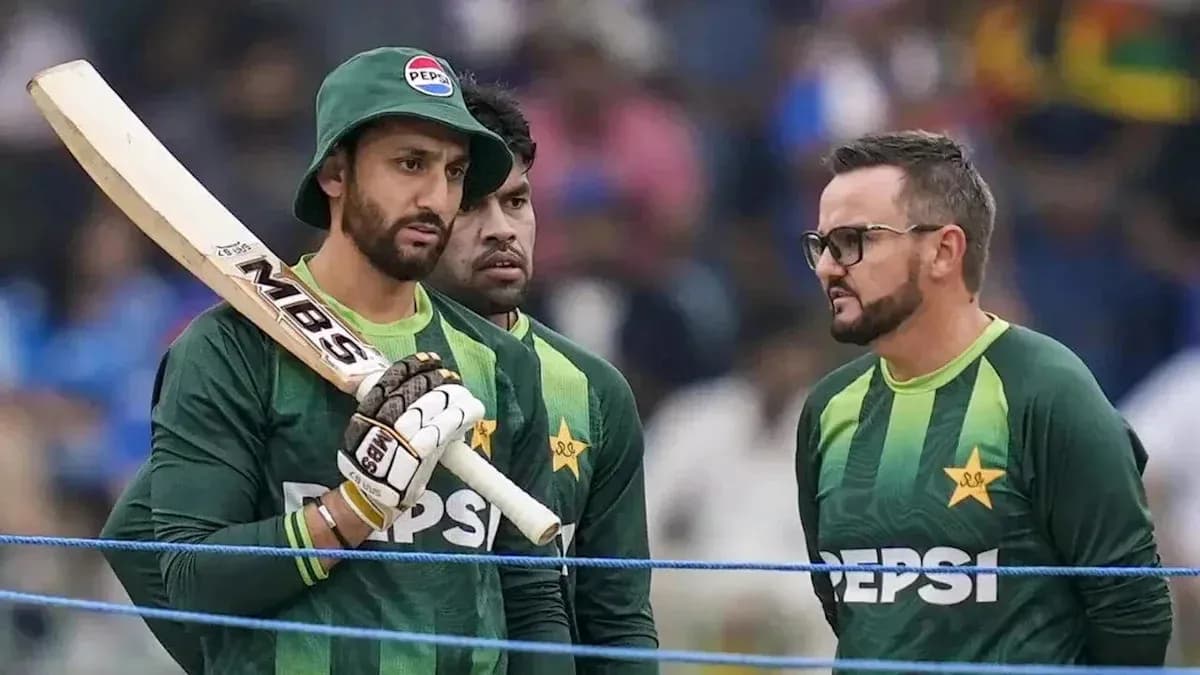
Pakistan’s chaotic build‑up to the third Test against England took another twist on Friday, with interim red‑ball coach Mike Hesson making it clear he was not the architect of the most controversial calls of the week.
Seven players have been sent home. Two coaches have gone with them. The series is already lost. And Hesson insists he walked into the storm only after the first major decisions had been signed off.
“They were already on their way home”
Speaking to reporters in Birmingham ahead of the Edgbaston Test starting September 9, Hesson moved quickly to separate himself from the headline omissions of three senior players: Mohammad Rizwan, Salman Ali Agha and Imam-ul-Haq.
“When they (Pakistan Cricket Board) told me if I could manage the side for the final Test, these three players (Rizwan, Agha and Imam) were already released from the squad and (were) on their way home. So, I really don't know what happened there,” Hesson said.
By the time he picked up the phone, the damage — at least in terms of experience and dressing-room presence — had already been done. Rizwan, Agha and Imam, all central to Pakistan’s recent Test plans, were out of the picture before the new coach had even unpacked his bags.
The clear message: this was a board decision, not a coach’s purge.
Series in ruins, squad in pieces
The Pakistan Cricket Board reacted brutally after England wrapped up the series with a game to spare. The numbers were ugly, and they demanded a response.
At Headingley, England crushed Pakistan by an innings and 103 runs. At Lord’s, they tightened the grip with a 194‑run win, sealing a 2-0 lead and leaving the visitors searching for answers, identity, and now, personnel.
The PCB’s response was sweeping. Along with Rizwan, Agha and Imam, four others — Ali Usman, Aamir Jamal, Muhammad Awais Zafar and Khurram Shahzad — were released from the Test squad. Head coach Sarfaraz Ahmed and bowling coach Umar Gul were also removed from their roles.
What remained was a shell of a touring party and a final Test at Edgbaston that suddenly feels less like a dead rubber and more like an audition for the future.
Where Hesson did step in
If Hesson had no say on the fate of the three senior names, he did not deny his involvement in the rest of the reshuffle.
“I was involved in the release of the rest of the players and the inclusion of some new players,” he said, confirming his hand in trimming the squad and shaping what Pakistan will put on the park in Birmingham.
The New Zealander has been working inside Pakistan’s system long enough to know the stakes. He has been part of the white‑ball setup, overseeing a camp in Lahore before heading to Japan for the Asian Games. His switch to the red‑ball role came at speed.
“We already had a white-ball camp in Lahore and I had just returned from Japan where the Asian Games are taking place, when I was asked if I could manage the red-ball squad,” he explained.
One week he is fine‑tuning limited‑overs plans in Asia. The next, he is fire‑fighting a Test crisis in England.
A new look at Edgbaston
The PCB wanted change. They have it. A new voice in charge, a stripped‑down squad, and a chance — or a risk — to see who can handle a hostile Edgbaston with a series already gone.
Hesson has signalled he wants more variety in the bowling attack, a hint that Pakistan’s balance will look different in Birmingham. After being outplayed at Headingley and Lord’s, they can hardly afford to look the same.
The question now is not how Pakistan lost this series. That story is already written. The real intrigue lies in what kind of Test side walks out behind Hesson at Edgbaston, and how many of them are still there when Pakistan start again.