.svg&w=384&q=75 "logo")
Mike Hesson Open to Long-Term Role as Pakistan Test Coach
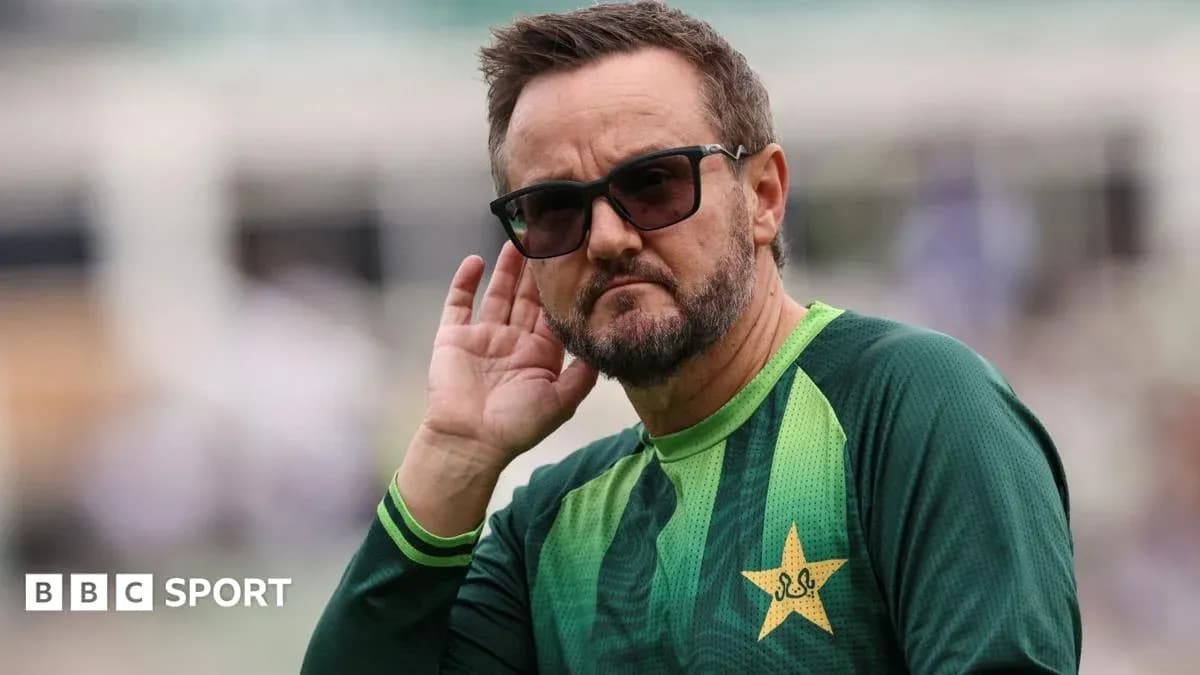
Mike Hesson has made it clear: if Pakistan want him as their permanent Test coach, he’s ready to talk.
The 51-year-old New Zealander, parachuted in as an interim appointment for the third Test at Edgbaston, has barely had time to unpack. Yet already he is speaking like a man who sees a longer road in front of him, not just a quick repair job after a bruising tour of England.
“I'll be open to it, for sure. I love Test cricket,” Hesson said, his words carrying the calm certainty of someone who has been around enough dressing rooms to know what he wants. “I think there's enough talent around the system in Pakistan that if we can provide some good direction, we can make some strides forward.”
He is not promising miracles. He is promising work.
“It’s certainly not going to happen in a game or two,” he added. “But I think there is some skill there I'd certainly be considering looking after.”
From Headingley and Lord's to Edgbaston
Hesson’s arrival followed two heavy defeats, at Headingley and Lord’s, that cost Sarfaraz Ahmed his role as interim Test coach. The Pakistan Cricket Board turned to their limited-overs coach, appointed in May 2025, to steady a red-ball side that looked rattled and underprepared.
Edgbaston did not bring a result to change the narrative on the scoreboard. England won by eight wickets. The margin was clear, the gulf in preparation perhaps even clearer.
Yet inside that defeat, Pakistan’s hierarchy saw enough to keep the conversation going. There were small shifts: more resistance with the bat, a bit more organisation in the field, a sense that this was at least a team trying to respond rather than merely absorb punishment.
Former captain Ramiz Raja, watching closely, picked up on that edge.
“Pakistan's players put up a fight,” he said, but his verdict came with a warning and a challenge. “It's time to revisit Test match cricket. It's back to the drawing board because in the sub-continent not a lot of emphasis is put on Test match cricket.”
Ramiz did not ignore the turmoil surrounding the side.
“Obviously there was mayhem around the team and that may have hurt the dressing room environment. But Pakistan were also a little underdone, undercooked with preparation.”
In other words: the intent is there, the structure is not. That is exactly the sort of project Hesson has built a career on.
England Came Calling Too
If Pakistan needed a reminder of Hesson’s standing in the game, it came from across the field.
The former New Zealand coach, who led his country between 2012 and 2018 and helped lay the foundations for their modern, hard-edged, tactically sharp Test side, confirmed he had been sounded out about one of the most high-profile roles in world cricket: England’s Test job.
England sacked Brendon McCullum in July and eventually turned to another New Zealander, Stephen Fleming. Before that, Hesson’s phone buzzed.
“I was contacted by my agent to say there had been an approach to have a discussion around my availability, as I'm sure many people were,” he said.
He listened. Then he shut the door.
“I made it pretty clear I had committed to Pakistan,” Hesson explained. “Most of the positions I've been in, I've been in for five or six years. I see it through, then you have a break, then you refresh and try for something else.”
That line tells you as much about his mindset as any tactics board. Hesson is not a short-term firefighter. He is a builder. A planner. Someone who expects to be judged over years, not series.
A Red-Ball Reckoning for Pakistan
All of this drops into a wider, uncomfortable truth for Pakistan cricket: the red-ball team has slipped down the list of priorities, and the results are starting to expose it.
Ramiz’s words cut to the heart of the issue. In the sub-continent, white-ball tournaments, leagues, and commercial pull dominate the calendar. Test cricket survives on tradition and prestige, not always on planning.
Hesson, a self-confessed lover of the longest format, is pushing in the opposite direction. He talks about “direction”, about “strides forward”, about the time required to embed a method. His track record with New Zealand suggests he means a clear identity, disciplined selection, and a dressing room that knows exactly how it wants to play.
Pakistan, as ever, bring raw material that most nations would envy: fast bowlers with pace and bounce, batters with flair, spinners who can change a session. What they have lacked in this series is cohesion, preparation, and a stable voice at the top.
Hesson, already embedded as limited-overs coach, offers continuity across formats at a time when the PCB must decide what it wants its Test side to be.
The question now is not whether he is interested. He has answered that. The question is whether Pakistan are ready to hand the red-ball reins to a coach who builds in five-year blocks, not five-day fixes—and whether they have the patience to let him do it.