.svg&w=384&q=75 "logo")
Marcus Trescothick Reflects on England's Coaching Transition
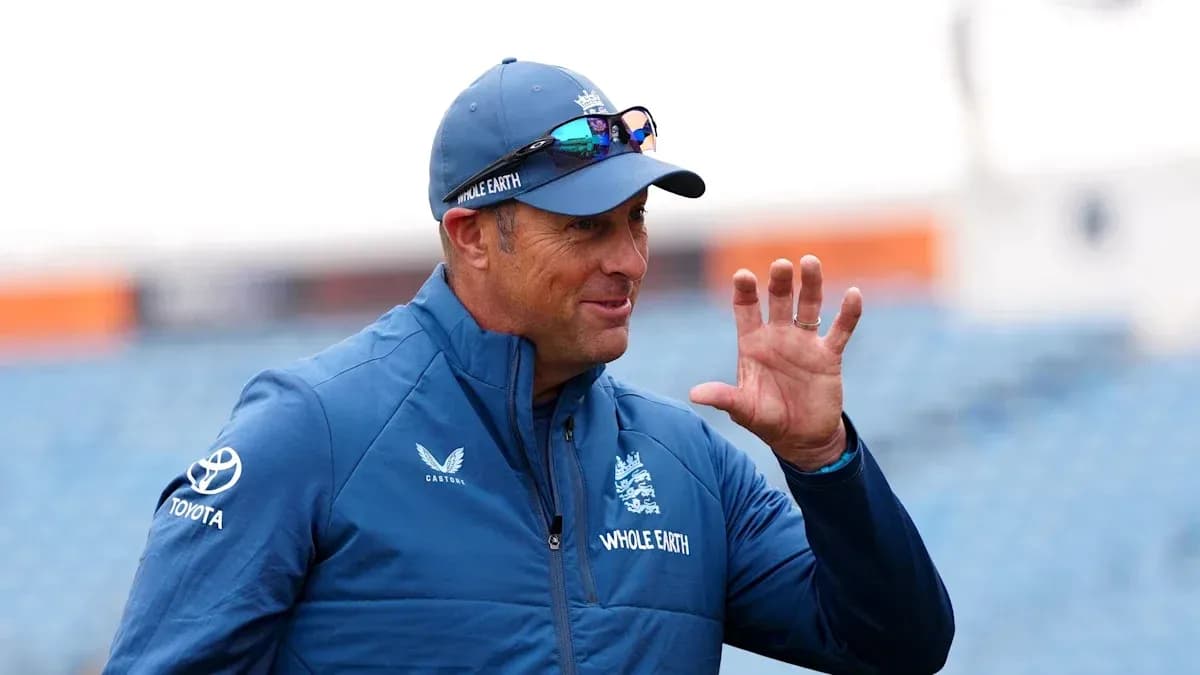
Marcus Trescothick walked out of The Oval with a 3-0 series win in his pocket and a question mark over his future.
He has just overseen a ruthless whitewash of Pakistan as interim head coach of England’s Test side. On Sunday he swaps tracksuits, joining Brendon McCullum’s white-ball group for the Sri Lanka series. Yet while the schedule is mapped out, his own role in the next era of English cricket is anything but.
Fleming era looms – with a Kiwi core
Stephen Fleming, the incoming red-ball head coach, is due to land in England in the coming days. When he does, both national teams will effectively be run by New Zealanders.
McCullum already fronts the white-ball set-up. Tim Southee and Jeetan Patel are embedded with the bowling group. Australian influence is growing too: Marcus North has arrived as national selector, while Fleming has reportedly sounded out compatriot Mike Hussey as a potential Test batting mentor.
Trescothick, for four and a half years the most senior English voice around the Test squad, suddenly looks like the outlier in his own dressing room.
“There’s another transition to happen with Stephen coming in to work with Joe Root and plan how they are going to move things forward,” he said, acknowledging that the next phase is about to be drawn up without yet knowing his place in it.
He has spoken with Rob Key, the director of men’s cricket, “a little bit over the last couple of weeks”, with only “bits of discussions” so far about what comes next. The real decisions will be made once Fleming touches down and sits in a room with Key and McCullum to “thrash out how it’s going to look”.
Trescothick does have a preference. He just isn’t sharing it.
“I probably do, but it’s probably best I don’t mention it at the moment because it may not be what happens. I love doing both formats. It’s been brilliant and a privilege.”
The fight to keep an English heartbeat
This is not just about one man’s job description. Trescothick is clear: amid the overseas expertise, England need homegrown voices.
He is not alone in that conversation. Sarah Taylor has drawn strong reviews for her work as a fielding consultant this summer. Michael Yardy, usually with the under-19s, has stepped up temporarily to the senior group in recent weeks. Both are English, both understand the rhythms of the domestic game and the nuances of the national shirt.
“Yeah, I’d like to think so. There’s nothing better than working for your own national country,” Trescothick said, when asked if English representation should remain part of the set-up.
For him, it is not a sentimental plea. It is practical.
Within any coaching structure, he argues, someone must be able to pinpoint what matters specifically to England players, England teams, England series. The Ashes. A Lord’s Test. A September decider in the cold. Those are not generic assignments. They feel different, they play different, and they demand an understanding that cannot always be imported.
“They are different to other countries and unique in their own way,” he said.
The ambition, in his eyes, is clear: promote from within, push English coaches up the ladder, and let them share the responsibility at the very top.
“We want to try and promote our own from within and get them up to the top because there’s nothing better if you can get to that point. It’s not the be-all and end-all but if we can have representation in there the better it will be.”
England’s Test side has just delivered a clean sweep. A new head coach is on his way. The structure around him is being redrawn in bold, foreign strokes. The next few weeks will reveal whether Trescothick, and the English core he champions, remain part of the picture or watch the new regime from the outside looking in.