Luis Enrique’s PSG Overpowers Manchester City’s High Line with Rapid Transitions
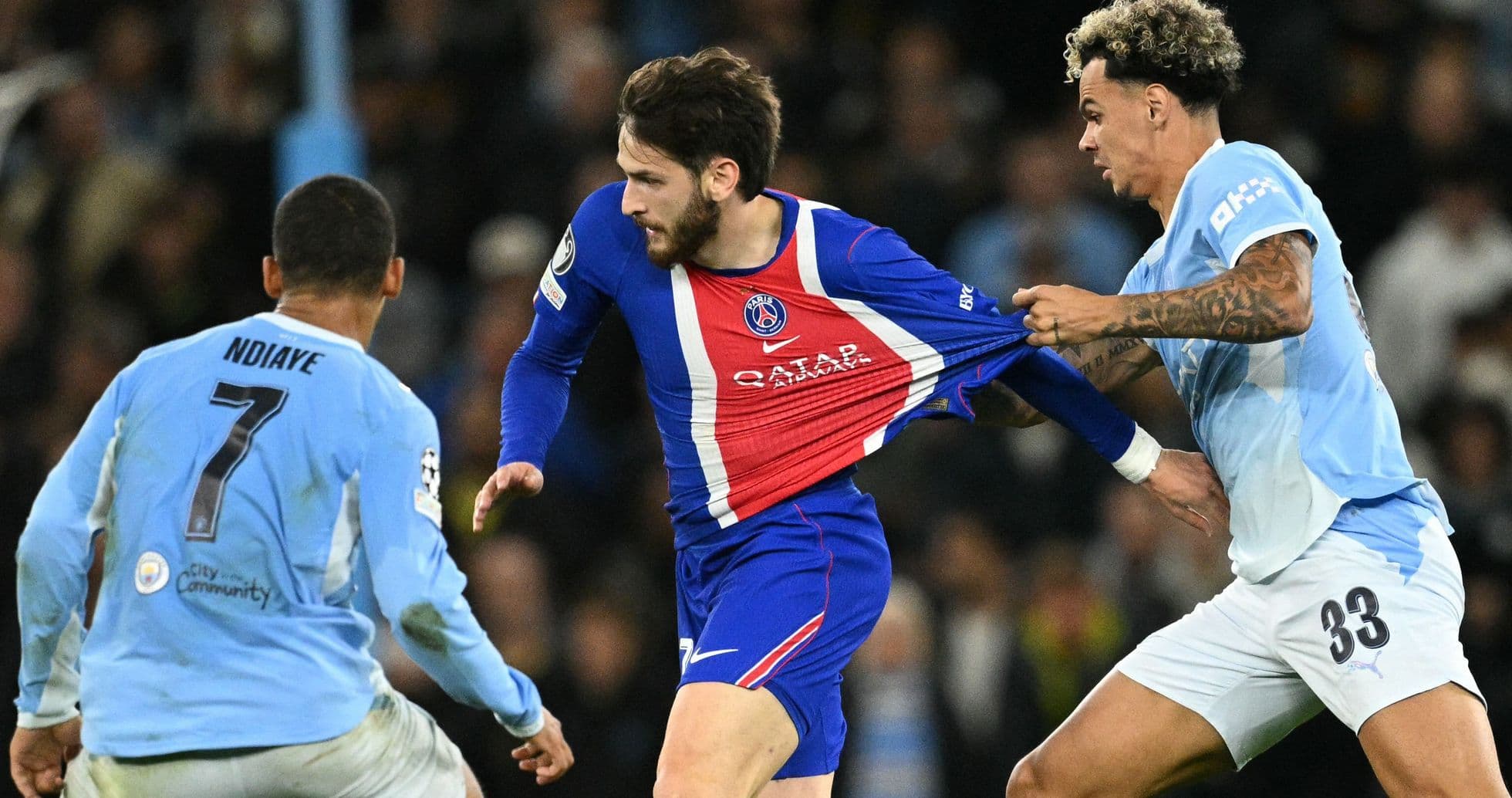
Manchester City vs Paris Saint-Germain: Tactical Breakdown
Paris Saint-Germain showcased a flawless transition strategy to earn a 4-2 victory at the Etihad Stadium. Despite Erling Haaland leading a strong comeback in the second half, Manchester City’s defensive flaws in the opening 45 minutes proved too costly.
Tactical Setups and Strategies
The match was a clash of contrasting game plans from Enzo Maresca and Luis Enrique. City aimed to dominate possession through a high-pressing 4-2-3-1, trying to overwhelm PSG in their defensive third. Maresca relied on the double pivot of Enzo Fernandez and Elliot Anderson to control the midfield tempo, while hoping for moments of brilliance from Jeremy Doku and Rayan Cherki to break down PSG’s defense.
On the other hand, Luis Enrique set up PSG in a fluid 4-3-3 focused on vertical attacks rather than sideways ball movement. PSG baited City’s aggressive pressing to expose space behind their high defensive line. The plan was to quickly bypass City’s initial press and use the speed of Ousmane Dembele and Desire Doue to isolate City’s center-backs in rapid counter-attacks.
Manchester City’s Tactical Approach
- Formation: Started with a 4-2-3-1, shifting to a 3-2-5 during build-up phases.
- Defensive Setup: Josko Gvardiol dropped inside for extra cover.
- Pressing Triggers: Aggressive pressing when Safonov passed short to Marquinhos or Willian Pacho, forcing long clearances.
- Risks: Large gaps between midfield and defense left Ruben Dias and Marc Guehi vulnerable to direct runs.
- Possession Issues: Despite 54% possession, City struggled to penetrate centrally; Haaland isolated due to limited vertical passes.
- Defensive Fragility: High line caught out repeatedly by PSG’s quick first-time passes.
Paris Saint-Germain’s Tactical Execution
- Formation: Flexible 4-3-3, dropping into a compact 4-5-1 defensively.
- Midfield Shield: Vitinha and Fabian Ruiz screened the back four effectively.
- Patience in Defense: Allowed City to keep possession in low-threat areas before pressing aggressively on loose balls.
- Transition Play: Vitinha orchestrated quick ball recovery and immediately looked to release Dembele or Doue diagonally.
- Exploiting Space: By involving goalkeeper Safonov in build-up, PSG drew City out, creating lanes for Zaire-Emery and Ruiz to attack vertically.
- Wide Movement: Maghnes Akliouche’s drifting pulled Guehi out of position, opening spaces for wingers.
- Efficiency: Scored three goals from just 46% possession in the first half.
Tactical Battle Highlights
The key fight happened on the flanks and in transition zones. Luis Enrique targeted City full-backs, especially Gvardiol, who pushed high and left gaps behind. Keeping Dembele wide and advanced prevented City from fully committing to attacks without risking long-ball counters. This limited City’s ability to overload final attacking areas and forced their midfielders to cover excessive lateral ground.
Enrique’s pragmatic approach outmaneuvered Maresca’s rigid positional game. The mismatch between PSG’s agile front three and City’s slower centre-backs during the early stages was decisive. By the time City adjusted, PSG had built a three-goal lead within the first 32 minutes through goals from Doue, Dembele, and Vitinha, shifting momentum firmly toward Paris.
In-Game Adjustments
- City’s Changes: Maresca made three substitutions at halftime, bringing on Matheus Nunes, Ayyoub Bouaddi, and Iliman Ndiaye for Ruben Dias, Rayan Cherki, and Jeremy Doku.
- New Strategy: Shifted to a more dynamic setup pushing more players forward to support Haaland.
- Impact: Ndiaye’s direct play helped create Haaland’s first goal in the 53rd minute; City became more vertical and increased crossing frequency.
- PSG Response: Introduced Khvicha Kvaratskhelia for Doue and Joao Neves to stabilize midfield.
- Defensive Reinforcements: After Haaland’s second goal in the 75th minute, PSG shifted to a 5-4-1 block with late entries of Lucas Hernandez and Lucas Beraldo.
- Outcome: PSG successfully resisted City's late aerial pressure despite City having 27 total shots.
Match Summary
The game was largely defined by the tactical gap in the first half. PSG’s ability to lure City into a false sense of security and then strike rapidly on the counter was the key difference. Haaland’s two goals highlighted City’s individual class and improved intensity after halftime, but the damage inflicted early by PSG’s trio of Doue, Dembele, and Vitinha was too much to overcome.
Luis Enrique’s focus on sharp vertical play overcame Enzo Maresca’s possession-heavy style, proving that controlling space can be more decisive than simply holding the ball in elite European football.