.svg&w=384&q=75 "logo")
Laver Cup: Tennis' Bold Experiment or Just an Exhibition?
Tennis has never rushed to reinvent itself. White lines, green courts, hushed crowds – the sport leans heavily on its traditions.
In 2017, Roger Federer tried to bend that script.
The Laver Cup arrived that year as tennis’ answer to golf’s Ryder Cup: three days, one court, two continents colliding. Six players from Europe against six from the rest of the world, singles and doubles, points escalating as the weekend wears on. A made-for-television concept, but with a clear ambition – to matter.
Nine editions in, with the 2026 event set to begin on September 25, the Laver Cup is still fighting that battle.
Exhibition or something more?
From the start, the event has split opinion. The format is slick, the production polished, the star power undeniable. Yet a sizeable portion of fans – and some players – refuse to see it as anything more than a lucrative show.
Julien Benneteau went further than most. Speaking on the Grandes Gueules du Sport podcast in 2024, the former French pro dismissed the competition bluntly, saying the Laver Cup had “no sporting value” and that players were only there because “the cheque is huge.”
The numbers are not small. The total prize pot for the 2026 edition stands at $1.5 million. Each player on the winning team will take home $250,000. The losers get nothing. It is a clear, hard financial incentive layered on top of prestige that is still being constructed.
That tension – between spectacle and sporting weight – has followed the Laver Cup from day one.
Nadal’s answer
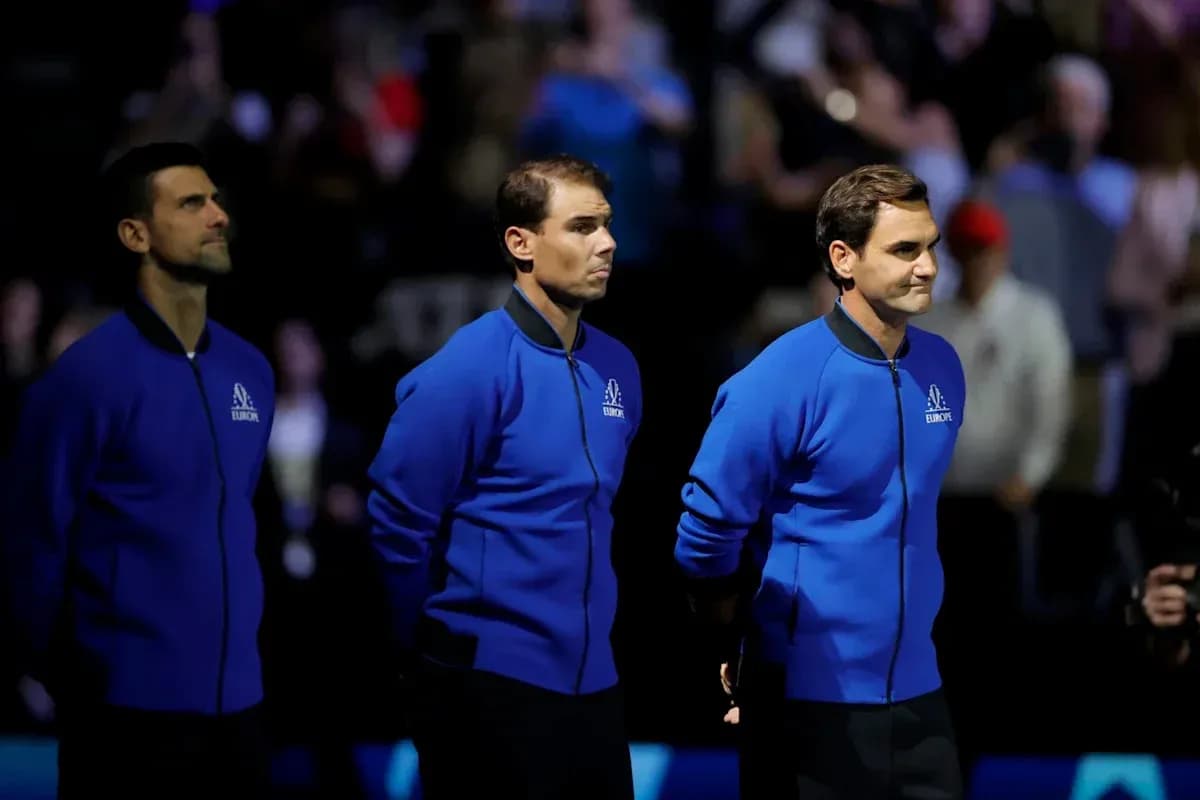
Before a ball had been struck in the inaugural edition in 2017, Federer and Rafael Nadal sat in front of the microphones and faced the obvious question: is this just an exhibition?
Nadal did not hesitate.
“No, is not an exhibition at all. No, no, I don't think,” he said. He went straight to the detail that matters to players: preparation. “No, we are here to try our best, no? I woke up today at 4:00 in the morning to practice. An exhibition match, I don't practice before an exhibition match normally, no.”
It was classic Nadal – blunt, intense, rooted in work.
“We are here to try our best. We are here to try to win. Not at all like a friendly match, no? We are here to really play with passion and to play for our continent. We have a great team behind us. We want to do it well for all of them. Let's see if we are able to do it."
Then they went out and backed it up. Team Europe beat Team World 15-9 in that first Laver Cup, a result that set the tone for European dominance in the early years and gave the event an immediate competitive edge.
What hooked Federer
For Federer, the Ryder Cup inspiration was never just about format. It was about emotion.
Asked in 2017 how important it was to recreate that same passion, he pointed not to marketing plans but to something more basic – who showed up, and when.
“Well, I think it's going to be vital,” he said. “That's why I'm very excited to see that the guys all arrived a day early. You know, they were supposed to arrive on Wednesday. They all came in on Tuesday. Everybody seems really eager to play, to win.”
That eagerness was the signal he needed. The players were treating it seriously. The rest, he knew, would depend on what happened once the lights went up.
“But of course we have to give it the passion and the energy,” Federer continued. “Without that, the fans are just going to sit there and maybe enjoy some tennis, but they're not going to get into it.”
He framed the crowd as a partner rather than a backdrop.
“I hope that while we are playing on home soil, the fans are going to understand how much we need their support and how lovely it would be if everybody got really excited and make this event something very unique and special for years to come. But it's clearly crucial."
That was the bet: that emotion, not ranking points, could carry a competition.
A tournament still on trial
As the 2026 Laver Cup approaches, the core arguments around it have barely shifted. The format remains the same. The star names keep coming. The money is still eye-catching. So is the criticism.
On one side, there is Benneteau’s blunt verdict and a section of the tennis public that will not budge: no ranking points, no history, no real stakes. On the other, Nadal’s 4 a.m. practice session and Federer’s insistence on passion as currency.
Nine editions in, the Laver Cup sits in the grey space between exhibition and institution. The next serve comes on September 25.