.svg&w=384&q=75 "logo")
Kevin Pietersen's Comeback as England Cricket Mentor
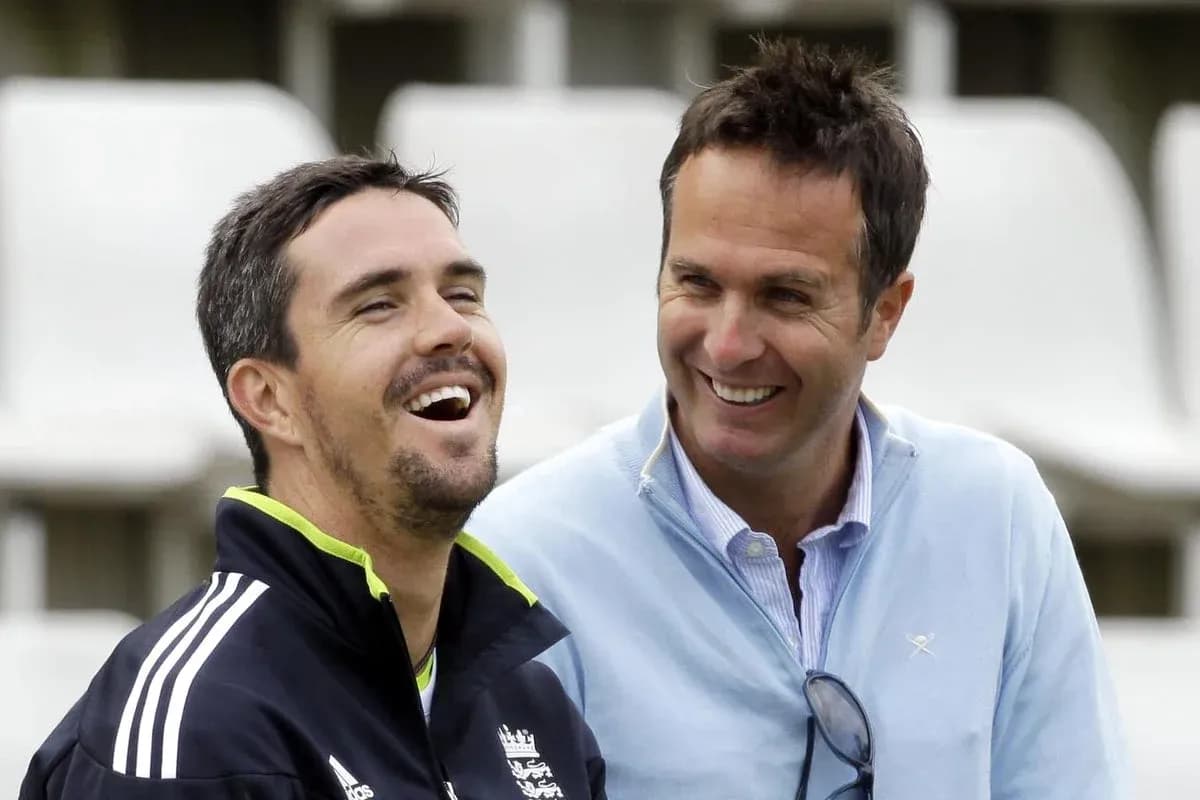
Kevin Pietersen is back in England colours. Not out in the middle this time, but in the dressing room – and Michael Vaughan thinks the gamble is worth every ounce of risk.
A dozen years after being effectively cast out following a spectacular fallout with England’s hierarchy, Pietersen has re-entered the international set-up as a specialist mentor with the one-day and T20 sides. For a player whose England career ended in acrimony in 2014, it is a striking twist.
Vaughan, who captained Pietersen during the 2005 Ashes and knows the volatility and brilliance that come with him, did not pretend this was a safe, predictable move.
“I like it, it’s quirky. It’s a risk, it has to be a risk because you’re not too sure what you’re going to get because Kev’s not done a great deal of coaching,” he said.
That is the tension at the heart of this appointment. Pietersen has never been a traditional coaching figure. He has dipped into mentoring – most notably with Delhi Capitals in the IPL – but his post-playing career has been dominated by broadcasting, not back-room work. Even his stint with Delhi made headlines for the wrong reasons when he slipped away to the Maldives in the middle of the 2025 tournament.
Yet Vaughan is adamant that when it comes to batting knowledge, competitive edge and understanding of high-pressure moments, England could hardly have chosen a sharper mind.
“His knowledge of batting, his knowledge of winning, his knowledge of playing at the right intensity at the right moments, there’s no-one been better in my time playing for England,” Vaughan said.
Pietersen’s return is not just about expertise. It is also about reconciliation. The scars of 2014 have never fully faded, not for him, not for English cricket. Vaughan has long felt his former team-mate was cut adrift too brutally.
“I’m happy he’s back in English cricket because (in) 2014, I always felt that Kev was dealt an iffy hand,” he said. “Kev brings a lot of things on himself but there are many others who have done equally silly things and have been allowed back into English cricket.”
That sense of unfinished business hangs over this comeback. Pietersen, once accused of undermining the dressing room, now walks back into it as a guide to a new generation of white-ball players. He has already shown he is not afraid to criticise the current regime: only last year he accused England’s limited-overs side of inadequate preparation on a tour of India. Now he has to help fix the very standards he questioned.
He is already in camp, linking up with the squad at the Utilita Bowl ahead of England’s T20 series against Sri Lanka, which starts on Tuesday. His role is set to run through to next year’s ODI World Cup, much of which will be staged in his native South Africa – a delicious subplot for a man who made his name in England but never hid his roots.
Vaughan, though, admitted he was surprised by the direction England chose.
“I was actually surprised they’ve brought him into the white-ball set-up. I thought the Test team would have approached him. The white-ball team over the last year have been doing quite well,” he said.
That doesn’t mean the impact will be limited to the shorter formats. Several of England’s white-ball batters also feature in the Test side, and Vaughan expects Pietersen’s fingerprints to be visible across formats.
“I would think that the batters in the white-ball team who play Test cricket, he’ll be having an influence on them,” he said.
The jokes haven’t disappeared either. Vaughan could not resist a playful nod to Pietersen’s IPL break.
“I’ve seen him at Delhi doing a few coaching gigs – I believe he hasn’t got two weeks in the Maldives in his contract, which is good, I believe he has to stay and coach,” he chuckled.
Beneath the humour lies a serious demand. This is not a romantic reunion for nostalgia’s sake. England’s white-ball revolution, once the envy of the world, has stalled. With investment high and expectations higher, Vaughan was blunt about what must follow.
“Winning will be the key. They’ve got to start winning trophies, to justify all these decisions and, let’s be honest, a huge amount of money being spent. England have to start winning trophies.”
Vaughan was speaking in a week that underlined another side of the game’s future. At Lord’s, the inaugural winners of the Barclays Knight-Stokes Cup were crowned after the boys’ and girls’ finals of the new national hardball competition for state schools.
The scale of the project is already striking. An estimated 15,744 students and 1,100 teams are set to take part in the 2025 edition, with applications for next year’s tournament now open. Vaughan believes that is only the start.
“This will go from strength to strength,” he said. “I’m hoping next year that we’ll have more than 2,000 teams enter, that’s the goal.”
On one side, a former superstar returns to try to sharpen England’s edge at the very top. On the other, thousands of state-school kids chase a chance to walk out at Lord’s. If Pietersen’s second act helps turn promise into trophies, the question won’t be why England took the risk – it will be why they waited so long.