.svg&w=384&q=75 "logo")
Joe Root Surpasses Tendulkar in England's 3–0 Victory Over Pakistan
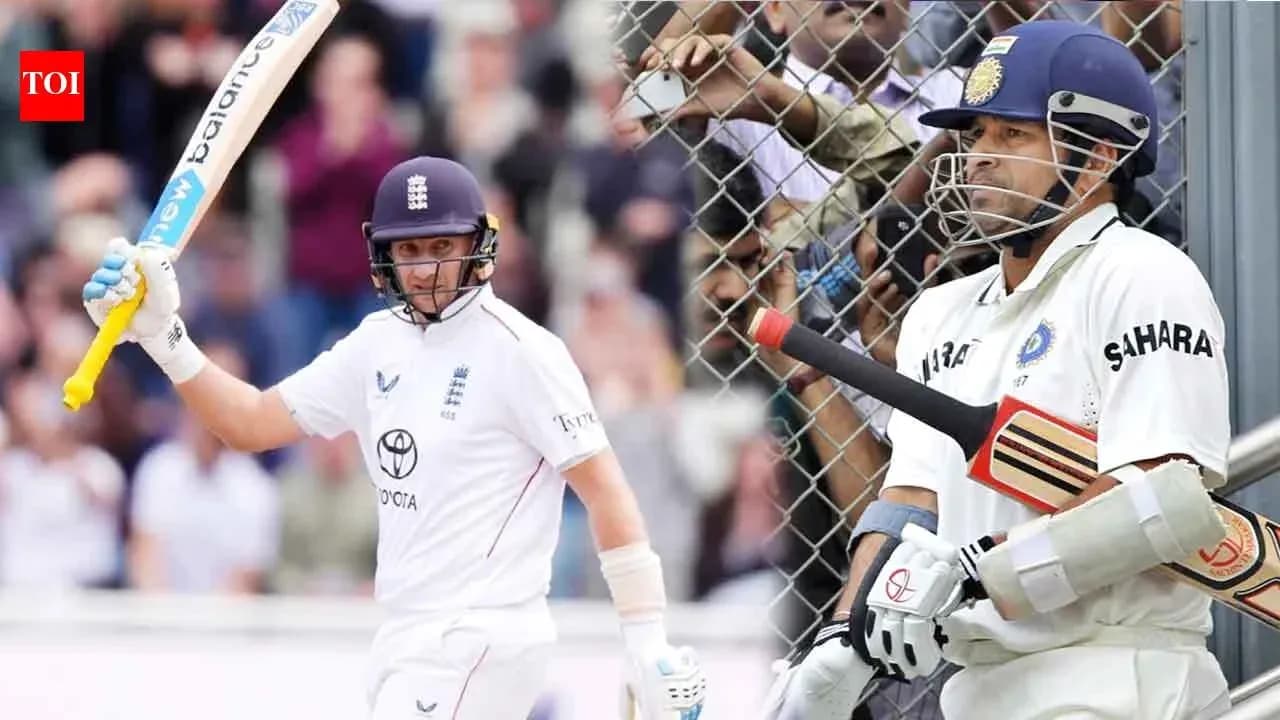
EDGBASTON: On a grey Birmingham afternoon, with a modest chase and a series already under lock and key, Joe Root quietly walked into a corner of cricketing history.
No fanfare. No grand stage. Just 130 runs to get, a willing Pakistan attack, and an England captain in complete control.
By the time he walked off, unbeaten on 62 from 69 balls, Root had done far more than steer England to an eight‑wicket win and a 3–0 sweep. He had slipped past Sachin Tendulkar on the list of most Test fifties, and joined one of the most exclusive clubs the format has ever known.
Root’s fifty that rewrote a line in history
The target was small, but Root batted as if the score were 330, not 130. He drove on the up, punched off the back foot, and threaded nine fours with the assurance of a man who knows exactly where his game is.
That half-century, his 69th in Test cricket, nudged him ahead of Tendulkar’s 68. The names around him underline the scale of the achievement. Behind Root now sit Tendulkar on 68, Shivnarine Chanderpaul on 66, Allan Border and Rahul Dravid locked together on 63, and Ricky Ponting on 62.
It is a roll call of Test batting royalty. Root is no longer just part of the conversation; he has edged to the front of it.
What made the moment striking was its lack of theatre. No desperate scramble, no frayed nerves. England were never in danger. Root simply accumulated, as he has done for more than a decade, until the numbers on the scoreboard and the numbers in the record books quietly aligned.
Edgbaston joins Root’s personal playgrounds
The records did not stop with Tendulkar.
Root’s 62 also carried him into another rarefied bracket: he became the first batter to score more than 1,000 Test runs at Edgbaston. It is now the fourth ground where he has gone past that landmark.
The figures are stark.
- Lord’s: 2,203 runs.
- Manchester: 1,128.
- The Oval: 1,050.
- Edgbaston: now beyond 1,000 as well.
Only Jacques Kallis and Ricky Ponting had previously managed 1,000-plus Test runs at four different venues. That is the company Root keeps now – a South African colossus and an Australian giant, both synonymous with relentless, long-form excellence.
Edgbaston has seen many English heroes, from Ian Botham to Andrew Flintoff, but it now belongs, statistically and stylistically, to Root. He has turned it into one more stage where his game translates into runs with almost mechanical regularity.
England’s ruthless whitewash
All of this came wrapped inside a ruthlessly efficient team performance.
England entered the third Test with the series already won after victories at Headingley and Lord’s. The job here was to finish properly, not drift. They did not drift.
Chasing 130, they closed at 130 for 2, Root unbeaten on 62, Jordan Cox matching him for composure with 59 not out at the other end. There were no alarms, no late twists. Just a calm, methodical march to the line that underlined the gulf between the sides over these three matches.
A 3–0 scoreline in a Test series is never an accident. It speaks of depth, discipline and a side that understands its roles. Root’s runs framed the day, but England’s collective authority across Headingley, Lord’s and now Edgbaston told the broader story.
A legacy still being written
Root’s numbers now carry the weight usually reserved for retired greats. Most Test fifties in history. Four grounds conquered beyond 1,000 runs. Landmarks that sit alongside names like Tendulkar, Kallis and Ponting.
Yet he is still in the middle of it all, still walking out with bat in hand, still finding new ways to peel off another score.
At Edgbaston, England ticked off a whitewash. Root ticked off two more records. The question now is no longer whether he belongs among the modern greats.
It is how far, and how high, he can push those numbers before he is finally done.