.svg&w=384&q=75 "logo")
India vs Pakistan: Women's Asia Cup 2026 Showdown in Dubai
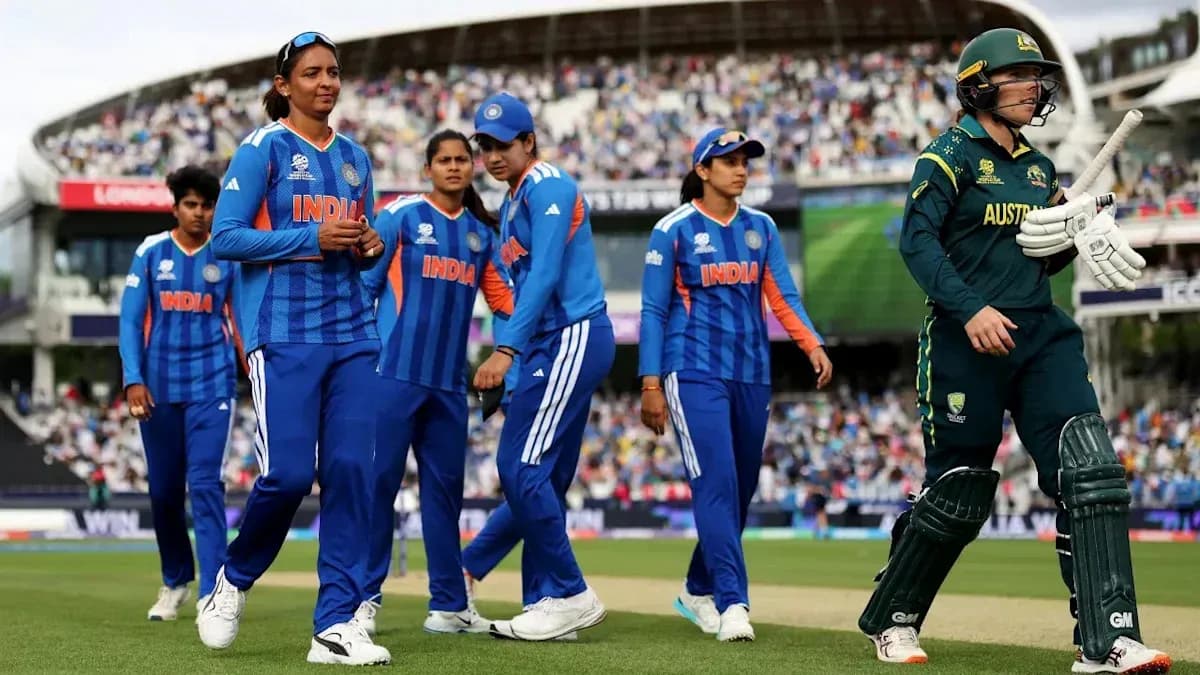
India and Pakistan will walk out at the Dubai International Cricket Stadium on September 5 with more than just group-stage points on the line. This is the Women's Asia Cup 2026, under lights in a venue that has already shaped the fortunes and reputations of both teams.
Dubai knows them well. They know Dubai even better.
The stadium hosted every match of the 2024 Women's T20 World Cup and now carries the full load of the Asia Cup as well, all 15 fixtures played on the same square of desert turf. India and Pakistan have already traded blows here: in October 2024, India chased down Pakistan to win by six wickets, a result that underlined the gulf between the sides in these conditions.
For Pakistan, the place carries a harsher reminder. They own the lowest women's T20I total ever recorded at this ground. India, by contrast, sit at the other extreme with the highest. That statistical split tells its own story.
A ground that rewards the chase
Nineteen women's T20Is have been played at Dubai International Cricket Stadium. The pattern is clear. Sides chasing have won 11 of those 19 matches, a tilt that has quickly become part of every captain’s calculations at the toss.
The reason sits in the air, not the soil. As the evening settles, dew creeps onto the outfield and onto the ball. Bowlers lose their grip, variations skid instead of grip, and batters suddenly find the freedom to drive through the line. Under lights, a target that once looked stiff can start to feel light.
The stadium itself holds around 25,000 spectators, a compact bowl in Dubai Sports City that has grown into one of the modern hubs of the international game since it opened in 2009. It also serves as the permanent home of the ICC’s headquarters, a reminder that this isn’t just another neutral venue; it is a stage the global game watches closely.
A pitch with two faces
The strip in Dubai rarely misbehaves, but it changes character as the evening wears on.
New-ball quicks get something to work with: bounce, occasional lift, and just enough pace to trouble batters prepared to throw their hands through the line. Swing, though, has seldom dominated here, even under lights. Seamers earn their rewards more through discipline than movement.
Then the match turns. As the surface dries, the middle overs belong to the slower bowlers. The ball grips. It holds. Spinners come into the game and stay there. Across all women’s T20Is at this venue, slow bowlers have claimed more wickets than the quicks, a trend that underlines how often captains lean on their spinners once the shine goes.
Yet the defining factor remains that late-evening moisture. When the dew arrives, it tilts the contest back towards the chase. The numbers back it up: 11 wins for chasing sides against eight for teams defending in women’s T20Is.
Chasing records and reputations
The highest successful run chase in women’s T20Is at Dubai belongs to West Indies. During the 2024 Women's T20 World Cup, they reeled in England’s 141, a pursuit built on authority at the top.
Skipper Hayley Matthews and opener Qiana Joseph both struck half-centuries, taking the game away from England with a blend of timing and power that suited the skiddy, dew-kissed conditions. It was a chase that reset what teams believed was possible under lights here.
India, though, have gone bigger.
They hold the highest team total in women's T20Is at this ground: 193 for 5 against Hong Kong in the 2026 Women's Asia Cup group stage. That innings did more than break a record; it erased their own previous mark of 172 for 3 set during the 2024 Women's T20 World Cup.
At the heart of both highs stands one name.
Mandhana’s kingdom
Dubai, in women’s T20I cricket, belongs to Smriti Mandhana.
The India opener has scored more runs at this stadium than any other batter in the women’s game: 212 runs in five matches, at an average of 42.40. Those numbers include one century and one fifty, but they don’t quite capture the manner of her dominance.
Her 124 off 64 balls against Hong Kong, the highest individual score in women's T20Is at the venue, was a masterclass in tempo. She accelerated without panic, punished anything short, and drove through the covers as if the boundary rope were a formality. No other batter has reached three figures in women’s T20Is here. The next best is Anneke Bosch’s unbeaten 74 for South Africa.
Mandhana’s record already towers over the rest, yet she has not finished. With Pakistan next on this pitch, the left-hander has another chance to stretch that gap, to turn a strong record into an untouchable one.
Behind her, South Africa’s Laura Wolvaardt sits as the closest challenger, with 181 runs in five innings at an average of 45.25. It’s an outstanding return, but still a step behind India’s standard-bearer.
Spin, craft and a seven-for
If Mandhana owns the batting records, the bowling ledger tells its own compelling tale.
South Africa’s Nonkululeko Mlaba leads the wicket charts in women’s T20Is at Dubai with 11 wickets from five innings. Her left-arm spin has thrived on the surface’s natural grip, and her best figures of 4 for 29 against West Indies in the 2024 Women's T20 World Cup showcased how a canny spinner can choke scoring and rip through a line-up in these conditions.
Yet even Mlaba’s consistency yields the spotlight to one extraordinary performance.
Sri Lanka’s Chamari Athapaththu, better known worldwide for her explosive batting, produced the most astonishing bowling figures the ground has seen in women’s T20Is: 7 for 5 against India on September 2 in this very 2026 Women's Asia Cup.
Seven wickets. Five runs.
It was a spell that shredded India’s order and stunned the tournament, a reminder that even the most familiar script can be ripped up in a handful of overs. That single performance has lifted Athapaththu to within two wickets of Mlaba’s overall record at the venue, despite far fewer outings.
A rivalry framed by numbers and memory
So the stage is set.
India arrive in Dubai holding the highest total at the ground, the top two team scores in its women’s T20I history, and the most prolific batter in Smriti Mandhana. They also carry the confidence of that six-wicket win over Pakistan here in 2024.
Pakistan walk in with scars from their lowest total at this stadium, but also with the knowledge that Dubai can flip quickly once the ball grows wet and the chase becomes king.
The ground has seen records tumble, reputations made, and on one remarkable night, seven wickets fall for just five runs. On September 5, under the lights and under the weight of history, it will ask one more question.
Who handles Dubai better when it matters most?