Who Is Considered the Father of Cricket? Insights for 2026
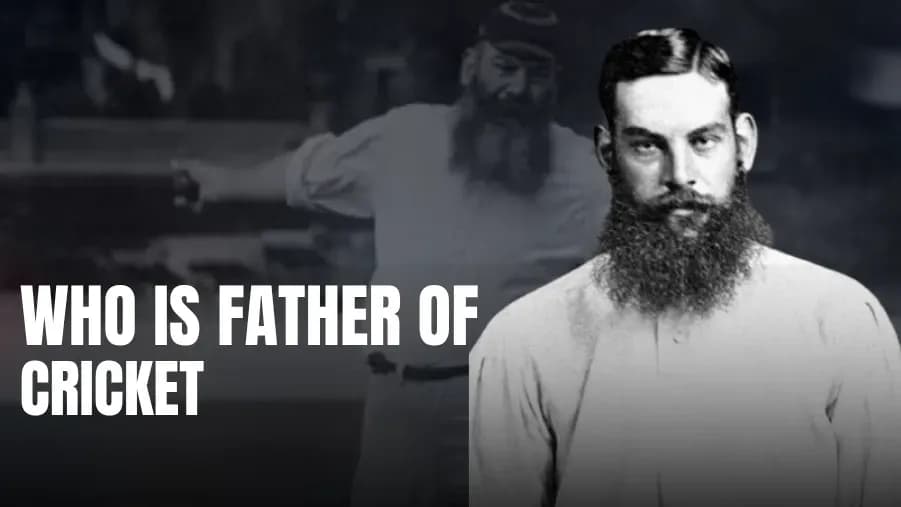
The Origin and Legacy of Cricket's Father
William Gilbert Grace is widely acknowledged as the father of cricket, credited with transforming the sport through his innovative batting style and all-round skills. Over a career spanning 22 Test matches and 870 first-class games, Grace accumulated more than 54,000 runs and took nearly 2,800 wickets. His charismatic personality and pioneering role helped elevate cricket from a casual pastime to a sport embraced worldwide. Remarkably, he captained England at the age of 50, a record that remains unbeaten.
In India, Sir Ranjitsinhji Vibhaji Jadeja, renowned for his elegant leg glance shot, holds a similar place of honor, with the prestigious Ranji Trophy named after him.
Who Is Known as the Father of Cricket?
The name W.G. Grace immediately comes to mind when discussing cricket's roots. Born on July 18, 1848, in Downend, Bristol, and passing away on October 23, 1915, Grace's impact was immense. Although Test cricket was limited during his time, his statistics remain impressive: 1,098 runs in 22 Tests and 54,211 runs in first-class cricket at an average of 39.45. Beyond batting, he was a formidable bowler, taking 2,809 wickets in first-class matches.
Grace revolutionized the game with his refined shot selection and strategic approach. His career included leading England, Gloucestershire, Gentlemen, Marylebone Cricket Club, and United South of England Eleven. His dedication and longevity earned him the titles 'Father of Cricket' and 'Godfather of Cricket.'
Key Facts About Sir W.G. Grace
- Full Name: William Gilbert Grace
- Born: 18 July 1848, Downend, Gloucestershire, England
- Died: 23 October 1915, Mottingham, Kent, England
- Test Debut: 6 September 1880 vs Australia
- Test Matches Played: 22
- First-Class Matches: 870
- Runs Scored: Test - 1,098; First-Class - 54,211
- Wickets Taken: Test - 9; First-Class - 2,809
- Known For: Revolutionizing cricket with his batting technique and all-round play
- Profession: Cricketer and Physician (Doctor)
Early Years and Rise to Fame
Grace was born into a medical family and showed cricket talent early, supported by his father and brothers. By 15, he played for Gloucestershire County and participated in the prominent Gentlemen vs Players matches, which were key fixtures before Test cricket began in 1877. As a teenager, he scored his first century against the Gentlemen of Sussex.
He quickly became a cricketing icon, blending skill with a larger-than-life presence. His popularity helped draw huge crowds and increased the game's profile. Today, his legacy is honored at Lord's Cricket Ground with the W.G. Grace Memorial Gates.
Transforming the Game
Grace’s influence went beyond personal achievements. He brought structure and technique to batting, mastering footwork and shot selection. His career coincided with major shifts in cricket, including the rise of international competitions and changes in playing laws. The Marylebone Cricket Club (MCC), cricket’s law custodian, gained prominence during his era and refined rules partly due to his on-field conduct pushing boundaries.
Grace’s charisma attracted fans, turning cricket from a gentleman’s leisure activity into an organized international sport with clear regulations and fixtures.
Why He’s Called the Real Father of Cricket
Grace didn’t just score runs or take wickets; he reshaped how cricket was played and perceived. His long career inspired countless players, and his magnetic personality drew thousands to watch him. His beard and confident style made him cricket’s first superstar.
Matches often had spectators eager to see him perform. His role in transitioning cricket to structured county and international formats cements his place as the father of cricket worldwide.
Legacy and Influence
Though debates about cricket's father exist, W.G. Grace’s impact remains unmatched. His batting style set standards still admired today. Stadiums filled to see him play, and his name symbolizes excellence across generations.
Father of Cricket in India
Sir Ranjitsinhji Vibhaji Jadeja is celebrated as India's cricket father. Linked to the royal family of Nawanagar, he began playing university cricket in England, later representing England internationally. Famous for his perfect leg glance, he surpassed W.H. Grace’s record for aggregate runs in a season during first-class cricket.
He was honored as one of Wisden’s Cricketers of the Year in 1896. To commemorate him, Maharaja Bhupinder Singh of Patiala and the BCCI established the Ranji Trophy, India's premier first-class tournament.
Summary
Many great cricketers have graced the sport, but W.G. Grace stands out for pioneering cricket’s development. Legends like Sachin Tendulkar, Ricky Ponting, and Jacques Kallis have pushed the game forward, yet none match Grace’s lasting legacy.
Playing when cricket lacked today's popularity, Grace’s skill left a mark on future generations. Despite changes over time, he remains a legendary figure whose contributions continue to inspire.
FAQs
- Who is the father of cricket? W.G. Grace is known as the father of cricket due to his outstanding performance and influence.
- Who is called the king of cricket? Virat Kohli holds this title.
- Who is the king of God in cricket? Sachin Tendulkar is referred to as the king of God in cricket.
- Who is the prince of cricket? Shubman Gill is known as the prince of cricket.
- Who is the father of cricket in India? Sir Ranjitsinhji Vibhaji Jadeja is recognized as India's cricket father.
- Who is known as Mr. 360? AB de Villiers earned the nickname Mr. 360 for his versatile batting.