.svg&w=384&q=75 "logo")
Asian Games Challenges for India's Cricketers in Nagoya
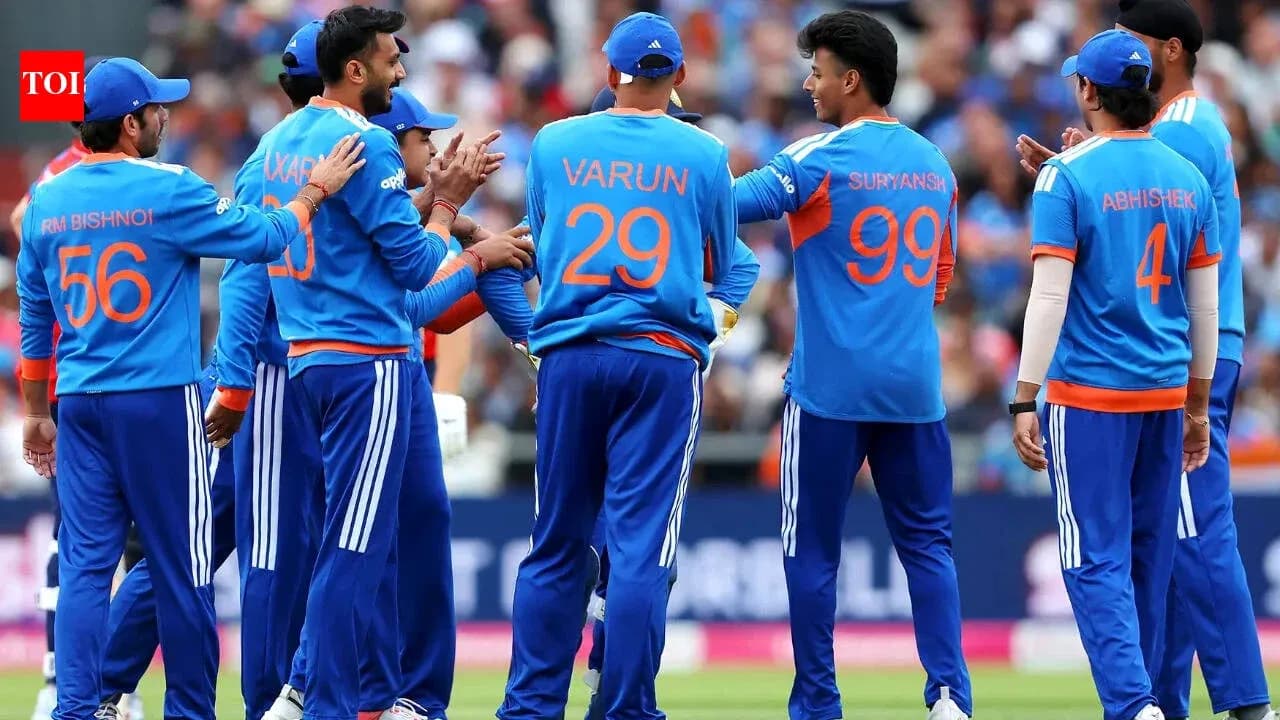
In Nagoya, India’s cricketers are about to discover that the Asian Games are a very different world from their usual five-star circuit.
If the BCCI decides its men’s and women’s teams will not stay in the official Games hotels in Aichi-Nagoya, the board will have to run its own mini-operations: book the rooms, arrange the food, secure the transport and still guarantee that players reach the ground on time and within Games protocols. No safety net from the Indian Olympic Association. No special carve-out.
That is the clear line drawn by IOA CEO Raghuram Iyer.
“The BCCI is free to make its own arrangements if the organisers’ hotels don’t suit its requirements,” Iyer told TOI, underlining that the decision — and everything that flows from it — will rest squarely with the Board. The IOA, he stressed, has 36 sports to look after, and one basic principle: every athlete, every coach, every discipline must be treated the same.
IOA holds its ground, BCCI tests the waters
For now, the organisers have slotted India’s cricketers into the standard Games plan. The men’s team, led by Shreyas Iyer, has been allotted the three-star APA Hotel Nagoya Ekimae. The women, captained by Harmanpreet Kaur, are down for the four-star Meitetsu Grand Hotel.
Both properties tick the basic boxes: team-friendly facilities, acceptable amenities, proximity. But they sit a notch below the luxury Indian cricketers usually enjoy on bilateral tours and ICC events. Rooms will be on a twin-sharing basis, another friction point for a group used to single-occupancy suites.
That gap between expectation and reality has already set the BCCI thinking.
Hemang Amin, the BCCI CEO, has spoken to the IOA, and an advance team will fly to Japan early next week. Their brief is simple and unforgiving: inspect the hotels, assess the cricket venue, check the support facilities, and come back with a recommendation the Board can stand behind.
“The IOA is completely fine with that,” Iyer said. “Based on their assessment, they can decide whether they want to use the organisers’ facilities or make their own arrangements. It is for the BCCI and the organisers to work out the best solution.”
The IOA will not lobby for an upgrade or a separate block. Its job, as Iyer frames it, is to ensure the entire Indian contingent has a fair, functional environment. No special lanes for cricket.
Tight turnarounds, tighter logistics
The schedule only heightens the stakes.
Harmanpreet Kaur’s side will be first into the fire. The women return from the Asia Cup in Dubai on September 13 and are due to fly to Nagoya the very next day. They walk straight into the Asian Games quarterfinals on September 18, with their tournament wrapping up by September 22.
No time for a slow settling-in. Jet lag, new beds, unfamiliar food — all of it hits in the same week as a knockout match.
The men’s team has a slightly later window. Shreyas Iyer’s squad is scheduled to leave for Japan on September 21, also entering directly at the quarterfinal stage. Their campaign runs from September 28 to October 4, after which they head home.
With different arrival dates and overlapping demands, the BCCI is weighing whether the official hotels can genuinely support performance, recovery and security at the level it wants. The advance team’s report will be crucial. So will the availability of alternatives.
And that is where the challenge sharpens.
Aichi-Nagoya is already straining under the weight of numbers. The athlete and coach count is expected to climb to around 17,000, well above the original planning figure of 15,000. Organisers have bolstered the hotel stock with mobile accommodation and even the Costa Serena cruise ship. Space, in every sense, is at a premium.
If the BCCI pulls its teams out of the official hotels, it will have to find and fund suitable properties in a city that is already close to full. Then come the moving parts: team buses, meal planning, security coordination, travel times to the ground, and the simple but unforgiving reality that a delayed bus can derail a campaign.
Inside the Games, even if outside the Village
One thing will not change, no matter where Rohit Sharma’s successors lay their heads: the cricketers will remain firmly inside the Asian Games system.
Any decision to stay outside official hotels must be formally routed through the IOA to the organisers. Security protocols, accreditation rules and venue access will continue to apply exactly as they do for every other athlete. No accredited person, no entry. Outsiders will not be allowed to drift in and out of the team hotels just because they sit beyond the main Games blocks.
Anti-doping procedures will also follow. WADA and the International Testing Agency will need precise information on the players’ location to carry out random testing at their chosen accommodation. Separate hotels do not mean a softer testing regime; they simply require more coordination.
From the IOA’s side, there is no resistance to cricket doing things its way — as long as the responsibility is accepted.
“The BCCI is taking care of its athletes, and sending an advance team is the right way to assess the facilities before making a decision,” Iyer said. “Our objective is that the entire Indian delegation has a comfortable stay and a wonderful experience in Japan.”
Japan’s squeeze, LA’s promise
As India wrestles with hotel categories and twin-sharing rooms in Nagoya, a very different picture is taking shape across the Pacific.
Cricket’s Olympic return at Los Angeles 2028 is already being mapped out in detail. Iyer recently spent nearly a week in LA as part of a joint IOA–Sports Authority of India delegation, meeting stakeholders and touring venues across multiple sports, including cricket.
The centrepiece is the newly built Knight Riders Cricket Ground at the Fairplex complex in Pomona. Right next door stands the Sheraton Fairplex Suites & Conference Center, earmarked as the likely base for the cricket teams. Walk out of the hotel, stroll to the ground. No buses stuck in traffic, no scramble for bookings in an overburdened city.
Major League Cricket matches are expected to give the venue an early trial by fire, bedding in the pitch and the infrastructure long before the Olympic rings arrive.
“The objective is to ensure athletes can focus only on their performance and do not face logistical issues,” Iyer said of the LA planning. “We are thinking well in advance about their welfare, comfort and acclimatisation, and this is something which is happening for the first time.”
It is a striking contrast. In Japan, the system is asking cricket to fit in. In Los Angeles, the system is being built with cricket in mind.
A historic stop before the Games
Before all that, there is a different kind of landmark on the calendar.
On September 22, India and Japan’s men’s teams will meet in a T20I for the Suzuki Cup, marking 75 years of diplomatic relations between the two countries. For India, the match doubles as a valuable tune-up before the Asian Games. For Japan, it is a chance to host one of the sport’s giants on home soil in a format that could shape its own cricketing future.
By then, the BCCI will likely have made its call on where its players will sleep, eat and prepare during the Games. Five-star comfort or Games-standard practicality. Self-run bubble or official block.
Either way, once the first ball is bowled in Nagoya, there will be no room for excuses.