.svg&w=384&q=75 "logo")
Alexandra Eala: A Rising Star in Asian Tennis
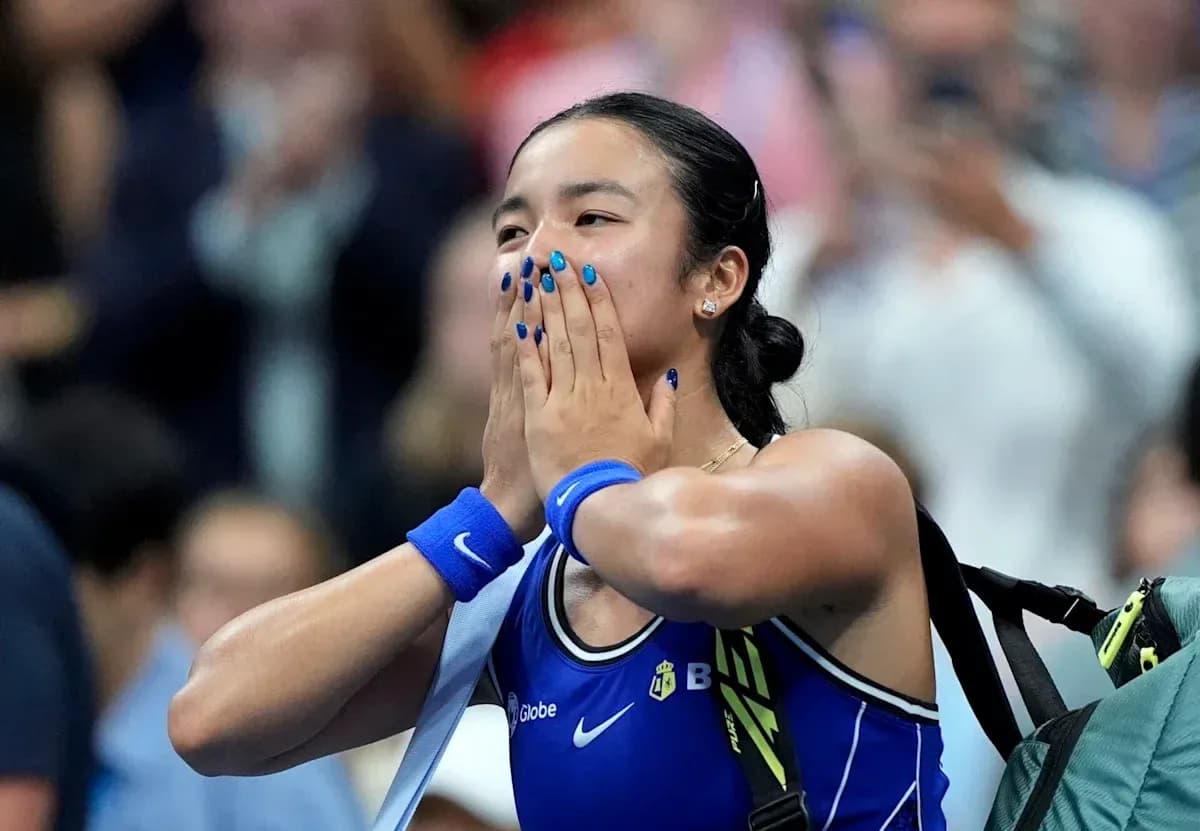
Alexandra Eala steps into the arrivals hall in Singapore carrying more than a racket bag and a passport. She walks in as a top‑20 player, a WTA champion, and the face of a new generation of Asian tennis.
It has been that kind of year.
Last month, the 21‑year‑old Filipino surged to a career‑high ranking of world No 18 and stunned world No 3 Jessica Pegula to win the Washington Open, becoming the first Filipino to lift a WTA Tour singles trophy. Before that, she ripped through Wimbledon, taking out defending champion Iga Swiatek on the grass and marching into the fourth round – the first Filipino ever to reach the second week of a Grand Slam singles event in the Open Era.
Now she is back in a city that feels familiar, even as everything around her has changed.
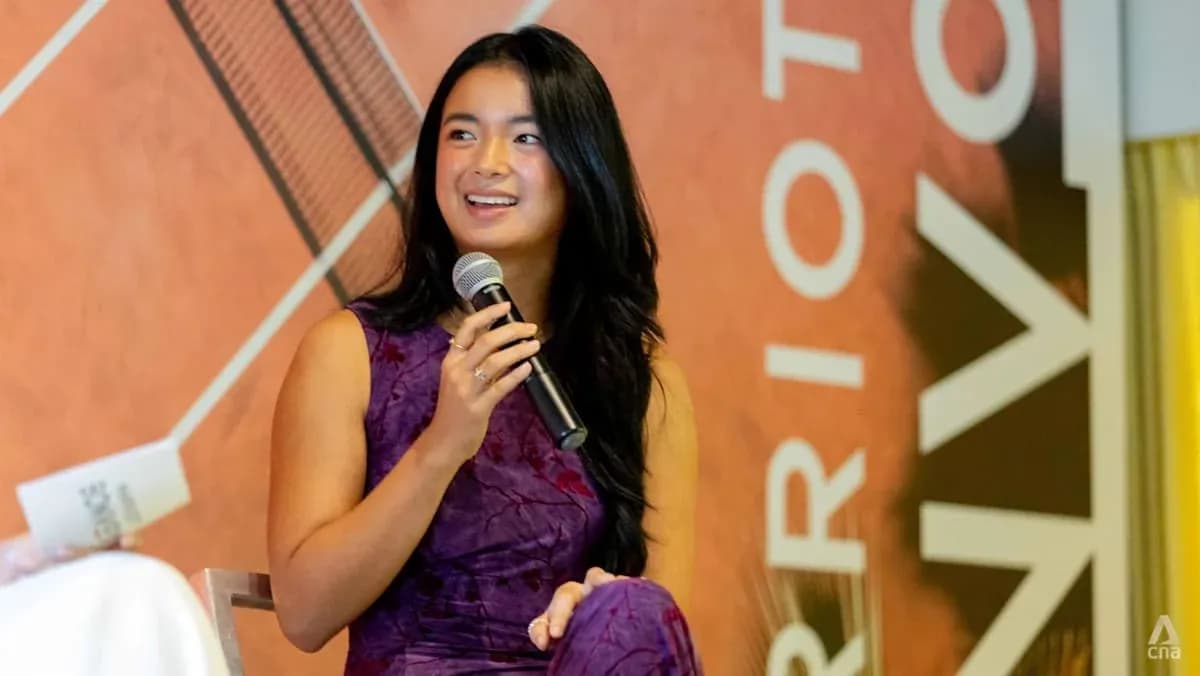
Eala arrived in Singapore on Thursday (Sep 17), ahead of the Singapore Tennis Open, a WTA 500 event that returns to the OCBC Arena at The Kallang from Sep 21 to 27. On Friday, at The NCO Club in JW Marriott Hotel Singapore South Beach, the Marriott Bonvoy brand ambassador sat down for a conversation that revealed a player still coming to terms with the scale of her rise.
Learning to live with the spotlight
The results have come quickly. The adjustments off court have not.
"For all her achievements on court," she admitted, 2026 has forced her to rethink almost everything away from it. The surge in attention, the cameras, the constant requests – they have pushed her to redraw the lines in her life.
"I've had to rediscover my relationship with so many things this year because of the extra exposure and just becoming a more public figure," she said.
Boundaries have become a daily exercise. With media. With fans. With people she has just met. Even with the relentless stream of opinions that follow her online.
"I'm learning a lot about myself and about what works best for me," she said. "I'm still 21, so at the end of the day, you have to recognise that I'm still growing and I'm still growing into myself."
That honesty has become part of her armour. She allows herself room to get things wrong, to not always know how to respond to the demands that now come with her ranking and profile.
"For not knowing how to do things, it's very normal," she said. "But at the same time, I just kind of face these things head-on. You have to be confident. You have to be yourself and just be genuine."
The online world is where she has had to be most ruthless. She sees a "good chunk" of what is written about her, but she has learned to treat social media as another space that needs clear limits.
"I definitely appreciate criticism. At times, I think it is very helpful. But I can't value too much an opinion where they don't know the whole story, or if it's unsolicited."
When the attention spikes, she resets by flipping the perspective. She tries to see the moment through the eyes of the people in front of her – especially the excited fans who have followed her journey from afar.
"I've learned the importance of compartmentalising; I'm also now familiar with what keeps me sane and what keeps me happy and healthy, so I focus on that," she said.
The discipline that drives her tennis is now being applied to her life.
Singapore, and the comfort of many “homes”
For most professionals, the tour can blur into a loop of airports, hotels and practice courts. For Eala, travel is no longer a novelty. It is simply her reality.
"I do travel a lot because of what I do, so it's become a part of my life," she said. "And now, I have so many 'homes' around the world."
Home, for her, is less a single address and more a feeling. A place to exhale between matches, to "wind down" before the next stretch of training, competition or exploration.
Singapore is one of those places.
As a junior, she played here at the WTA Future Stars event in 2016 and 2017. At just 11, she received the Li Na Inspiration Award, a sportsmanship honour that hinted at the path she might one day take.
"I love Singapore. I used to compete here very often as a kid because this was one of the hubs for tennis in Southeast Asia," she told CNA Lifestyle. "There's also obviously a very huge Filipino community here. I do have close relatives here that, whenever I was in town, I'd go see."
That sense of belonging stretches beyond the Filipino diaspora. For Eala, Southeast Asia itself feels like an extended family.
"Southeast Asian culture in general is very close-knit, and I think we find that sense of community in each other," she said.
On tour, she gravitates naturally towards other Southeast Asian women. They talk about SEA Games, share jokes, trade references that others on tour simply do not have.
"We can relate on things like SEA Games, and we know that doesn't happen for all the other players," she said.
Those shared touchpoints make being back in the region feel different. Lighter. More personal.
Even the playful questions carry a regional flavour. Asked to choose between balut – the Filipino street food – and durian, she paused, laughed, and eventually sided with the "king of fruits".
Durian wins.
From inspired to inspiring
The icons on Eala’s wall growing up were global superstars. Serena Williams is her GOAT. Maria Sharapova was another early reference point. But one name carried a different weight: Li Na.
The Chinese trailblazer, the first Asian player to win a Grand Slam singles title, showed her what was possible for someone from their part of the world.
"There's a huge power when you see people from where you come from, and knowing they're successful," Eala said.
Now she is the one occupying that space for others.
More and more, supporters tell her what it means to watch a Filipino woman walk out on some of the sport’s biggest stages, competing deep into Grand Slams and winning tour titles.
"Being able to connect with them is a part of my job and a part of my life – that is really very sentimental," she said. "It's opened my eyes to the power of representation and what it can do for people, how it can inspire and how it can touch.
"I look back at myself as a young girl; I know that I went through that same inspiration with Li Na and other Asian tennis players."
The responsibility is real. So is the pressure.
"I'm not gonna say that it doesn't weigh at all," she said. "But I see it as an opportunity for me to grow, to develop my character, to become more brave, to be more self-confident.
"More than pressure, I see it as an opportunity for me to improve myself and to do my little part in giving back to the community through inspiration."
She also understands that her breakthrough sits on decades of work by women who came before her.
"I'm so grateful to everyone who has paved the way before me," she said. "Every single woman who has played tennis has contributed to its history and to the progression of the sport.
"I hope to, in my own little way, whatever it is, leave tennis better than I found it."
That ambition is not framed in grand slogans or bold predictions. It shows up in the way she acknowledges the people who follow her from city to city, waving flags and waiting by practice courts.
"It means so much, and it adds so much meaning to an already very meaningful job and an already meaningful sport," she said. "They really do show up for me, and I do my best to show up and give back to them. So every chance I can, I want to say thank you."
This week, one of those chances comes in Singapore, on courts where she once played as a promising junior. Now she returns as a top‑20 player, a WTA champion, and a standard‑bearer for Southeast Asia.
The stakes are higher. The arena is bigger. The question now is how far this 21‑year‑old can push the ceiling she has already shattered.