.svg&w=384&q=75 "logo")
WTA 2026: Singapore and Seoul's Rising Stars
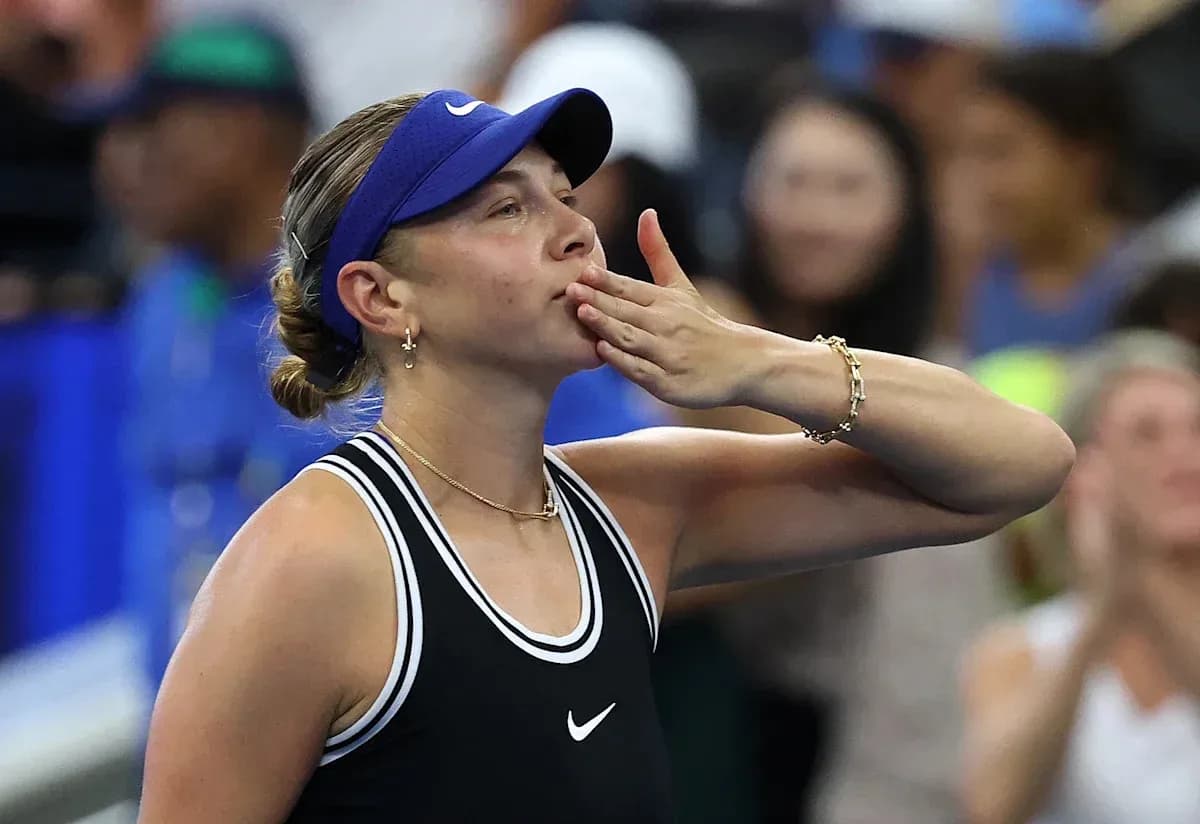
The US Open may close the New York chapter of the tennis year, but it does not close the book on 2026. On Monday, Sept. 21, the WTA caravan rolls into Asia, opening its fall swing with a newly upgraded Singapore Open and a talent-heavy Korea Open.
Two events, two tiers, one clear message: there is still plenty on the line.
Singapore’s second act
Singapore is not new to women’s tennis, but this version of the Singapore Open feels different. Once a modest WTA 250, the tournament has been elevated to WTA 500 status this year, and the upgrade has done exactly what organizers hoped: it has pulled in a deeper, sharper draw and turned the event into a serious stop for players chasing ranking points and momentum.
The city itself knows big-time tennis. It hosted the WTA Finals from 2014 to 2018, then went quiet on the main tour. The current tournament’s history is even more fragmented. First staged in 1986, the Singapore Tennis Open has nowhere near 40 champions to show for its 40-year timeline. It disappeared from the calendar from 1991 to 1993, vanished again from 1995 all the way through 2024, and only resurfaced last year.
That 2025 return delivered a familiar name: Elise Mertens lifted the trophy and now comes back as the fourth seed, defending champion and measuring stick for the new-look field.
This year, the draw lost one of its headline acts before a ball was struck. Jessica Pegula, top seed on paper and fresh off a 2026 US Open semifinal run, withdrew, removing a proven hard-court force from the top line.
The vacuum did not stay empty for long.
French Open champion Mirra Andreeva slides into the role of top seed, a teenager carrying a major title and a growing reputation for fearless, front-foot tennis. Behind her, Amanda Anisimova takes the No. 2 seed, a reminder of her own Grand Slam pedigree and her ability to catch fire on hard courts.
Then there is Alexandra Eala, seeded third and bringing something that cannot be coached: a movement.
Eala mania in the Lion City
The Philippines’ rising star has not just arrived in Singapore; she has taken it over.
Eala’s profile has soared since her junior days, but this week feels like a turning point. “Eala mania” is not just a phrase; it is visible in queues that snake around corners and in a sea of fans wearing her colors. Nike has leaned into the moment, rolling out custom Eala merchandise that features the sampaguita, the national flower of the Philippines, as a central motif.
The response has been instant. Supporters have waited in line for hours just to get into the store, eager to leave with a piece of their country’s standard-bearer. For a WTA 500 event still re-establishing its identity, this is gold: a young star, a passionate diaspora, and a host city that understands big-event theatre.
On court, the stakes are just as clear. Andreeva chasing consolidation of her Slam breakthrough. Anisimova hunting rhythm and ranking. Mertens defending turf. Eala riding a wave of expectation that now stretches well beyond Southeast Asia.
For a tournament that spent nearly three decades off the calendar, the noise around Singapore in 2026 is striking.
Seoul leans on Ostapenko
While Singapore climbs a tier, Seoul holds firm as a WTA 250 with a marquee name at the top of the bill.
The Korea Open may not have the upgraded status, but it has something every promoter craves: a Grand Slam champion as top seed. Jelena Ostapenko, the Latvian who blasted her way to the Roland Garros title earlier in her career, anchors the draw in the Korean capital.
Her presence instantly raises the ceiling. Ostapenko brings power, unpredictability, and a history of turning weeks like this into statement runs. For a 250 event, that kind of star power can transform a routine stop into a destination.
The US summer has handed over to the Asian autumn. Rankings, late-season confidence, and a few careers on the rise all run through Singapore and Seoul now. For players like Andreeva, Eala, Anisimova, Mertens, and Ostapenko, this is not a wind-down. It is the stretch where momentum for 2027 quietly begins.