.svg&w=384&q=75 "logo")
Mark Wood Retires: A Fast Bowler's Legacy in Cricket
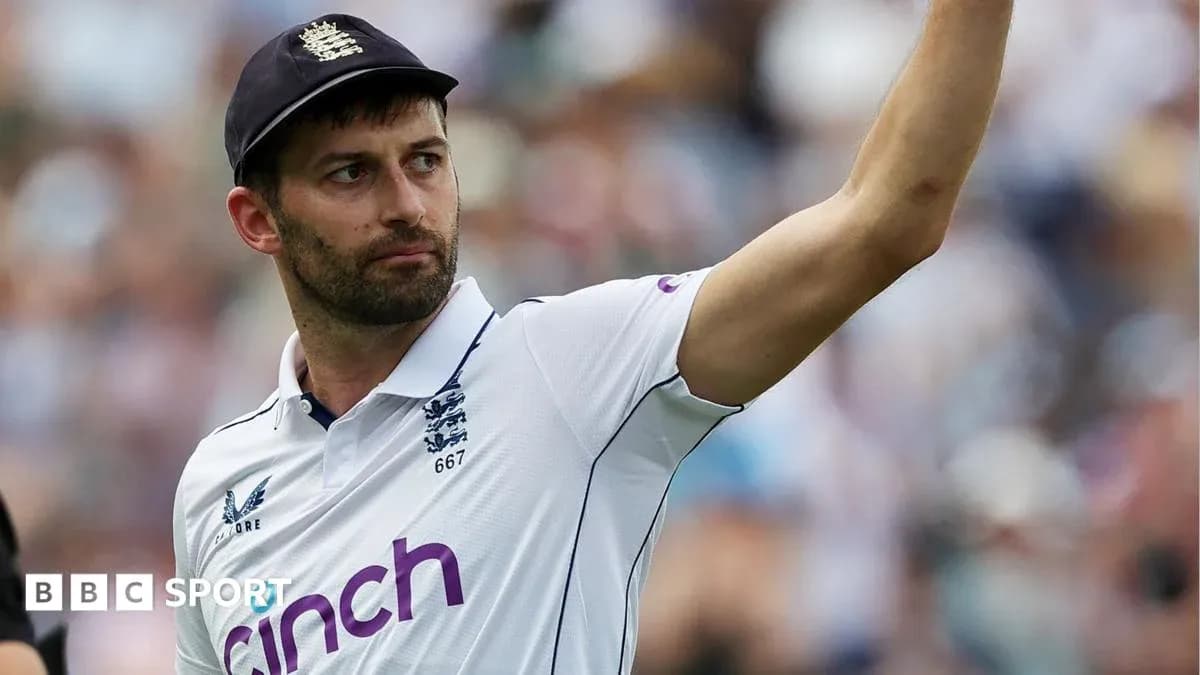
Mark Wood, the fast bowler who made English crowds gasp and speed guns blink, has called time on his international career at 36, ending an 11-year ride that delivered two World Cups and four Ashes series wins.
He goes as he arrived: abruptly, at high pace, and on his own terms as far as his body would allow.
A career lived in the fast lane
Wood burst into England colours in 2015 at Lord’s against New Zealand, a tearaway quick from Ashington with a whippy action and a grin that never quite matched the violence of the ball leaving his hand. From there, he carved out a record that never relied on volume so much as impact.
Across 38 Tests he took 119 wickets, often on pitches that offered little and in spells that changed games rather than padded averages. In one-day cricket he claimed 80 wickets in 70 ODIs, while in T20Is he finished with 54 wickets from 38 matches, enough to sit sixth on England’s all-time wicket-takers’ list in the shortest format.
The numbers tell one story. The memories tell a better one.
World champion in both white-ball formats
Wood stands in a tiny group of English cricketers who can call themselves a World Cup winner in both white-ball formats. The first came in 2019, on home soil, in a tournament that reshaped the country’s relationship with ODI cricket.
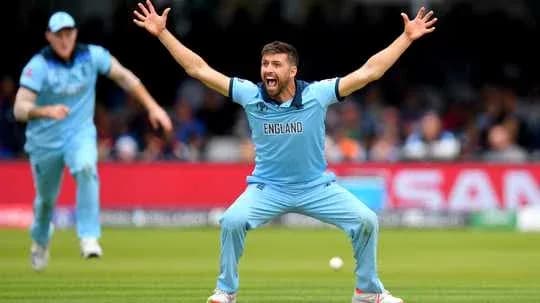
He was central to that success. Eighteen wickets, relentless pace nudging and often smashing past 95 mph, and a willingness to bowl the hard overs when the ball was flying and the pressure at its highest. At Lord’s in the final, with a side strain biting, he kept going. England edged New Zealand in that now-mythic Super Over finish; Wood, strapped up and grimacing, played his part right to the end.
Three years later, in Australia, he did it again in different colours and conditions. Nine wickets in four matches at the 2022 T20 World Cup, pace once more the point of difference as England lifted another global trophy. Two formats, two medals, same method: bowl fast, scare people, win games.
Ashes moments that will live long
If World Cups made his name globally, the Ashes etched it into English folklore.
Four series against Australia brought a string of snapshots. The first came in 2015 at Trent Bridge, where Wood took the wicket that sealed the Ashes and sparked celebrations around a stunned, jubilant ground. He was still relatively new then, the raw pace option in a more experienced attack, but he delivered the final blow.
Eight years on, in 2023, he returned to the Test side and lit up a series that had been slipping away. England were 2-0 down, the urn almost gone, when Wood charged in at Headingley. It was a spell that crackled with menace and intent, one of those passages where every ball felt like an event. England clawed their way back, levelled the series 2-2, and while the urn stayed in Australian hands, Wood’s thunderbolts became one of its defining images.
These were not the long, grinding careers of metronomic seamers. Wood’s Test life came in bursts – short, sharp, unforgettable.
Body finally calls time
The price for that pace was always going to be high. For years, Wood fought his body and often won, returning from one injury after another with the same determination and a little more tape on his ankles and shoulders.
This time, he could not.
He last played for England in the Ashes Test in Perth last November, only to break down again. Medical advice has now closed the door on both Test and 50-over cricket, the formats that demand the most from a fast bowler’s frame.
“I’ve made the decision to retire from international cricket,” he said, explaining that the end of his contract and the grind of the last year had brought him to this point. The dream, he admitted, had been “slowly ground out” of him as doctors ruled out any realistic path back to the longer formats.
The words carried the weight of a man who had spent a career pushing through pain to prove people wrong. This time, the battle was lost not in his head or his heart, but in the joints and muscles that had powered him for more than a decade.
Pride, impact and a lasting legacy
Wood spoke with obvious emotion about what playing for England had meant: the little lad thrilled just to pull on the shirt, the journeys around the world, the chance to bowl at the very best. He called it the greatest honour he could have wished for. Few who watched him would argue.
Inside the England set-up, the respect runs deep. Rob Key, the managing director of England men’s cricket, hailed the “point of difference” Wood provided in Ashes wins and World Cups, and the way he thrilled crowds every time the ball was in his hand. That, Key said, is a career “very well spent.”
That phrase fits. Wood’s numbers will never sit alongside the great accumulators, but that was never his brief. He was the shock weapon, the man summoned when the game needed shaking, when batters needed to feel uncomfortable, when a flat day demanded something wild and quick.
He gave England that, across formats, across continents, across eras of captains and coaches. Two World Cups, four Ashes series wins, and countless spells that jolted matches to life.
The speed gun will fall silent at international level now. The memories of that whirring approach and that explosive final stride will not.