.svg&w=384&q=75 "logo")
Mark Wood Retires from International Cricket
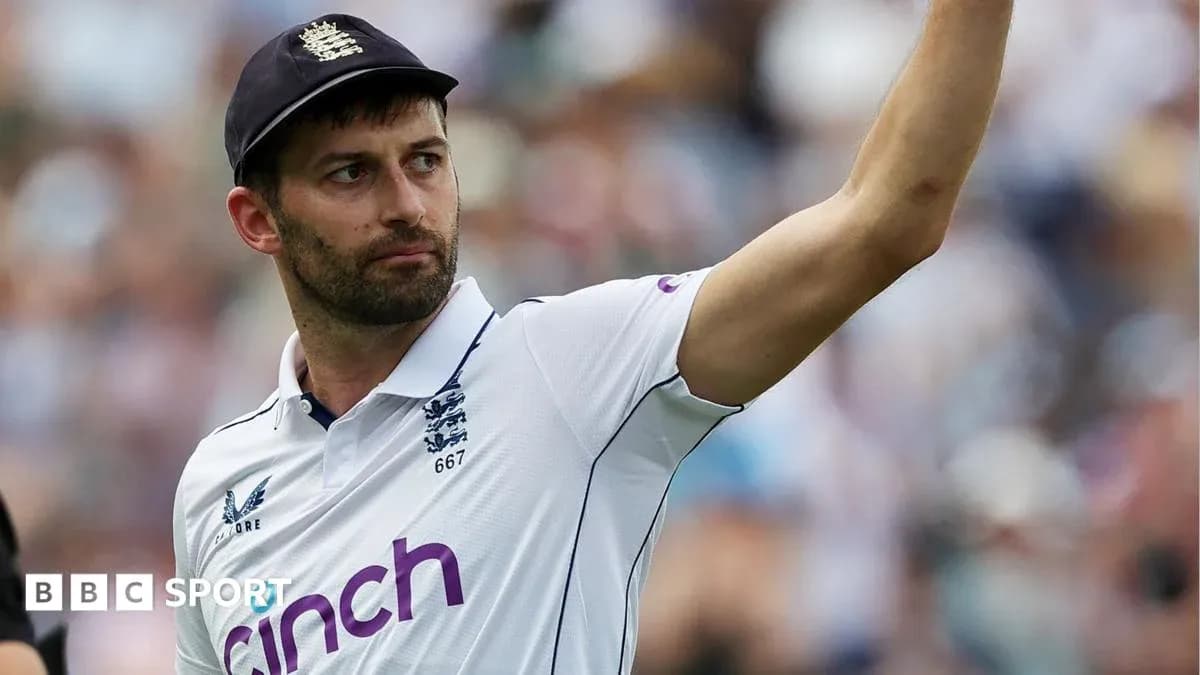
Mark Wood, one of the quickest and most wholehearted fast bowlers England have produced, has called time on his international career with immediate effect at the age of 36.
The decision ends a stop-start but unforgettable journey in which raw pace, repeated comebacks and a body pushed to its limits became the defining themes.
Pace, pain and a final call
Wood’s career has always felt like a race against his own frame. The Durham quick finally returned to the Test side in the opening Ashes match in Perth last November after 15 months out, time lost first to an elbow problem and then knee surgery.
He lasted 11 overs.
Swelling in the same left knee cut him down again and sent him back home for treatment. He has not played for England since.
So when the announcement arrived, it carried a sense of inevitability as much as sadness.
“Although this may not come as a surprise given the past year, it just feels like a natural time at the end of my contract,” Wood said in a statement on social media. He spoke of a career built on stubbornness, on proving people wrong, on coming back one more time. This time, he admitted, “I lost the battle.”
Medical advice left no room for compromise: Test cricket and 50-over internationals were off the table. The England dream, as he put it, had been “slowly ground out” of him over the past year.
“Playing for England has been the greatest honour I could have ever wished for and a dream come true,” he said, adding that he still hopes to stay in the game in some form.
A short career at full throttle
Wood’s numbers only tell part of the story, but they still demand respect.
He took 119 wickets in 38 Tests after his debut in 2015, bursting onto the scene in the summer when England reclaimed the Ashes on home soil. His spells were often short, sometimes wild, but rarely dull. Captains turned to him when they needed something different: a burst of 90mph hostility, a spell that changed the mood of a session.
Injuries, though, stalked him. Ankles, knees, elbow – the list grew as the years went on. Every comeback felt hard-earned, every series a negotiation with his own body.
In 2018 he tried to tilt the balance in his favour. He lengthened his run-up, seeking to ease the strain on his joints without losing the pace that made him special. It worked. The rhythm looked different, the impact did not.
That adjustment underpinned his role in some of England’s greatest white-ball highs. Wood was a central part of the 2019 World Cup triumph, taking 18 wickets across the tournament as England finally lifted the 50-over trophy. He was there again in the group stages of the 2022 T20 World Cup win, only for a calf injury to deny him a place in the closing acts.
White-ball weapon, Ashes firestarter
Across formats, Wood leaves as one of England’s most potent limited-overs fast bowlers. In men’s T20 internationals he finishes as the country’s sixth-highest wicket-taker, with 54 wickets in 38 matches. In one-day internationals he claimed 80 wickets in 70 games, often tasked with the hardest overs: the new ball, the middle-overs surge, the late assault.
His Test legacy, though, will always be tied to the Ashes.
In 2023, with England 2-0 down and the series slipping away, Wood’s return injected electricity into the contest. His blistering spells rattled Australia and reignited the home side. The series ended level, and while others filled the scorebooks, Wood’s pace and aggression shifted the narrative.
Rob Key, managing director of England men’s cricket, captured that impact. “It’s been a privilege to watch the latter part of a great career,” he said. Wood, he noted, had been “a point of difference in Ashes series wins, two World Cup wins, and to have thrilled crowds every time he got the ball in his hand is something very few players achieve.”
“He can look back with enormous pride on a career very well spent.”
A bowler who always went flat out
For a decade, whenever Wood marked out his run, there was a sense of anticipation. Something might happen. A bouncer that hurried the best. A yorker that uprooted middle stump. A roar, a sprint, a leap into team-mates’ arms.
He leaves the international stage with a body that has finally said no and a record that says he spent everything he had. The next chapter, whatever form it takes, will not involve the Three Lions on his chest.
But for those who watched him charge in, ball in hand, it is hard to imagine he will ever be remembered as anything other than what he always wanted to be: an England fast bowler, flat out, with nothing left in the tank.