.svg&w=384&q=75 "logo")
Colin Ingram: From Glamorgan Star to Coaching Career
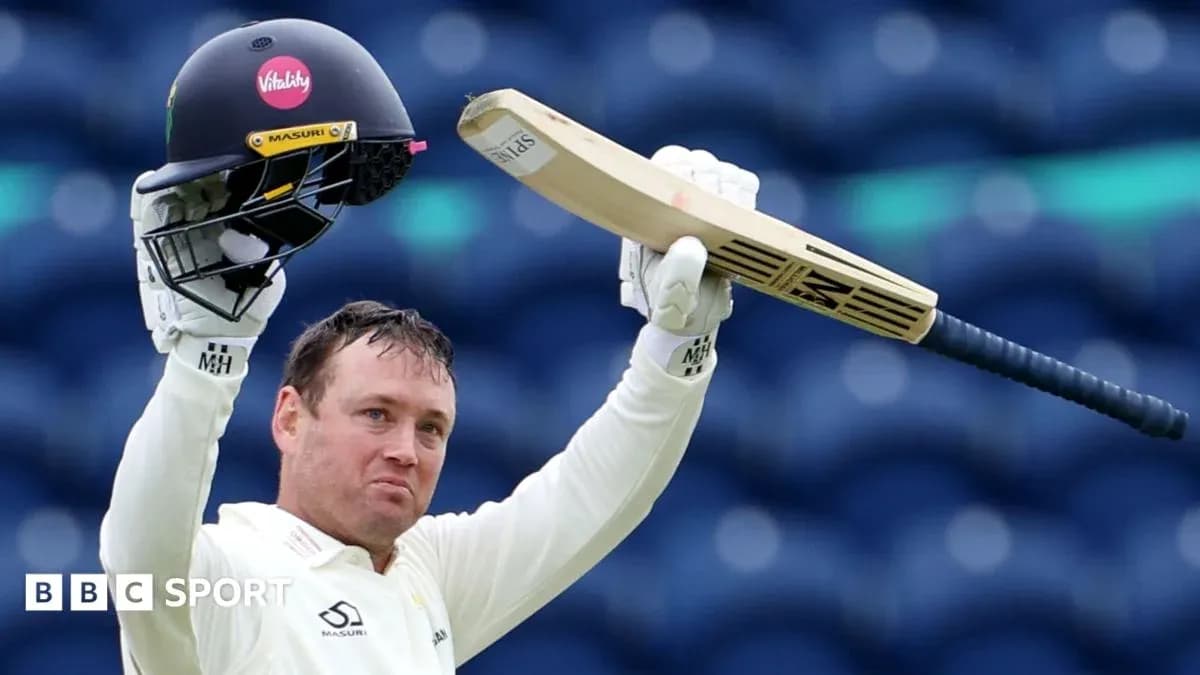
Colin Ingram, the South African left-hander who turned Sophia Gardens into his studio for more than a decade, will put down the bat at the end of the season and step into coaching after a 20-year professional career.
At 41, Glamorgan’s longest-serving overseas player of the 21st century has decided the canvas is complete.
The overseas constant
Ingram arrived in Cardiff in 2015 and never felt like a short-term import. He felt like furniture. The kind that shapes a room.
He quickly became a central pillar of the side and a favourite on the Sophia Gardens balcony, the hard-hitting left-hander who could change a game in a single session. By the time the county clinched Championship promotion in 2025, he was their leading run-scorer, the overseas pro who didn’t just pass through but dug in.
Across formats, the numbers tell the story of a player who didn’t waste a day.
- 31 centuries for Glamorgan in all competitions, headed by a monumental 257 not out.
- 5,645 first-class runs at an average of 47.
- 2,630 one-day runs at a remarkable 62.
- 3,431 T20 runs at 32.
He captained Glamorgan in T20 in 2018 and 2019, and when needed he turned his arm over, taking 67 wickets with his leg-spin, mostly in white-ball cricket. He even pulled on the gloves occasionally. Whatever the team required, he found a way to offer it.
A global journeyman, rooted in Cardiff
Before Glamorgan, Ingram had already lived the life of an international cricketer. He played 40 limited-overs matches for South Africa and represented Free State, Eastern Province and Warriors at home, with a stint at Somerset in 2014.
His career then stretched across the franchise world. Australia, India, Pakistan, the West Indies, the Middle East, his native South Africa, and the Hundred with Oval Invincibles. His batting travelled, his reputation followed.
Yet through all of that, Glamorgan remained the constant.
There was a long spell when the Championship barely saw him. Knee problems and T20 commitments dragged him away from the red ball. For five years, his county four-day appearances dwindled, and it looked as though his longer-form chapter might be over.
Then the knee operation worked. The body allowed what the mind still craved. He came back to first-class cricket in recent seasons, and the old rhythm returned.
Cricket as art
Ingram has never hidden how he feels about the game. He called cricket his “art”, and it has always sounded like more than a throwaway line.
“I was fascinated by the game from a young age, and in particular batting,” he said in his retirement announcement. When it clicked, he wrote, the game slowed down, everything felt instinctive, the bat became a paintbrush. For him, a cover drive wasn’t just a shot; it was a brushstroke.
“Throughout my career I’ve dreamed big, worked hard, made memories, laughed and cried and seen things and places I never thought possible,” he said. “I’ve had a full crack and left it all out there.”
You believe him. The itinerary alone proves it.
One more act
Even in this farewell season, he has not slipped quietly into the background. In the Championship he struck hundreds against Yorkshire and Warwickshire and produced a decisive performance in the home win over Surrey, scoring 80 and 61 not out in the match. Red-ball cricket, once threatened by injury and schedule, still answered to his touch.
Limited-overs opportunities were rare this year, just three appearances, but the quality remained obvious whenever he walked out.
There may yet be one final scene. Ingram could return for a last outing in Glamorgan colours in the closing Championship match against Essex, potentially sharing a goodbye with another stalwart, 40-year-old Chris Cooke. If it happens, it will be less a farewell and more a curtain call for two pillars of the dressing room.
Beyond the boundary
The next step is already mapped out. Coaching awaits.
“As one chapter closes the next opens beyond the boundary as I begin my coaching career,” Ingram said. “My art is complete but I hope to influence the game positively and inspire players to be the best they can while enjoying their journeys.”
For more than a decade, Glamorgan supporters watched him turn innings into exhibitions and summers into a body of work. The bat goes back in the bag now, but the artist is staying in the game.
The question is simple: how many future players will be shaped by the man who once treated the crease as his canvas?