.svg&w=384&q=75 "logo")
India’s Asian Games Triumph: Cricket Glory and Sen’s Comeback

India’s campaign at the Asian Games swung wildly between command and chaos, but by the end of the session one theme stood out: when it clicked, it really clicked.
Mandhana, Shafali and Richa light up the final
In the women’s cricket gold-medal match, India did not just set a target. They erected a wall.
Smriti Mandhana was the architect. Timing the ball sweetly and picking gaps at will, she carved out a classy 79 from just 45 deliveries, setting the tone for a total that always looked oversized for a final. She fell just when a three-figure score seemed within reach, dismissed with India 163/3 after 17 overs, but by then the damage was done.
Shafali Verma had already provided the early charge with a brisk 48, and once she departed, Sri Lanka sensed a sliver of hope. That hope vanished under the late-innings assault of Richa Ghosh. Walking in with the platform set, Richa turned the last few overs into a hitting exhibition, smashing 49 off 22 balls. Boundaries rained, Sri Lanka’s lines frayed, and India surged to a mammoth 216/3 in 20 overs.
For a gold-medal final, it was a ruthless statement. Sri Lanka were left needing 217 – a historic chase under any circumstances, let alone against this attack.
Athapaththu falls, India smell gold
The chase began with all eyes on one player: Chamari Athapaththu. If Sri Lanka were to get anywhere near 217, their captain had to produce something extraordinary.
She threatened to. Athapaththu moved to 29, found the fence, and briefly quietened the Indian fielders. But the pressure never really eased, and it was Deepti Sharma who snapped the contest open. Deepti’s breakthrough – Athapaththu gone for 29 – cut the heart out of Sri Lanka’s chase. The captain’s expression as she walked off told its own story: a chance gone, and with it, almost certainly, the gold.
At 43/3 after seven overs, Sri Lanka were not just behind the rate; they were running out of belief.
Shafali Verma then returned to the spotlight, this time with the ball. Having already bruised Sri Lanka with the bat, she struck again by removing Hasini Perera, her second wicket of the innings. Each dismissal tightened India’s grip. With every dot ball, every mistimed stroke, the equation looked less like a chase and more like survival.
India’s fielders sensed it. The Indian contingent was on its feet, roaring with every breakthrough. This was not just a final; it felt like a coronation in slow motion, one wicket at a time.
Lakshya Sen’s rollercoaster: from 11-21 to a stunning turnaround
On another court, in another arena, India’s emotions were far less straightforward.
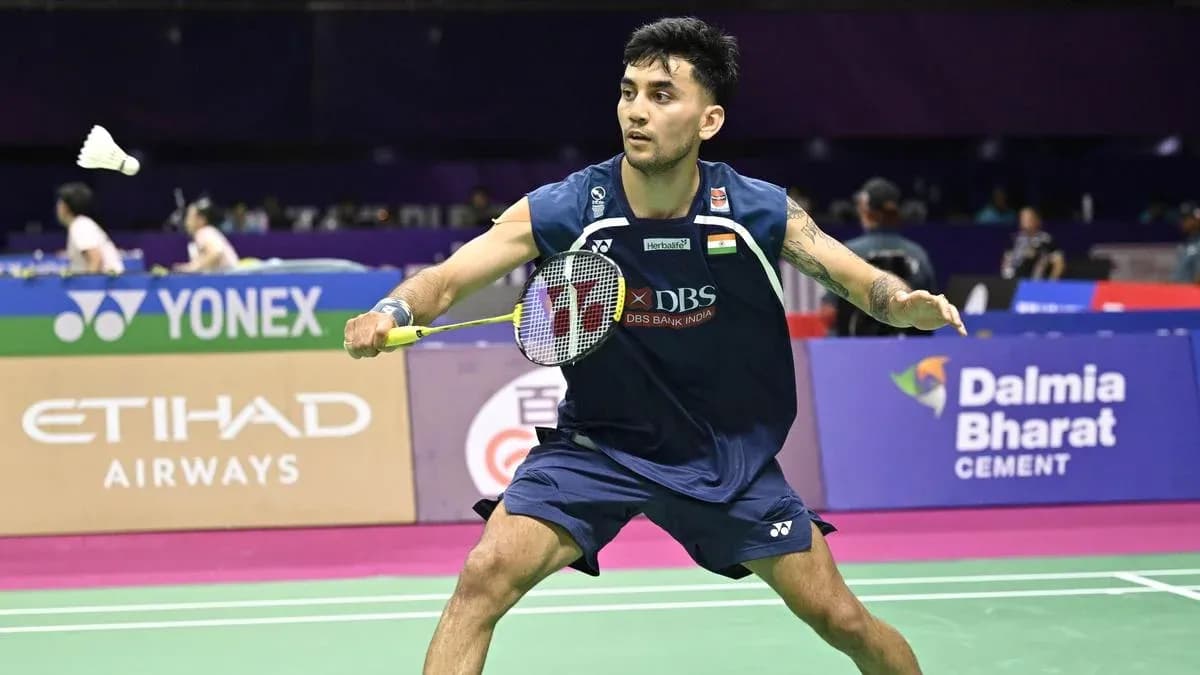
Lakshya Sen’s men’s singles quarter-final against World No.7 Kodai Naraoka was a study in patience, nerve and adaptation. It began badly. Sen never settled in the opening game, lost his rhythm, and was pushed around the court as Naraoka dictated the tempo. The result was brutal: 11-21 in just 18 minutes, Sen’s toss drifting long on the final point to cap a one-sided start.
Then everything flipped.
Switching to the better side of the court and with a clearer read on the drift, Lakshya changed the script. He slowed the game, defended deep, and pounced on anything played flat. Naraoka, suddenly, looked the one struggling for answers. Sen started to toy with him at the net, then hammered the Japanese’s backhand with fierce smashes.
Points flew by. From 8-2 to 11-2, Sen stormed through the second game with Naraoka unravelling under pressure. Unforced errors piled up. Shuttles sailed wide, drops and smashes crashed into the net. The drift, which had favoured Naraoka early, now turned into a trap he could not escape. Sen ran away with the second game 21-5 – a stunning reversal that dragged the tie into a decider.
The final game became a test of nerve as much as skill. Starting from the bad side, Lakshya knew he just had to hang on until the change of ends at 11. Trailing 5-7, then 13-17, he refused to panic. He leaned into the long rallies, trusted his defence and waited. Naraoka, forced to keep finding winners, began to crack.
The pressure finally told.
From 14-19 down in the decider, Sen launched a remarkable surge. Rally by rally, he reeled Naraoka in, turning defence into attack, drawing errors, and then striking when the shuttle sat up. The Japanese star suffered a complete meltdown in the closing stages, repeatedly failing to pierce Sen’s wall of defence.
Lakshya completed the comeback 21-19 in the third, winning the match 11-21, 21-5, 21-19 in a gruelling 1 hour 6 minutes. It was not just a win over a higher-ranked opponent; it was a masterclass in reading conditions, adjusting strategy and holding his nerve when the match seemed to be slipping away.
From there, India’s top-ranked men’s doubles pair, Satwiksairaj Rankireddy and Chirag Shetty, stepped up to face World No.9 duo Takuro Hoki and Yugo Kobayashi, with Sen’s performance setting the competitive tone for the tie.
Tough lessons in table tennis and fencing
Not every Indian story on the day ended in celebration.
In men’s team table tennis, the 2018 bronze medallists were swept aside in the pre-quarterfinals by a sharp Korean unit. Harmeet Desai went down 1-3 to Jang Woojin, Manush Shah lost a tight five-game battle 2-3 to Oh Junsung, and Manav Thakkar fell 1-3 to An Jaehyun. The 0-3 scoreline stung, and one question lingered: did India miss the experience of G Sathiyan, who was not fielded in this crunch tie?
On the fencing piste, Mitva Jesangbhai Chaudhari’s campaign ended in agonising fashion. In the women’s individual Epee Table of 32, she led Jingwen Yang of China 5-4 after the first period, only to see the bout slip away 14-15. One touch. That was the difference between progression and elimination. Fine margins, brutally exposed.
India’s hopes in the event now rest on Taniksha Khatri, who steps into her women’s individual Epee Table of 16 bout carrying both opportunity and expectation.
From towering totals and roaring crowds in the cricket final to the lonely walk off the court after a one-point fencing defeat, India’s day at the Asian Games had everything. The question now is simple: can this blend of dominance, resilience and hard lessons fuel an even bigger medal surge in the days to come?