.svg&w=384&q=75 "logo")
From Barcelona to Paris: A New Chapter in Football
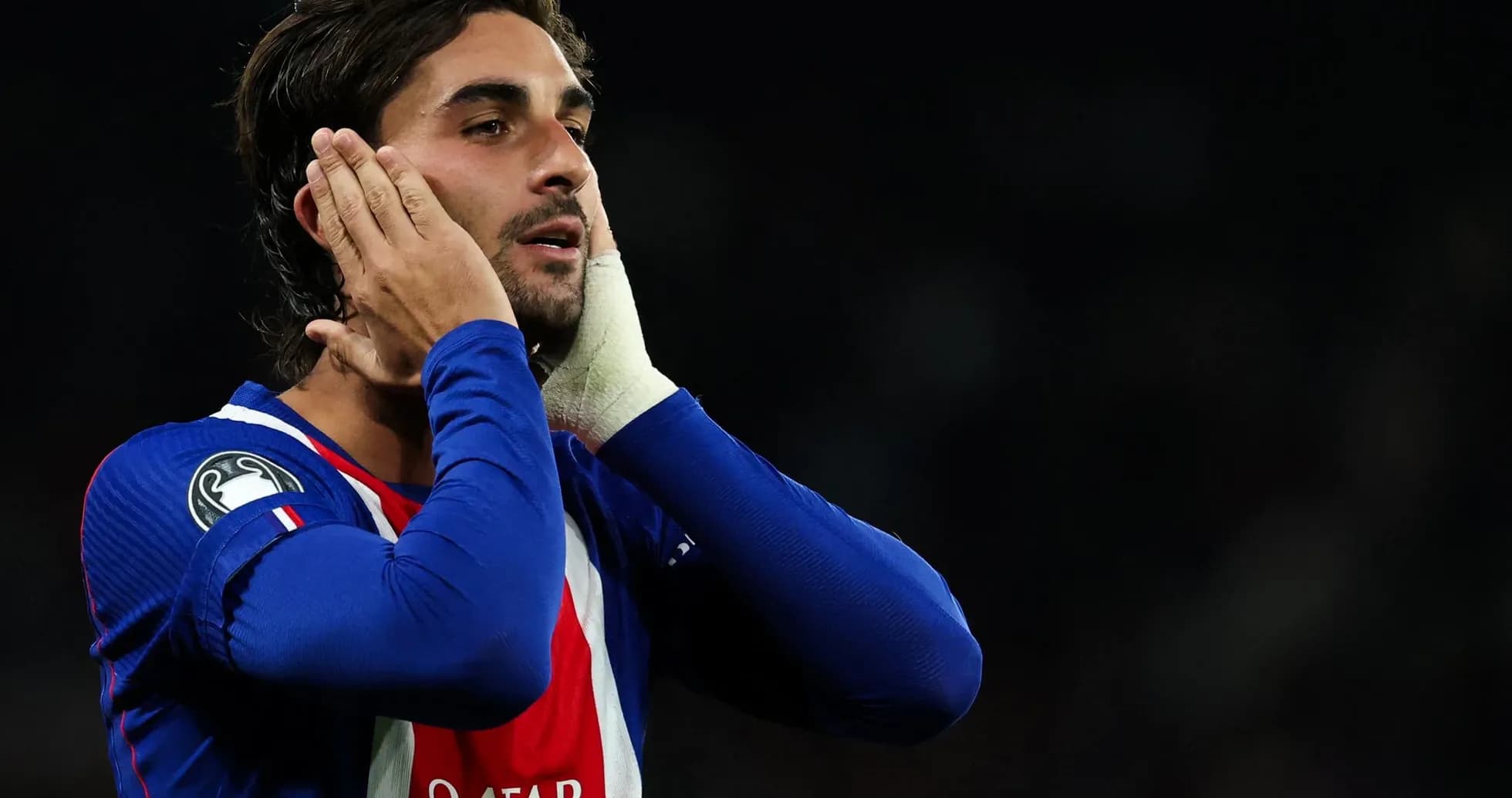
He left Catalonia with a suitcase full of medals and memories, but very little certainty.
For the 26-year-old Spain international, the move to Paris was not just a change of club badge. It was a wrench out of his comfort zone: new city, new language, new habits, a new life to assemble from scratch. The football part, the thing that should have been hardest, has looked like the easiest of all.
At the Parc des Princes, the pitch has felt familiar even when everything else hasn’t. Seven goals in his first six games: that is not adaptation, that is detonation. Luis Enrique asked for a forward who could live inside his ideas; he has ended up with a forward who is defining them.
From Barcelona to Paris in a heartbeat
The transfer itself arrived with the brutal speed that has become the norm in the modern market. One week he was a pillar in La Liga, the next he was clearing out his locker and booking a flight.
"It’s difficult: one day you’re here and the next you’re packing your bags," he said, summing up the chaos of a summer that turned in an instant. There was room for a joke, though, when talk turned to those left behind at Barcelona. "The only one I can’t bring with me is Pedri," he laughed, a line that said as much about the bond in that old dressing room as it did about his willingness to embrace the new one.
The upheaval off the pitch was real. Daily routines rebuilt from zero. A foreign language to wrestle with. A city that can swallow you whole if you let it. For many players, those details leak into performances. In his case, they have done the opposite. The more complicated life has become away from the stadium, the more ruthless he has looked inside it.
Luis Enrique’s “paternal” touch
If the transition has looked smoother than it should, there is a clear reason. Paris did not feel entirely alien. Waiting for him at the Parc des Princes was Luis Enrique, a coach he openly describes as a paternal figure in his career.
Reunited with a manager who already knows his strengths, weaknesses and quirks, the forward walked into a dressing room that did not feel like a blank page. Fabian Ruiz was there, another familiar Spanish voice. So was Dro Fernandez, a former Barcelona academy product now embedded in the back-to-back European champions’ squad.
That core of compatriots softened the landing. The tactical framework helped too. Enrique has built a system that asks his forward to be direct, decisive and brave in the final third. The response has been emphatic: seven goals in six matches, a start that has instantly made him one of the central weapons in PSG’s attack.
He has not just filled a role; he has forced his way to the front of the queue.
From World Cup glory to Ballon d’Or talk
This surge in Paris did not come out of nowhere. It followed a summer in which he wrote his name into Spain’s football history.
In the World Cup final, he delivered the moment that matters most, scoring the only goal in a 1-0 win over Argentina. One strike, a lifetime of consequence. That finish crowned Spain as world champions and pushed him into a different category of player, the kind whose performances are measured not just in numbers but in legacy.
Now comes the individual recognition. His name sits on the 30-man shortlist for the Ballon d'Or, a natural extension of his club form and his decisive role on the biggest stage. He is joined there by a wave of Spanish talent: Lamine Yamal, Pau Cubarsi, Marc Cucurella, Rodri, and PSG team-mate Fabian Ruiz.
When asked about the award, he refused to play the campaign game. No lobbying, no pointed hints, no carefully crafted soundbites about deserving more. "Whoever’s meant to win it will win it; it’s not up to me," he said, before adding the one condition he would happily endorse: "If a Spaniard wins it, so much the better."
The message was clear: let others argue. He will keep scoring.
The standard is set. Now he has to live with it.
Such a start in Paris comes with a price: expectations reset overnight. He has already shown Enrique he can be the sharp edge of this PSG side. The challenge now is to sustain it, to turn a hot streak into a season, and a season into a status.
His place in the starting XI is no longer a gift of familiarity with the coach; it is something he has earned with a ruthless streak in front of goal. To keep it, he will need that same relentlessness as the calendar tightens, as defences adjust, as the weight of competing on multiple fronts begins to press down.
PSG’s ambitions are clear. Dominate domestically. Go deep in Europe again. For that, they need forwards who do not just fit the system but bend matches to their will. He has already shown he can do it in a World Cup final. He has shown he can do it in the early weeks in Paris.
Now comes the real question: can he turn this electric beginning into the season that defines his career – and perhaps, one day soon, into the year that defines the Ballon d'Or?