.svg&w=384&q=75 "logo")
Red Bull Resets: Hadjar Returns, Lawson Out, and Driver Dynamics
Red Bull arrives in Baku with something it hasn’t had for two months: its first-choice Formula 1 line-up.
Isack Hadjar is back in the senior team after an injury-enforced, three‑race absence. Liam Lawson returns to Racing Bulls. Yuki Tsunoda steps back into reserve duties after his brief 2026 cameo.
Three races, five drivers, one question: who really moved their stock in Red Bull’s F1 empire?
Hadjar steps back into a faster Red Bull – and a higher bar
Hadjar gets his seat back with one clear message attached: don’t just pick up where you left off. Be better.
Before the summer break, his body of work was strong. Across the first 11 races he averaged 6.5 points per grand prix to Max Verstappen’s 9.9. Translate that: when Verstappen usually finished around fifth, Hadjar tended to be one or two places behind. That’s solid lieutenant territory.
Then he got injured.
In his absence, Lawson was thrown into the deep end again, with no pre‑knowledge of the car and another mid-season team switch. Even so, he kept Red Bull’s scoreboard ticking, scoring points and doing a “perfectly adequate” job in context. That matters, because it strips away Hadjar’s safety net. He’s not returning to replace a disaster. He’s replacing competence.
The landscape has shifted, too. In those three races without Hadjar, Verstappen’s average leapt to 12 points per race despite crashing at Zandvoort, powered by podiums at Monza and the Madring. Red Bull has found more performance; the peak has moved.
Lawson, by contrast, managed 4.7 points per event in that same period. Respectable. Not transformative.
So Hadjar climbs back into a car that’s now clearly capable of more – and he has to go with it. A demanding triple‑header will probe his rehabilitation, his concentration, and how quickly he can snap back to full race sharpness.
If he’s even slightly off, Red Bull’s decision looks questionable in pure competitive terms. If he hits his previous level or better, he becomes the second weapon Verstappen has been missing in the fight with Mercedes, Ferrari and McLaren.
The tide at Red Bull is rising. Hadjar has to rise with it.
Lawson shows he belongs – just not in Verstappen’s garage
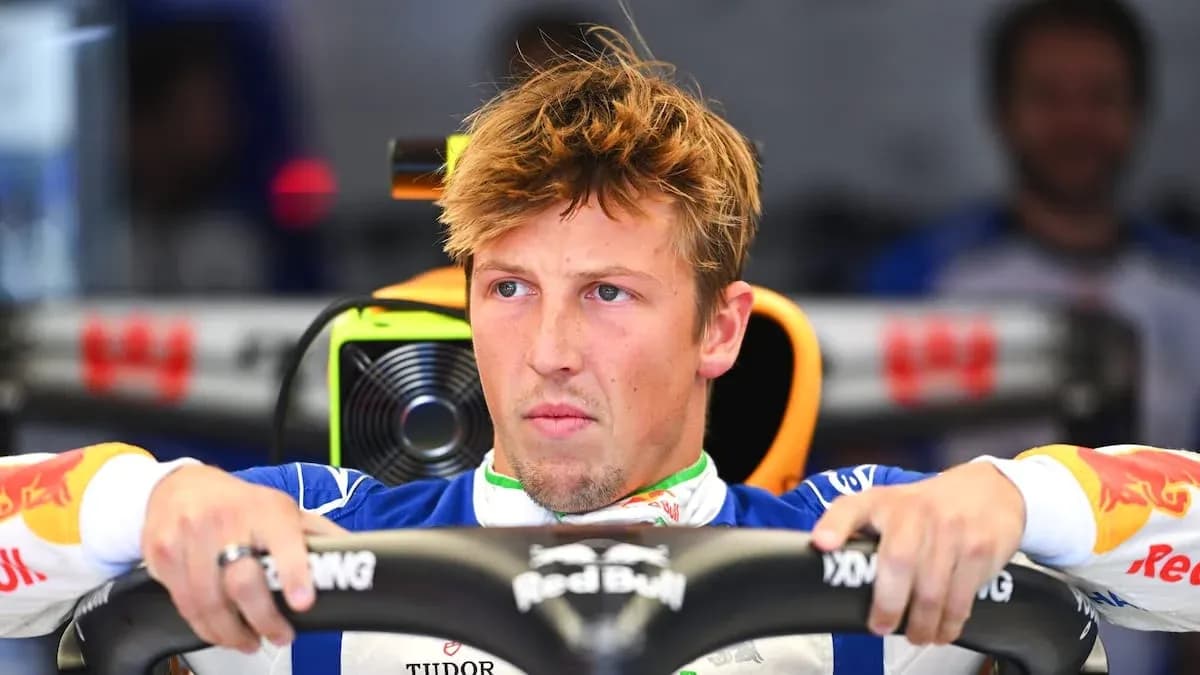
Lawson’s three‑race stint at Red Bull was never just a stopgap. It was a live audition.
His stock was already high before the break. He had quietly built a consistent season with Racing Bulls, leading the points tally among drivers outside the top four teams. Inside the garage, the view was clear: he’d taken a step over the winter, both in approach and execution.
Engineers liked how he handled the 2026 regulations he doesn’t particularly enjoy. He dug into the energy management tricks, helped push Racing Bulls forward, and earned the expectation of another season alongside Arvid Lindblad. When your line‑up works in F1, the old rule applies: don’t fix it.
Then Red Bull called.
Dropped into a tricky senior car, Lawson did what those at Racing Bulls expected him to do. He settled fast, scored points twice in three starts, and only really struggled at Monza – where an engine penalty left him starting from the back and facing an uphill slog.
Did he do enough to force Red Bull to rip up its plan and put him next to Verstappen long-term? Probably not. He didn’t deliver the kind of shockwave performance that makes a big team rethink its hierarchy overnight.
But he absolutely did enough to underline his value to Racing Bulls. He looked exactly like the driver that team needs if it wants to stay on the front foot in the midfield and keep Alpine behind.
He didn’t win the Verstappen sweepstakes. He might have secured something more realistic: a clear, central role in Red Bull’s second team.
Tsunoda reminds everyone what he is: a dependable scorer
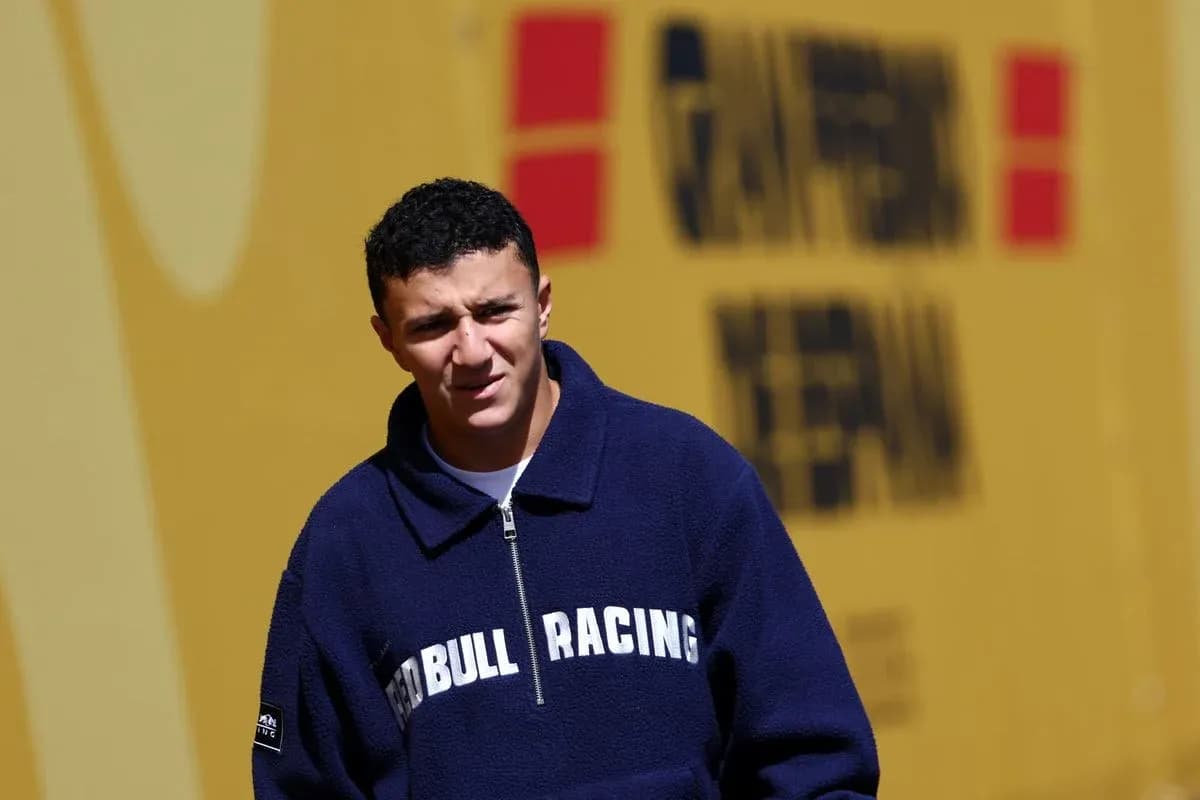
Yuki Tsunoda’s three‑race cameo told a familiar story. Give him a decent car, and he’ll bring it home in the points more often than not.
After a bruising year alongside Verstappen, there were questions about how much that had dented him. Zandvoort answered them quickly. First weekend back in a 2026 Racing Bulls, and he was only a tenth slower than Lindblad in qualifying. Straight on the pace.
At Monza he turned that speed into a point, despite a messy Saturday that ended with a Q1 exit and some questionable grid positioning at the start. Audi is trying to get that point taken away on a technicality, but on track, Tsunoda did what he has always done at this level: survive the chaos, pick up what’s there.
Madrid never really got going for him. Damage ended any hope of repeating the trick. Yet the overall impression was clear. Tsunoda remains an ideal stand‑in: quick to adapt, reliable in races, capable of scoring.
What he didn’t do was force a philosophical crisis at Red Bull. He didn’t look like a driver who simply cannot be left on the sidelines.
He summed it up himself: “I gave it my all and there's nothing to regret.”
If this proves the final act of a 114‑race F1 career, it’s a far more dignified exit than being hammered week in, week out by Verstappen.
Lindblad grows into a leader at Racing Bulls
Arvid Lindblad entered the year as the grid’s only rookie and has spent most of it refusing to behave like one. This latest three‑race stretch added another layer: leadership.
The Lawson–Lindblad pairing has been one of the most balanced in the midfield. Their combined effectiveness is a major reason Racing Bulls still sits ahead of Alpine in the constructors’ standings.
When Tsunoda dropped in for his cameo, he adapted quickly to the 2026 machinery. But Racing Bulls still needed someone to carry the load, to be the constant in a shifting line‑up. Lindblad did exactly that.
At Monza, his pace allowed him to finish ahead of an Alpine he had no real business beating on paper – even allowing for Franco Colapinto’s self‑inflicted drama. At the Madring, the weekend wasn’t perfect, but he still banked two important points.
Zandvoort was more frustrating. A harsh in‑race penalty knocked him out of contention, but even then he played a team role, disrupting Pierre Gasly’s race and helping give Tsunoda the best chance to get off the mark.
The numbers back up the impression: seven consecutive Q3 appearances. Consistent, repeatable speed. And crucially, Racing Bulls’ advantage over Alpine remains intact.
He’s still only 19. Red Bull’s senior figures will have noticed. The question now is not whether Lindblad belongs in F1. It’s whether the internal balance of power at Racing Bulls has started to tilt his way.
Why a sharp Hadjar matters so much to Verstappen
Max Verstappen cares deeply who sits in the other Red Bull. He knows that team-mate performance shapes his own weekends, both directly on track and indirectly in strategy and development.
Right now, Red Bull is trying to muscle its way into a consistent fight at the front. Mercedes, Ferrari and McLaren can usually rely on both cars being in the mix. Red Bull often can’t.
Lawson’s stint underlined that gap. He didn’t finish within a minute of the race winner in any of his starts for the senior team. There were reasons for that – late call‑up, unfamiliar car, bouncing between outfits – but the effect was the same: Verstappen was often fighting alone. At Zandvoort, of course, he was the one who exited in spectacular fashion, but across the run the second car rarely influenced the very sharp end.
A fully fit, fully switched‑on Hadjar changes the equation. If he instantly hits his stride, he becomes a factor in the lead battles, a car that can complicate rivals’ strategies and help Red Bull claw back ground in the constructors’ championship from its current fourth place.
There’s another layer. Hadjar has missed three races and spent two months away, yet if he comes back instantly competitive, it will feed Verstappen’s long‑held belief that F1 2026 simply isn’t as physically punishing as it should be.
Baku will show whether Red Bull has its full arsenal back – or whether its most important supporting act still needs time to heal in a season that isn’t waiting for anyone.