.svg&w=384&q=75 "logo")
Kevin Pietersen’s Spin School: England Enhances World Cup Readiness
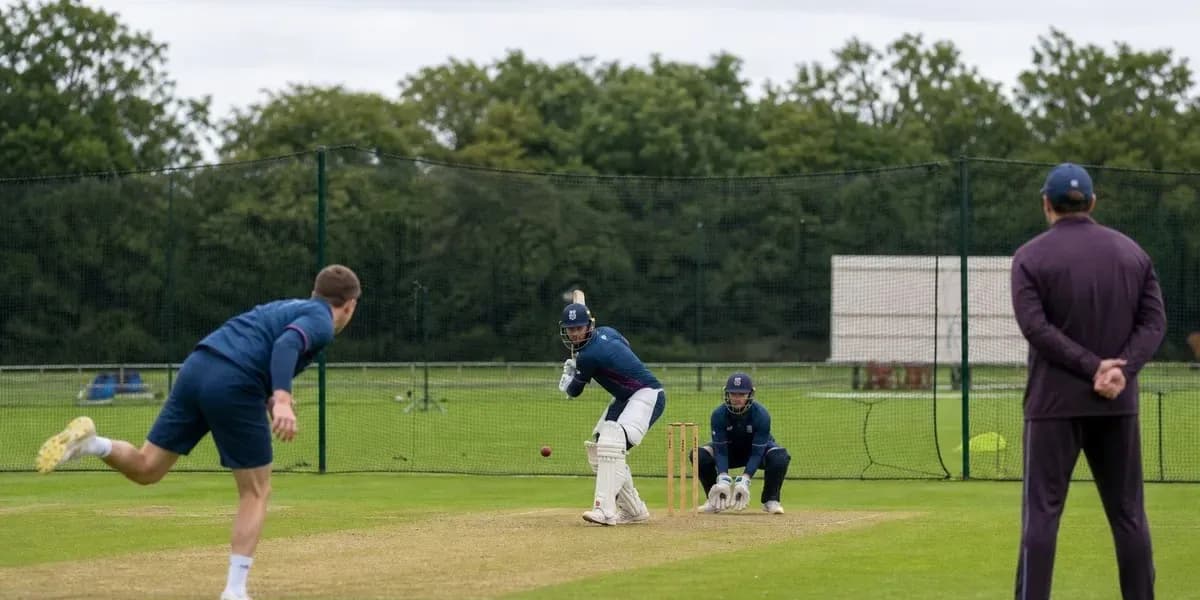
England’s white-ball players are back in class, and the teacher is someone who never feared a turning ball.
Kevin Pietersen, one of England’s most audacious batters of the modern era and the country’s third-highest run-scorer across formats, has been brought in as a specialist coach for the limited-overs sides ahead of next year’s World Cup. His brief is clear: fix England’s game against spin.
Captain Harry Brook has wasted no time in hailing the impact of the 46-year-old. Pietersen, appointed this month, has already delivered a hands-on masterclass focused on one of the game’s most subtle arts – judging length against spin.
That single skill, Brook believes, can change everything.
Learning to live with the turning ball
Under Pietersen’s guidance, England’s batters have been drilling the decision-making that separates survival from dominance. The emphasis has not been on slogging spin out of the attack, but on something more precise: reading the length early, getting into position quickly, and rotating the strike with authority.
Brook underlined how critical this is in One Day Internationals. In ODIs, where the middle overs are often suffocated by spin, the ability to work the ball into gaps and keep the board moving can decide matches. Fall behind against quality spinners and a game can drift away in ten overs. Handle them well and suddenly the pressure swings back on the fielding side.
He pointed to Pietersen’s own record as a template. For years, Pietersen was the batter opponents targeted with spin – and the batter who often hit them off their lengths. Brook also highlighted Joe Root and Marcus Trescothick as examples within the England set-up whose experience against slow bowling can feed into this renewed focus.
Early proof against Sri Lanka
If England wanted an immediate test of their new obsession, Sri Lanka provided it.
In their first series since Pietersen joined the coaching staff, England swept Sri Lanka 3-0 in Twenty20s, dismantling a side that traditionally leans heavily on its spinners. The result did more than just underline a shift in confidence. It lifted England above India to the top of the Twenty20 world rankings.
The message was blunt: this is not an England side content to be merely competitive on turning pitches. It wants to dictate terms.
Brook spoke of a team intent on playing at a higher tempo, with bat and ball, and forcing opponents to react. That mindset fits neatly with Pietersen’s own playing philosophy – proactive, aggressive, and unafraid of risk when the moment demands it.
Next examination: ODIs at home
The next challenge comes quickly. England now turn to a three-match home ODI series against Sri Lanka, starting later on Tuesday. The format changes, but the theme does not. Spin will again sit at the heart of the contest.
For Brook, these matches are another step in building a side that arrives at the World Cup not just talented, but meticulously prepared. He has been clear that England want to be one of the best-prepared teams in the world, a group that understands its plans against every style of bowling and every phase of an innings.
That, he insists, demands work far beyond the boundary rope. Technical drills, tactical clarity, mental resilience – all of it counts, and all of it is being pushed hard inside this England camp.
Pietersen’s presence gives that work a sharp edge. The players are learning from a man who has faced down the best spinners in the world and found ways to attack them. The early signs, in both performance and intent, suggest they are listening.
Now the question is simple: can England turn these lessons into a sustained advantage when the World Cup pressure tightens and the ball starts to grip?