.svg&w=384&q=75 "logo")
Indian Cricket's Power Circle Meets in Mumbai
Indian cricket’s power circle will close in on Mumbai on Thursday, and for once, the room will be as big a story as the team.
No formal agenda has been announced, but everyone knows what’s on the table: a brutal examination of India’s recent stumbles in white-ball cricket and some uncomfortable questions about the future.
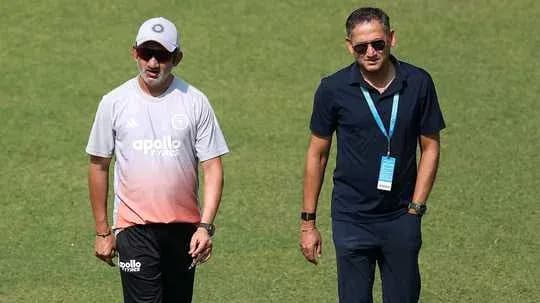
At the head of the table will be BCCI secretary Devajit Saikia, convening and presiding. Around him: head coach Gautam Gambhir, chief selector Ajit Agarkar and Centre of Excellence head VVS Laxman – a heavyweight think tank entrusted with charting the next phase of Indian cricket.
This time, though, there will be a captain in the room.
Gill steps into the boardroom
Late on Tuesday, it emerged that Shubman Gill has been invited and will attend in person. As India’s Test and ODI captain, his presence changes the tone of the gathering. This is not just a post-mortem; it’s a planning council.
Gill is understood to be taking the discussions seriously, keen to shape the roadmap for upcoming assignments and to give his own feedback on what went wrong in the recent series. For a young captain still carving out his leadership identity, it is an early test of how much influence he can wield off the field.
Shreyas Iyer, the T20I skipper, will also be part of the deliberations, though it is not yet clear whether he will walk into the room or dial in. Either way, both white-ball leaders will have to answer for a stark reality.
India, reigning T20 World Cup champions, did not win a single one of the six completed T20Is on the tours of Ireland and England. They were outplayed, outgunned and, at times, out-thought by the hosts.
The BCCI had promised a review. This is it.
A ‘bad phase’ or something deeper?
During the England series in July, as defeats piled up, Saikia tried to calm the noise.
“The BCCI is currently observing the performance of the Indian T20 team which has not been up to the mark in the ongoing series against England. However this is not something abnormal and can happen in international cricket. We consider it as a purely bad phase,” he had said.
Thursday’s meeting will test that assertion. Was it just a bad phase? Or the first clear sign that a champion side has slipped off its peak?
The white-ball failures in Ireland and England are expected to sit at the centre of the review. Selection calls, tactical decisions, workload management, role clarity – all of it will come under the microscope, with Gambhir and Agarkar expected to provide answers as much as opinions.
The Rohit question
Hovering over the discussions is a name not formally on any agenda but impossible to ignore: Rohit Sharma.
Recent reports suggested that the selectors did not see Rohit as part of their plans for the 2027 ODI World Cup and that the Lord’s ODI would be his last in the format. The BCCI moved quickly to deny that, but the damage was done. It exposed a perceived disconnect between the board and its selection panel over the future of one of India’s modern greats.
This meeting is expected to bring some clarity. Is Rohit still central to India’s medium-term white-ball vision, or will the transition accelerate under Gill and Iyer? The room may not produce a public verdict immediately, but the internal alignment – or lack of it – will shape selections in the months ahead.
New Zealand, WTC and 2027 on the horizon
The conversation will not stop at recent failures. A demanding tour of New Zealand looms, with a full multi-format series: five T20Is, five ODIs and two Tests. Conditions will be tough, the schedule relentless, and India can ill afford another disjointed campaign.
Planning for that tour will sit alongside longer-range thinking. The 2027 ODI World Cup remains a major reference point, with the need to build a squad capable of peaking four years down the line. Age profiles, succession plans and the balance between experience and youth will all be weighed.
Test cricket will have its say as well. India’s position in the ongoing World Test Championship cycle is expected to be reviewed, with an eye on what administrative and structural tweaks might lift performance – from domestic scheduling to player rotation and the use of the Centre of Excellence.
Agarkar, Laxman and the shadows of change
There is another layer to this meeting: the futures of the men doing the assessing.
Speculation has swirled around Ajit Agarkar’s position and the possibility of VVS Laxman stepping into a larger role with the senior team. None of the key figures – not the BCCI, not Agarkar, not Laxman – has spoken publicly about it. Still, the chatter has not gone away.
Thursday might not deliver dramatic announcements, but it could quietly reset responsibilities and influence within the system. If any shift is coming, this is where the first moves will be made.
A champion team has hit a rough patch, a new leadership core is emerging, and the old guard still hovers over the horizon. Behind closed doors in Mumbai, Indian cricket will decide how boldly it wants to move into its next era.