.svg&w=384&q=75 "logo")
England’s Top Order Struggles Under Pressure
The camouflage strip at Chester-le-Street is already baring its teeth. From the commentary box it looks mottled, green bleeding into brown like an old army jacket. Out in the middle, it feels far less forgiving.
One ball from Asitha Fernando barely gets up, scuttling through and thudding into Kamindu Mendis’ knee at slip via an under edge. He stays down, wincing. Early sign: this is no carefree August road.
England’s makeshift top order under the microscope
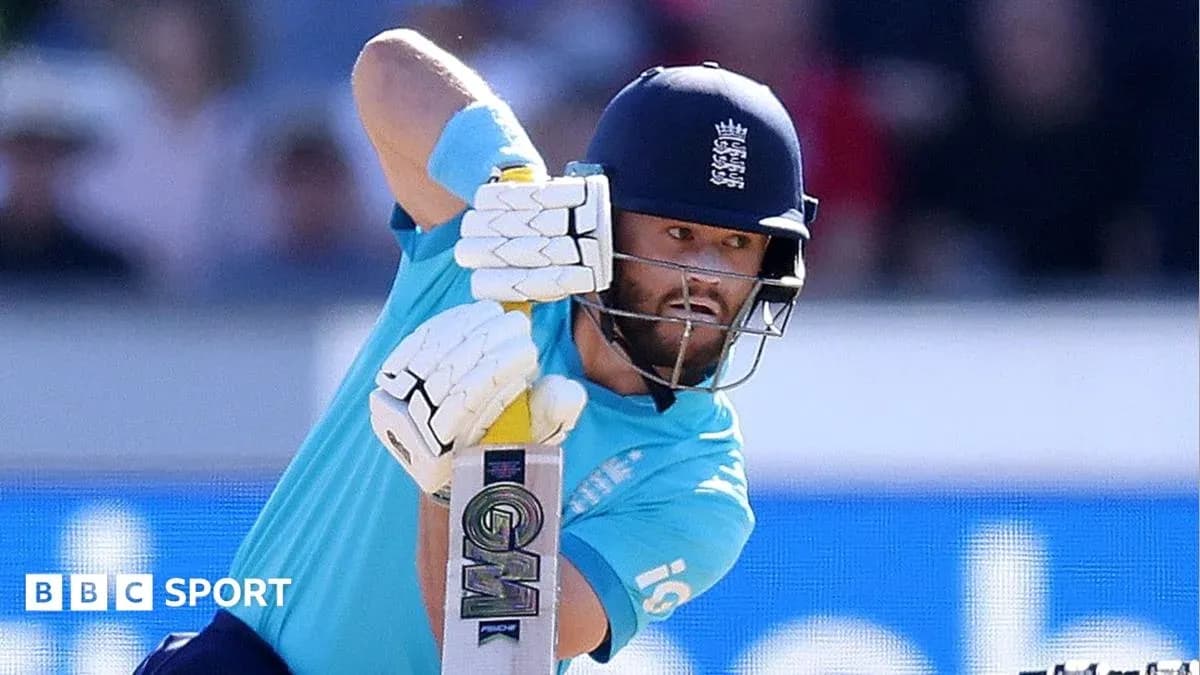
England are 17-1, and the early casualty is Joe Root for nought. A rare List A outing, gone almost before it began. Tom Banton, the man trying to remember the rhythms of 50-over cricket after years of T20, is now the one under examination.
This is just his 26th List A appearance at the age of 27. Root, by contrast, had 186 one-day games under his belt before he turned 28. Experience isn’t just a number here; it’s a different sport within the same format.
Banton is being worked over. Russel Arnold, watching on for BBC Test Match Special, purrs over one particular ball from Asitha Fernando that seams in and straightens, pinning the right-hander. “That was a tremendous delivery,” he says, noting how Banton’s feet look stuck, not quite trusting the surface, not quite trusting himself. Coaches preach “hit the top of off”; Asitha has the sermon memorised.
Duckett chasing rhythm and reassurance
At the other end, Ben Duckett is trying to stitch together some confidence of his own. England’s recent ODI reshuffle has handed him a carousel of opening partners – Jamie Smith, Zak Crawley, Phil Salt, Jacob Bethell, even Rehan Ahmed – and now Banton joins the list.
There’s a hint of the Crawley-Duckett dynamic about this pairing too. Banton, tall and rangy, leaning down to offer a word, Duckett compact and busy, already looking to cash in on anything loose. Madushanka obliges with a wayward first over, and Duckett is grateful for a full toss early on to get the scoreboard and his nerves moving. England move to 12-0, then 17-1 once Root departs, the start neither fragile nor commanding, just nervy.
Duckett needs runs. Not to save a career, but to steady a mind. A lean patch in this format lingers longer than in T20, where another game is always around the corner. Here, every innings feels like a statement.
Sri Lanka carry form – and flaws
Sri Lanka arrive with a curious mix of momentum and burden. They were brushed aside 3-0 in the T20s last week, yet they sit above England in the ODI rankings and took the last 50-over series between these sides 2-1 at home earlier this year. This is their format, their comfort zone, or at least it should be.
Kusal Mendis, leading a reshaped one-day side, talks with the calm of a man who believes the numbers back him up. He wanted to bat first, but finds himself bowling. No complaint, just a quiet assertion that his team is “well-balanced,” that the batting line-up is strong, that the last tournament showed what they can do. Five bowlers, six batters. A clear template.
The conditions, though, ask questions of his attack. Arnold is blunt about Dilshan Madushanka’s early work: “He’s getting it wrong.” Line, length, new-ball discipline – all off. Sri Lanka, he says, carry the weight of that inconsistency. Against this England side, the plan has to be simple: start fast, get ahead, believe you can knock them over. Every loosened over chips away at that belief.
The weather has played its part in Sri Lanka’s late thinking. With the sun blazing, the morning moisture that might have helped the seamers is vanishing quickly. Any hint of tackiness is burning off. What looked like a seamer’s morning could yet become a bat-first afternoon, especially at a ground where 300 has become the par language: in each of the last six 50-over matches here, domestic and international, the side batting first has gone past that mark.
Rediscovering the 50-over tempo
For England’s batters, the challenge is mental as much as technical. Dawid Malan, on BBC Radio 5 Sports Extra, points to Harry Brook’s simplified mantra: treat it like a longer T20. It sounds neat. It rarely is.
Fifty-over cricket demands a different heartbeat. The bursts of aggression, the long spells of strike rotation, the patience to ride out a spell like Asitha Fernando’s without burning through your scoring options. For someone like Banton, who has played just one List A match since 2020, that gear change is sharp.
He stands there now, trying to find it on a pitch that refuses to offer clarity. Duckett nudges, dabs, looks for gaps. The ball grips occasionally, shoots low occasionally, behaves perfectly now and then just to keep everyone honest.
England have already dominated the shortest format on this tour. Sri Lanka, with a new captain and an ODI ranking edge, insist this is their arena. Between them sits a strip of camouflage grass and clay, a ball that won’t quite behave, and a format both sides are still trying to master in a world that keeps rushing towards the next T20.
Today, someone has to slow down, settle in, and prove that 50-over cricket still rewards those who can think a little deeper and bat a little longer.