.svg&w=384&q=75 "logo")
The Thames Derby at 100: A Rivalry Revisited
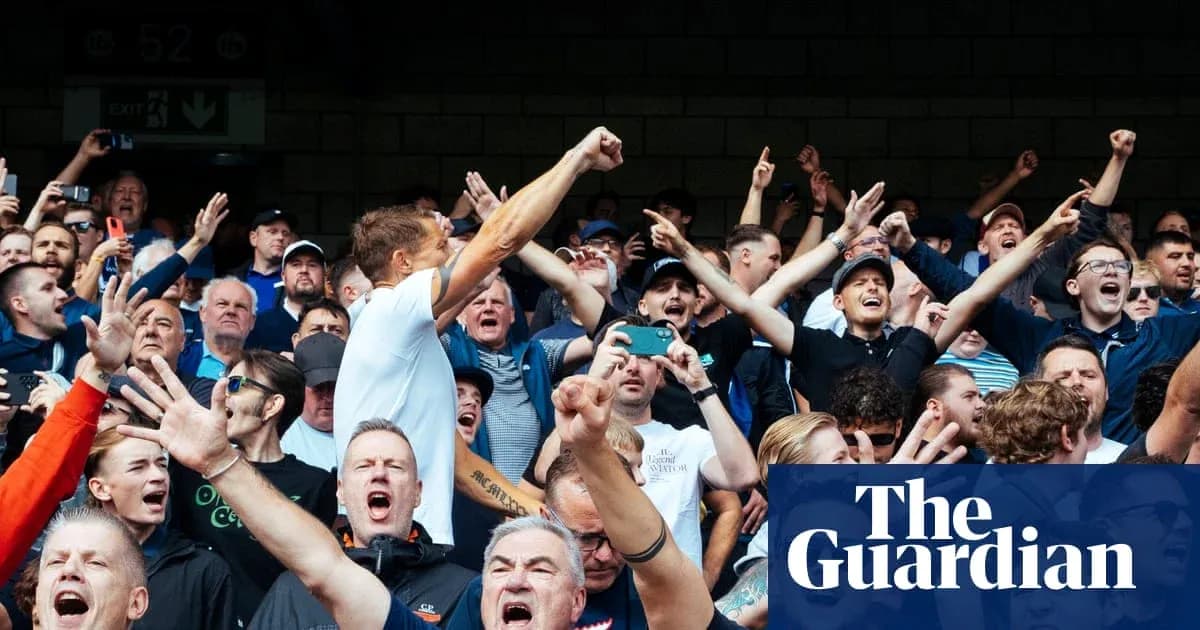
By the time Millwall and West Ham walked out at The Den on Saturday, the numbers already carried weight. The 100th competitive meeting. The first in 14 years. A rivalry that has outlived the docks that created it, revived again in a tight, raw 2-2 draw that felt, at times, like a history lesson played at full speed.
This was not just another league fixture. It was two clubs staring at a mirror and insisting they saw someone else.
Born in the Smoke
Millwall and West Ham were forged on the same river, in the same world of hard labour and harder choices. Millwall began life on the Isle of Dogs, known then as the Dockers. Across the water, Thames Ironworks – the works team that would give birth to West Ham – stood around Canning Town. In those early days, both clubs lived north of the Thames, barely more than two miles apart.
The nicknames still carry that industrial echo. Millwall’s old “Dockers” tag and West Ham’s “Irons” both speak to a time when a man’s back and hands were his only job security. Dock work meant turning up at dawn not knowing if you’d be picked, fighting for a day’s pay, standing shoulder to shoulder with men who might just as easily be rivals for work. That world built a code: toughness, loyalty, graft. Both clubs still sell themselves on those values.
With roots this deep, the line between truth and legend has blurred. One of the most enduring stories traces the rivalry back to the General Strike of 1926. The tale goes that West Ham dockers backed the strike while those at Millwall refused, a supposed betrayal that lit the fuse. Historians David Sullivan and Brian Belton push back hard on that version. Belton argues that the strike held firm in the Millwall docks, with only a handful of strike-breakers near Canning Town. The evidence is thin. The myth, though, has survived a century. In rivalries like this, what people believe often matters more than what actually happened.
The first footballing collisions came in the 1890s, when Millwall Athletic met Thames Ironworks. Even there, the history needs untangling. Belton warns against treating Thames Ironworks as simply “early West Ham”. The company team folded before West Ham were formed in 1900, a clean break that later storytelling tends to ignore. Sullivan and Belton both question the idea of a rivalry stretching unbroken from those days – the so‑called ancient Dockers Derby is, in truth, a more recent invention.
The real venom arrived later.
When the World Changed, the Rivalry Didn’t
By the 1970s, the tone around Millwall–West Ham had hardened. Harry Cripps’s testimonial in 1972, meant as a warm tribute to a man loved at both clubs, descended into serious disorder. Four years later, a Millwall supporter died after falling from a train, with some believing West Ham fans were involved. When the clubs finally met again in 1978 after a long gap, violence shadowed the fixture.
All this unfolded as the old industrial east London was being dismantled. The docks that had sustained communities for generations were closing. Traditional industries shed tens of thousands of jobs. Unemployment rose. Streets that had once revolved around the shipyards and warehouses were left searching for new meaning.
It would be too neat to draw a straight line from industrial collapse to hooliganism. Life is never that simple. But both ran on parallel tracks. As one way of life disappeared, football became one of the last places where territory, masculinity, belonging and local pride could still be asserted loudly, physically, in public. Millwall and West Ham, born of the same soil, became competing banners for the same battered identity.
Through the 1980s, 90s and early 2000s, the reputation of the fixture was kept alive by sporadic but vivid flashpoints. The most infamous came at Upton Park in 2009. A League Cup tie that should have been routine became a national story: fighting in the streets, a stabbing, pitch invasions. Their Championship meetings in 2011-12 were far calmer, almost jarringly so by comparison. Then the rivalry disappeared from the competitive calendar again, frozen in memory until this season.
A Day Under Watch
By the time Saturday arrived, the Dockers Derby had been fed by films like ID and Green Street, which turned both clubs’ reputations into cinematic folklore. The fixture has long been shorthand for trouble in the popular imagination. On social media, the build-up followed a familiar script: spiky posts, bravado, a steady hum of threat.
On the ground, the mood was different. Cautious, watchful, but not feral.
The game was live on ITV. Kick-off was dragged forward to 12.30pm, limiting drinking time. Around 400 police officers were deployed. West Ham were handed just 1,774 tickets in a crowd of roughly 20,000, and most away fans chose not to wear colours. They were told to travel via London Bridge to South Bermondsey, then escorted as a group to the away end. It was crowd control by funnel, designed to reduce friction points to the bare minimum.
Both sets of supporters carry a long-standing suspicion of journalists and photographers. Warnings to “be careful” came from both sides. A few insults flew. They came from a minority. What stood out far more was something that rarely makes the headlines: the density of community wrapped around both clubs, the easy warmth and humour from the majority of fans who stopped to talk or pose for pictures.
A Match That Refused a Script
On the pitch, the narrative threatened to defy the form book. West Ham arrived at The Den top of the table and fresh from a 6-0 demolition of Wrexham. Millwall were patched up, carrying injuries, but from the first whistle they played like a side insulted by the odds.
They dominated much of the first half. The Lions pressed, harried, and snapped into tackles, dragging the game onto their terms. By half-time they were two goals to the good, their aggression matched by a roar from the stands that felt like a throwback to another era.
West Ham, though, have not climbed to the summit by folding. Slowly, they found their rhythm. Passes stuck. Territory shifted. The pressure built. The away end, subdued early on, began to believe again.
The comeback gathered pace and, with 10 minutes left, they finally broke through. The equaliser detonated the away section and sent a shiver through the rest of the stadium. For a brief spell, the atmosphere tipped towards the edge. Police numbers around the stands swelled. Stewards stiffened. The sound was no longer just loud; it was volatile.
Then came the moment that might linger longest in Millwall minds. In the 89th minute, Kyrell Lisbie burst clear, streaking through on goal with the chance to snatch the game back. Mohamadou Kanté dragged him down. The referee reached for red. Kanté walked, and with him, perhaps, went Millwall’s best hope of a winner. The free-kick came to nothing. The whistle went on 2-2, a scoreline that managed to frustrate and satisfy both sides at once.
West Ham could point to their resilience, their late surge, their escape from a hostile ground with a point. Millwall could look at that first half, at Lisbie’s late break, and wonder what might have been.
Beyond the Myths
Outside, after the final whistle, there were a few brief skirmishes between Millwall fans and police. They fizzled out quickly. Within minutes, the scene had shifted. Children waited patiently for autographs. Groups of supporters lingered in clusters, picking over the key moments of the match.
To anyone coming from the outside, the similarities between these two clubs can feel more striking than the differences. Many fans have family on the other side. Some have worked the same jobs, lived in the same streets, drunk in the same pubs. Both clubs lean heavily on an image of working-class London: hard, loyal, unvarnished, suspicious of pretence.
And yet, when they meet, something sharper cuts through. There is still real animosity in parts of both fanbases, an insistence on difference. Perhaps that is the heart of it. Millwall and West Ham are not just playing for points. They are competing to claim the same cultural ground, to say: we are the true heirs of this place, this history, this way of life.
The docks that named the Dockers Derby have all but vanished. The clubs have moved further apart. Competitive meetings are rare now, museum pieces dropped into the modern calendar. But the argument over what each badge stands for has not gone away.
On Saturday, under early kick-off light and heavy police presence, that old argument found a fresh chapter. The scoreline will fade. The question it poses will not: in a changing city, who gets to call themselves the most authentic voice of its past?