.svg&w=384&q=75 "logo")
Cricket Australia Opens Big Bash to Private Investment with Renegades Sale
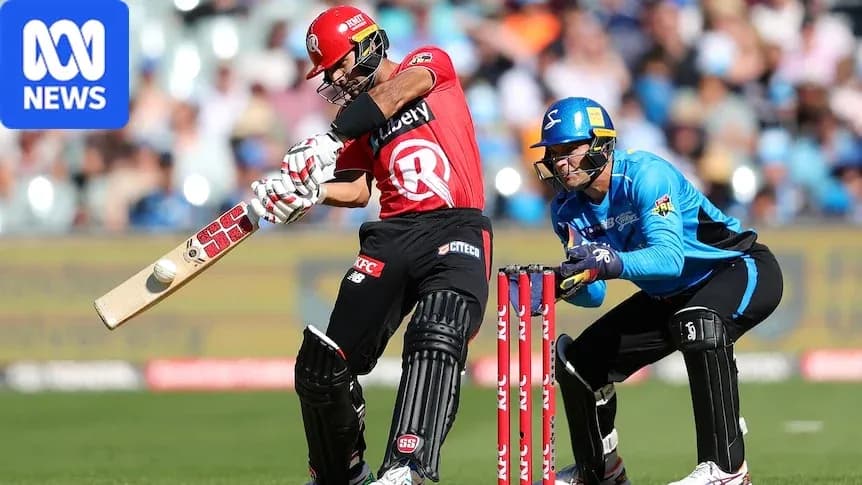
Cricket in Australia crossed a line on Tuesday it has stared at for years. The Big Bash League is heading into private hands, and the Melbourne Renegades will lead the way.
Cricket Australia’s board has approved a move to bring private investment into the BBL, with the Renegades to be the first club taken to market. The target is clear: new ownership in place by the 2027/28 Big Bash season.
This is not a tinkering exercise. It is a structural shift in how Australian cricket funds and runs its flagship domestic entertainment product.
Renegades first, others may follow
The Renegades sale will act as the test case. If the process lands the right buyer at the right price, more clubs could follow them into private ownership.
In a statement, Cricket Australia flagged a “self-determination model” that hands each state member the power to decide its own path. Put simply, states will be able to judge whether selling or holding is best for their club and community.
The Renegades, long seen as one of the league’s more marketable brands despite mixed on-field fortunes, now become the pilot project for a new era of investment.
Control stays in Jolimont
For all the talk of privatisation, Cricket Australia is drawing firm lines around what it will not give up.
Chair Mike Baird called the move “a defining moment for the game”, but stressed that the national body and its members will retain control over the levers that shape Australian cricket.
That includes international scheduling, player availability, Big Bash salary caps, branding proposals, and the reserve price that any licence bidder must meet. CA will also have the final say on which investors are allowed into the tent.
So private capital can buy into a club. It cannot buy control of the sport.
Months of debate, one decisive turn
This decision has been building in plain sight.
In May, CA chief executive Todd Greenberg described private investment as “inevitable”. The debate sharpened again in June when Cricket Victoria’s plans to sell the Renegades dragged the issue from theory into practice.
Behind the scenes, the arguments have been intense: traditional member-based control versus the cash and commercial expertise of private owners; local identity versus global expansion; short-term revenue versus long-term independence.
Baird said the final call came after “an enormous amount of analysis, discussion and collaboration over many months”. The outcome is clear: CA believes the upside outweighs the risk.
Big Bash as growth engine
At the heart of the move sits a simple equation. The BBL and WBBL cost money to stage and grow. The global T20 economy is surging. To keep pace, Australia needs deeper pockets.
Baird framed private investment as the way to “strengthen and secure the long-term future of the game” and “accelerate growth”. The promise to stakeholders is that new money at the top will flow down through the system.
CA has tied the decision directly to investment in community cricket, grassroots participation, domestic and international pathways, and the elite level. The message is that selling part of the Big Bash is not a retreat, but a way to keep the entire pyramid funded and competitive.
A domestic league in a global race
This is also about positioning. Around the world, private owners and conglomerates already dominate the T20 landscape. IPL franchises stretch across continents. Leagues in the UAE, South Africa and the Caribbean lean heavily on private money.
The Big Bash, once the disruptor, has felt that pressure. Player availability battles, scheduling clashes, and the rise of rival competitions have forced CA to rethink how it keeps the BBL and WBBL relevant on a crowded calendar.
Opening the door to investors is CA’s answer. It wants to modernise the business model while defending what it calls “our standing on the global stage”.
The Renegades are now the first test of that strategy. The sale process will show how much the market really values a Big Bash licence, how far private investors are prepared to go in Australian cricket, and how comfortably the sport can live with new money at its core.
The era of a fully member-owned Big Bash is ending. The question now is not whether private ownership will shape the league, but how quickly – and how deeply – it will change the game.