Mohammed bin Salman: Redefining Luxury and Power in Football
The 134‑metre superyacht Serene was the first clear signal that Mohammed bin Salman intended to live – and rule – on a different scale.
In 2015, the then-rising Crown Prince stepped aboard the vessel owned by a Russian billionaire. Within roughly 12 hours, the deal was done: €429 million, around US$550.7 million, for a floating palace fitted with two helipads, an underwater viewing room, a cinema, multiple pools and its own private nightclub. No long courtship. Just a staggering, snap acquisition that made global headlines and set the tone for what would follow.
That same year, another record fell. Outside Paris, near Versailles, he bought Château Louis XIV for more than $300 million, a modern mega-mansion wrapped in 17th‑century French grandeur. Behind the classical façade, the estate runs on cutting-edge tech: climate control and lighting systems managed by iPhone, ornate fountains flicked on at a screen’s touch, and an underwater aquarium sunk beneath the moat. Old-world opulence wired to a smartphone.
Art followed architecture. In 2017, the Crown Prince was widely reported to be the anonymous buyer of Leonardo da Vinci’s Salvator Mundi, the painting that shattered auction records at $450.3 million. A single canvas, almost half a billion dollars, added to a portfolio already redefining what personal luxury looks like.
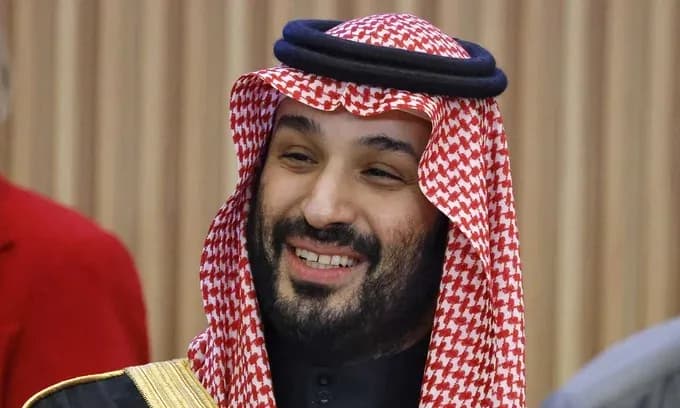
By then, Mohammed bin Salman – now 41 – had become one of the world’s most powerful figures, with an estimated personal fortune of about $25 billion, according to House of Saud. That money, and the influence that trails it, has reached deep into football.
As chairman of Saudi Arabia’s Public Investment Fund (PIF), he has turned sport into a central pillar of the country’s Vision 2030 project, a sweeping plan to diversify an oil-dependent economy through entertainment, tourism and global soft power. Football sits at the heart of that strategy.
In 2023, the PIF took majority control of four of the Saudi Pro League’s foundational clubs: Al Nassr, Al Hilal, Al Ittihad and Al Ahli. The move did not stay on the balance sheet for long. With state-backed muscle behind them, Al Nassr landed Cristiano Ronaldo in a deal that jolted the transfer market and triggered a rush of high-profile names to Saudi Arabia. What looked like an ambitious domestic league suddenly became one of the game’s most aggressive new power bases.
The reach extends far beyond the Gulf. In 2021, the PIF completed its takeover of Newcastle United, dragging the Premier League club out of years of drift and into a new era fuelled by sovereign wealth. St James’ Park now sits on the same strategic map as Riyadh’s superclubs, part of a wider football empire that stretches from Tyneside to the Red Sea.
Around this sporting project stands a vast network of global connections. The Crown Prince has cultivated relationships with political heavyweights such as former U.S. President Donald Trump, Silicon Valley titans like Mark Zuckerberg and Elon Musk, and Hollywood names including Johnny Depp, Morgan Freeman and Lindsay Lohan. Boardrooms, studios, palaces, stadiums – all folded into the same orbit.
He has never pretended to be modest about his means. Speaking to CBS in an earlier interview about his lifestyle, Mohammed bin Salman drew a sharp line: “As far as my private expenses, I'm a rich person and not a poor person. I'm not Gandhi or Mandela. I'm a member of the ruling family that existed for hundreds of years before the founding of Saudi Arabia.” It was a blunt acknowledgment of status, heritage and the scale on which he operates.
Yet the gilded world around him now sits under a different kind of pressure. Regional security tensions have intruded on the luxury. According to The Wall Street Journal, a recent wave of drone and missile attacks by Houthi forces has targeted airports and oil facilities in Riyadh, while commercial shipping routes in the Red Sea have come under threat. The response has been to move his daily operations into fortified palaces, reinforced with secure underground bomb shelters.
For a leader reshaping global football with almost limitless resources, it is a stark reminder: even the most lavish yachts and palaces exist in a region where power is measured not only in trophies and paintings, but in how well you can protect them.